


A feed conveyor that shifts, corrodes, or suffers impact during overseas shipping can turn a ready-to-run edge bander into a costly commissioning delay.
Effective edge bander export packaging starts with a verified restraint system, compatible surface protection, and documented acceptance checks before the machine leaves the factory.
For quality control and safety teams, the key question is whether transport forces can reach vulnerable conveyor components or move the machine inside its packaging.
Drawing on Qingdao Zhongding Machinery Co., Ltd.’s woodworking machinery experience, this guide explains practical checks for conveyor protection, shipment release, and safer unpacking at destination.
What must the packaging protect on the feed conveyor?
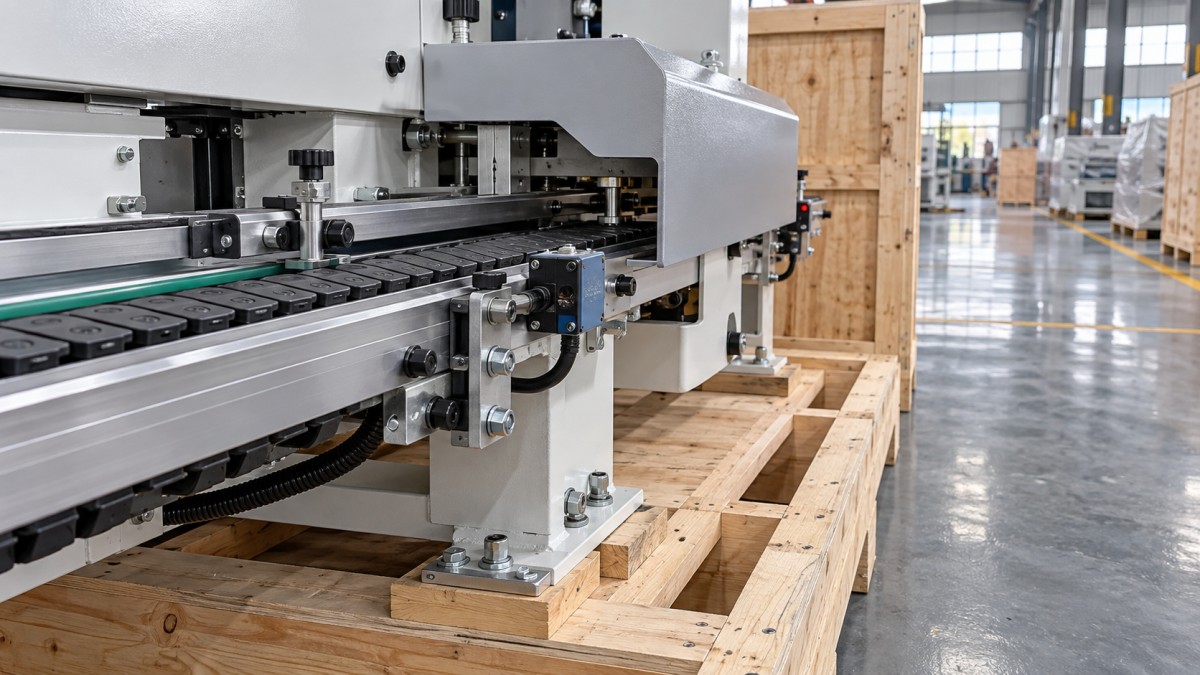
Start by identifying the conveyor configuration actually fitted to the machine. Depending on the model, vulnerable parts may include chain pads, guides, sprockets, and sensors.
The conveyor carries panels through successive machining stations, so its geometry and running condition influence feeding consistency, workpiece stability, and the quality of finished edges.
A conveyor can appear undamaged while concealed guide displacement, pad deformation, or bearing contamination creates problems that only become obvious during commissioning under load.
Quality inspectors should therefore establish a condition baseline before packing, including visible defects, conveyor alignment references, pad condition, and any existing maintenance issues requiring attention.
Record the machine serial number and photograph relevant adjustment points. These records help receiving teams distinguish transport damage from an unresolved condition present before shipment.
Prioritize consequences rather than appearance alone. A scratched removable cover usually matters less than a displaced guide, damaged lubrication connection, or compressed conveyor pad.
The protection plan should address four separate hazards: machine movement, local component movement, direct impact, and moisture exposure throughout the expected transport and storage period.
How should the machine and conveyor be restrained?
First separate machine anchoring from conveyor restraint. Securing the machine to its transport base does not automatically prevent vulnerable conveyor components from moving or deforming.
Use the manufacturer's designated transport supports and anchoring locations. The base, fasteners, and blocking arrangement must suit the machine mass and anticipated handling conditions.
Shipping loads should pass through approved structural members into the transport base. Conveyor pads, guide rails, covers, and adjustment screws should never become convenient anchoring points.
Where conveyor restraint is required, use model-specific transport fixtures or an approved blocking arrangement. A generic clamp may introduce distortion while appearing mechanically secure.
Do not select bolt sizes, tightening torques, or restraint quantities by visual judgment. Obtain the applicable packing drawing, engineering specification, or written manufacturer instruction.
Any contact blocks should distribute force over approved surfaces without concentrating pressure. Cushioning must remain stable and compatible with the surfaces it touches during shipment.
Check that tightening the restraints has not changed conveyor alignment or compressed vulnerable parts. Photograph the installed arrangement before protective wrapping hides the contact points.
For container shipments, verify the separate connection between the packaged machine and the container securing system. Internal blocking cannot compensate for an inadequately secured crate.
Which parts need local protection or removal?
Projecting sensors, cable carriers, lubrication fittings, and exposed connectors need individual assessment. Protecting the main conveyor structure does not shield every small component from impact.
Retain components in place when approved guards or rigid protective covers provide adequate clearance. Covers should transfer impact loads away from the protected component.
Remove projecting parts only when the manufacturer permits removal and provides a reliable reinstallation method. Unnecessary disassembly can introduce alignment errors and lost settings.
Label every removed item with its installation location and machine identification. Package associated fasteners together and include clear photographs showing the original orientation before removal.
Cap disconnected lines and protect electrical connectors against contamination using approved materials. Avoid adhesive tape directly on sensitive contacts or surfaces requiring clean reassembly.
Loose accessories, tools, and spare parts need separate restraint. A small unsecured metal item can damage conveyor pads or become trapped inside the machine.
Before enclosure, inspect internal cavities and the space beneath the conveyor. Confirm that packing debris, loose hardware, and temporary workshop items have been removed.
How can moisture protection prevent corrosion without creating new problems?
Moisture control begins with a clean, dry machine. Wrapping damp surfaces or wet packaging materials can trap moisture close to precision components throughout the voyage.
Clean exposed metal according to the manufacturer's instructions, then apply a compatible corrosion preventive where specified. Keep treatments away from surfaces requiring different handling.
Conveyor pads, belts, adhesives, electrical parts, and lubricated assemblies may react differently to protective chemicals. Verify compatibility before applying oils, sprays, or corrosion inhibitors.
Select the moisture protection system for the route, season, expected storage duration, and packaging permeability. Ordinary stretch film alone does not establish controlled moisture protection.
Where specified, use a sealed barrier with correctly selected desiccant and a readable humidity indicator. Desiccant quantity must follow the packaging design or supplier calculation.
Inspect seams, closures, and penetrations carefully. A barrier punctured by an unprotected corner can undermine the intended moisture control even when desiccant is present.
Protect sharp edges before sealing, and use dry timber and cushioning materials. Moisture introduced during packing increases the burden on the enclosed protection system.
Document the protection materials and their locations. Receiving teams need to identify temporary coatings, remove desiccant, and follow the specified cleaning procedure before operation.
What should inspectors check before closing the crate?
Use a release checklist tied to observable evidence. Statements such as “packed securely” are difficult to audit and provide little guidance when a defect appears.
Each critical item should identify its acceptance criterion, inspection method, responsible person, and supporting record. This turns packing quality into a repeatable release decision.
- Confirm the correct machine identity, packing drawing revision, transport base, approved anchoring points, and installed conveyor restraints.
- Check that protective blocks contact approved surfaces and leave required clearance around pads, guides, sensors, and moving assemblies.
- Verify that exposed surfaces are dry, specified corrosion protection is applied, and moisture barrier closures are intact.
- Account for removed components, loose accessories, fasteners, transport locks, and the instructions needed for their removal or reinstallation.
- Record photographs before wrapping, after restraint installation, and before final closure, including details that will become inaccessible.
Where safe and permitted, verify conveyor condition before installing final transport restraints. After restraint installation, perform only checks authorized by the manufacturer's packing procedure.
Never energize the machine simply to demonstrate movement while transport locks remain installed. The packing inspection must preserve the established isolation and release sequence.
Hold shipment when restraints are missing, protective materials are wet, or contact pressure affects vulnerable parts. Cosmetic crate completion should never override unresolved internal defects.
Will the crate and handling plan protect the conveyor together?
A strong crate cannot prevent damage if forklift entry, lifting locations, or load distribution are unclear. Packaging design and handling instructions must work together.
Provide accurate gross weight, package dimensions, approved lifting points, and center-of-gravity information where required. Marks must correspond to the packaged machine's actual transport configuration.
Forklift access should keep forks clear of conveyor assemblies and vulnerable underbody components. Sling arrangements must follow approved lifting instructions and suitable equipment capacities.
Maintain clearance between crate members and protected components. A wall that deflects during handling should not transfer pressure directly into a sensor or conveyor guide.
Use handling symbols and orientation markings as supporting instructions. Labels cannot replace adequate blocking, structural protection, or a lifting plan understood by the handling team.
Where solid wood packaging is used, check applicable destination requirements, including ISPM 15 treatment and marking where required. Compliance does not establish structural adequacy.
What evidence should accompany an export shipment?
Useful documentation explains how the machine was protected and how to release that protection safely. A photograph of the closed crate provides limited internal evidence.
Build a compact packing record containing machine identification, inspection approval, restraint locations, protective materials, removed components, and photographs linked to the relevant checklist items.
Include a clearly illustrated transport-lock register. Number each restraint, identify its location, and state when it must be removed within the manufacturer's unpacking sequence.
Record any special storage limitations and inspection requirements for delayed installation. Protection designed for a defined journey may require reassessment after extended destination storage.
If shock or tilt indicators are specified, document their locations and activation status. Treat their readings as inspection triggers rather than proof of conveyor condition.
Give the receiver the packing record before arrival whenever possible. Early access helps teams arrange suitable lifting equipment, inspection personnel, and a controlled unpacking area.
How should the receiver unpack and check the conveyor?
Inspect and photograph the package before opening, noting impact marks, water staining, broken boards, or displaced indicators. Follow agreed reporting procedures when abnormalities appear.
Establish an exclusion area and follow the documented opening sequence. Packaging panels, tensioned bands, and temporarily supported components can move unexpectedly when restraints are released.
Remove crate panels and internal restraints in the specified order. Do not remove load-bearing packaging or machine anchors until the machine is stable and supported.
Account for every transport lock, block, cover, desiccant pouch, and removed component. Compare the inventory with the supplied register before preparing the machine for operation.
Check conveyor pads, guides, wiring, fittings, and exposed metal against the shipment photographs. Investigate corrosion, deformation, displaced references, or unusual resistance before commissioning proceeds.
Clean temporary preservatives and restore lubrication only as instructed. Reinstall removed components using the specified settings and complete the manufacturer's commissioning checks before production.
If movement is abnormal, stop and investigate. Forcing the conveyor or repeatedly running a faulted assembly can worsen damage and make the original cause harder to establish.
What makes edge bander export packaging ready for release?
Release is justified when approved restraints control movement, vulnerable parts have suitable protection, moisture measures match the shipment, and inspection records support every critical check.
For quality and safety teams, the strongest judgment comes from traceable evidence: known starting condition, verified packing details, clear handling instructions, and controlled unpacking steps.
With more than twenty years in woodworking machinery, Qingdao Zhongding Machinery Co., Ltd. emphasizes reliable equipment, technical support, spare parts supply, and responsive after-sales service.
Confirm model-specific packing and commissioning requirements with the supplier before shipment. Protecting the feed conveyor succeeds when the same documented plan guides packing, transport, and receiving.