


Yes, woodworking workflow optimization can reduce avoidable machine idle time when delays arise from material shortages, poor scheduling, lengthy setups, or imbalanced production capacity across operations.
For business leaders, the real objective is higher profitable throughput and more reliable delivery. Keeping every machine busy can actually increase inventory without improving completed orders.
A woodworking workflow optimization service should identify where production loses time, establish the financial consequences, and test practical improvements before recommending additional equipment or automation investments.
Drawing on more than 20 years of woodworking machinery experience, Qingdao Zhongding Machinery Co., Ltd. understands how equipment selection and process coordination can influence manufacturing productivity.
Which idle machines are actually costing your business money?
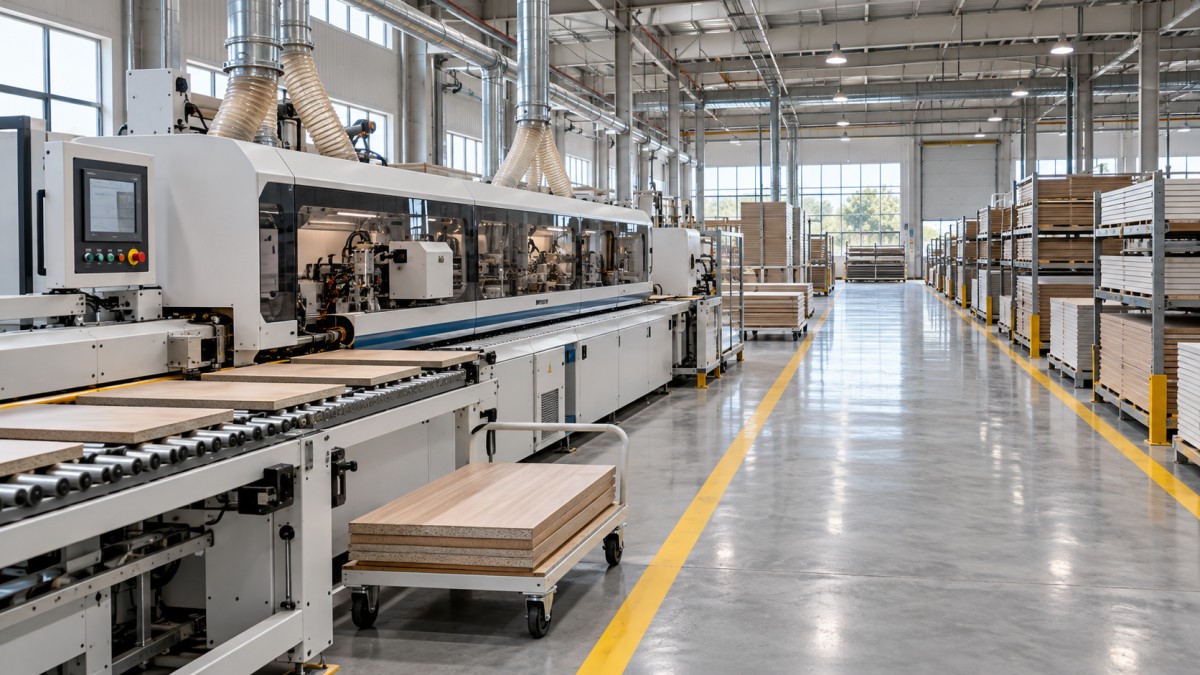
Start by separating avoidable waiting from necessary downtime. A machine may stop for maintenance, safety checks, scheduled breaks, insufficient demand, or preventable disruptions elsewhere in production.
These situations require different decisions. Eliminating a material delivery delay may improve output, while reducing essential maintenance could increase breakdowns and create much larger production losses.
Idle time matters most at the production constraint: the operation currently limiting completed output. This could be cutting, edge banding, drilling, sanding, finishing, or even assembly.
If an edge bander determines daily output, recovering its lost production time can help the entire line. Increasing saw utilization alone may simply create more unfinished panels.
Likewise, a nonconstraint machine can have spare capacity without harming delivery. Its available time may provide useful flexibility for urgent orders, maintenance, or changing product mixes.
Management should therefore ask which stoppages reduce saleable output, delay confirmed orders, or trigger overtime. Those losses deserve priority over an isolated machine utilization percentage alone.
Where does avoidable idle time usually come from?
Material readiness is a frequent source of disruption. Panels may be available in the warehouse but missing identification, cutting instructions, required thicknesses, or suitable staging space.
Jobs can also arrive incomplete. An operator may receive most components for an order while waiting for one missing part, drawing revision, hardware item, or approval.
Scheduling creates another problem when work sequences ignore setup requirements. Repeated changes in material thickness, tooling, edge material, or machining programs can consume substantial available time.
Downstream congestion causes blocking. A saw may stop because cut parts cannot move forward, while an upstream shortage causes starvation when the next machine receives nothing.
Quality problems generate less visible delays. Incorrect dimensions, damaged surfaces, and labeling errors require sorting or remanufacturing, disrupting schedules and diverting capacity from planned customer orders.
Technical dependencies also matter. Extraction performance, compressed air availability, tooling condition, operator coverage, and spare parts access can restrict output even when the main machine functions.
What should a woodworking workflow optimization service deliver?
A useful service begins with an agreed business objective, such as reducing late orders, increasing constrained output, lowering overtime, or accommodating growth within the existing facility.
The assessment should follow representative orders through the complete production route. Reviewing machines individually can miss queues, repeated handling, and information delays between departments or workstations.
Baseline data should record scheduled production time, stoppage reasons, setup duration, queue time, good output, and product mix. Include different shifts and representative busy production periods.
Operators and supervisors should help validate the findings. They often know which delays recur, which workarounds conceal problems, and which proposed changes would be impractical onsite.
Expected deliverables should include a prioritized loss analysis, proposed changes, responsible owners, estimated costs, implementation dependencies, and a measurement plan with clearly defined acceptance criteria agreed.
Ask providers to distinguish observations from assumptions. Any projected improvement should identify the bottleneck, available demand, required resources, and conditions under which the estimate remains valid.
Which workflow changes should you test before buying machinery?
Begin with job readiness. Release work only when approved drawings, programs, materials, labels, and necessary tools are available, so operators can complete the scheduled production sequence.
Next, improve staging around the constraint. A small, controlled buffer of ready work can protect production against minor interruptions without filling the workshop with excessive inventory.
Move suitable setup preparation outside machine stoppage periods. Preparing tools, checking programs, and gathering edge materials beforehand can shorten changeovers while preserving required safety procedures consistently.
Group compatible jobs where delivery commitments allow. Similar materials or settings may reduce changeovers, but oversized batches can delay urgent orders and increase work in progress.
Reduce unnecessary movement through clearly assigned staging locations, reliable labels, and agreed transfer routines. Consider handling equipment where weight, panel dimensions, or travel distance justify investment.
Introduce changes around one product family or production route first. A focused pilot makes results easier to interpret and exposes operational difficulties before broader implementation begins.
How much financial value can recovered time create?
Recovered machine hours are useful only when they support demand, replace avoidable costs, or improve delivery performance. Available capacity alone does not automatically become additional revenue.
Estimate the potential output gain using recovered hours at the constraint multiplied by demonstrated good units per hour. Account for product mix and downstream capacity limitations.
For example, recovering six constrained hours weekly at twelve good units per hour creates capacity for seventy-two additional units, provided other operations can support that volume.
If confirmed demand absorbs those units and contribution after variable costs is $18 each, the illustrative weekly contribution opportunity is $1,296 before additional implementation operating costs.
Add separate, verifiable savings such as reduced overtime, scrap, or subcontracting. Avoid counting the same benefit twice through both increased contribution and overlapping labor savings assumptions.
Compare total implementation costs with conservative net monthly benefits. Include assessment fees, training, handling changes, software, installation disruption, and ongoing support when calculating simple payback periods.
Which performance indicators show whether the changes work?
Track avoidable idle time by reason, rather than combining every stoppage into one figure. Separate material waiting, setup overruns, program issues, breakdowns, blocking, and staffing gaps.
Measure constraint throughput as good output per scheduled hour. This connects improvement to the operation governing production and prevents rejected parts from inflating reported performance figures.
Monitor order lead time and on-time completion alongside throughput. More machine activity has limited business value if customers still wait longer for finished orders to arrive.
Track work in progress between operations. If output rises while queues expand sharply, the improvement may have shifted the bottleneck or released work faster than necessary.
Overall equipment effectiveness can support analysis when definitions remain consistent. Its availability, performance, and quality components help distinguish waiting losses from slow operation or defective output.
Compare equivalent product families, staffing levels, shifts, and demand conditions. Otherwise, an easier order mix or temporary overtime can look like a sustainable workflow improvement result.
When is new equipment the better investment?
Workflow changes have limits. If the constraint operates reliably, receives ready work, and still cannot meet sustained demand, additional capacity may be the appropriate next investment.
Replacement may also make sense when equipment cannot meet required tolerances, processing capabilities, or reliability expectations. Scheduling improvements cannot remove a fundamental technical limitation in production.
Evaluate the complete route before expanding one operation. A faster panel saw may require greater edge banding capacity, additional handling space, stronger extraction, or more assembly resources.
Automation deserves the same scrutiny. Automatic loading or material transfer can reduce interruptions, but benefits depend on compatible dimensions, predictable job flow, maintenance skills, and integration.
Compare alternatives using realistic production trials or representative cycle calculations. Include changeovers, handling, scrap, service access, and operator requirements instead of relying solely on maximum specifications.
Qingdao Zhongding Machinery Co., Ltd. supplies woodworking machinery and complete solutions, supported by technical assistance, spare parts supply, and after-sales service for customers across global markets.
How can management introduce changes without disrupting deliveries?
Choose a pilot where the problem is frequent, measurable, and commercially relevant. Avoid launching simultaneous changes across every department, which makes outcomes harder to attribute accurately.
Assign one accountable owner and involve production, maintenance, planning, and quality teams. Each group controls conditions that can determine whether recovered capacity becomes a lasting improvement.
Agree on baseline definitions before implementation, then review results against comparable production. Record exceptions, including rush orders, machine failures, and unusual absences, so conclusions remain credible.
Protect safety and quality throughout the pilot. Changes to handling, staffing, tooling preparation, or machine access must preserve required safeguards and inspection steps during normal production.
Use brief daily reviews to resolve recurring delays and maintain ownership. The purpose is to remove obstacles promptly, with clear actions and deadlines for responsible teams.
Scale improvements only after the pilot demonstrates repeatable benefits. Document the new process, train affected employees, and check whether another operation has become the production constraint.
What should decision-makers conclude before committing budget?
Woodworking workflow optimization can reduce machine idle time when it addresses identifiable losses that restrict production. The strongest opportunities connect operational changes directly with commercial outcomes.
Before approving a woodworking workflow optimization service, require a measurable baseline, a constraint-focused assessment, practical recommendations, and financial estimates grounded in your own demand and costs.
Before approving another machine, establish whether current capacity is genuinely exhausted or merely unavailable because of preventable delays. That distinction can materially change the investment decision.
The right outcome is dependable production with controlled costs and reliable delivery. Measure success through those results, then invest where evidence shows the greatest business value.