


Choosing a Single Blade Rip Saw for Lumber of Varying Thickness
Buying a single blade rip saw for lumber of varying thickness requires more than checking maximum cutting height. Start with your actual production requirements.
Procurement teams need to assess blade capacity, feed stability, hold-down adjustment, and motor power against the timber sizes and species they regularly process.
A poor match can cause inconsistent cuts, excess waste, and production delays. The right machine must handle your common stock efficiently and difficult material predictably.
This guide explains which specifications to compare, what suppliers should demonstrate, and how service support affects the operational safety and lifetime cost of your investment.
The central purchasing question is whether thickness changes occur between batches or within individual boards. These conditions create different requirements for adjustment, feeding, and acceptance testing.
Define Your Lumber Range Before Comparing Machine Specifications
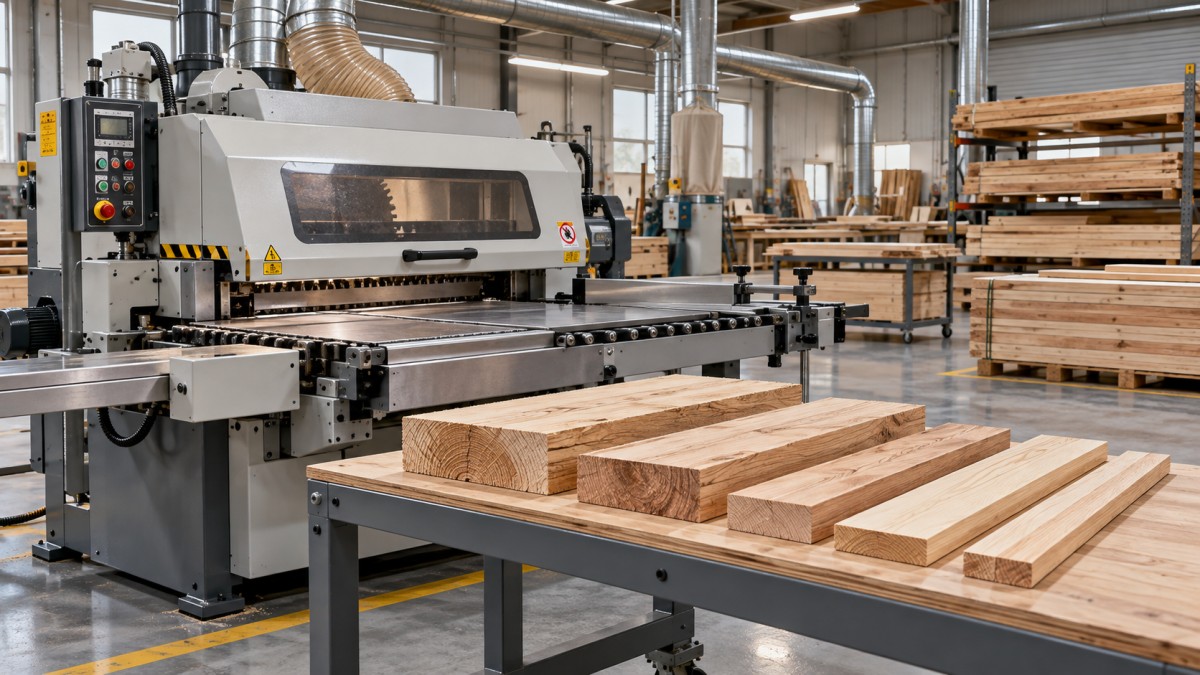
A useful purchasing specification starts with material records. Document minimum, typical, and maximum thickness, together with board length, width, species, moisture condition, and required output.
Separate occasional extremes from everyday production. A machine selected around rare oversized boards may cost more without improving the productivity of your main product mix.
Distinguish rough lumber from previously surfaced stock. Thickness variation, surface irregularity, and board distortion can affect feeding even when nominal dimensions fit the published capacity.
Record whether boards have a suitable reference edge and support surface. Confirm any preparation requirements with suppliers before assuming rough material can enter the machine directly.
Also define what happens after ripping. Components proceeding to further machining may tolerate different edge quality and dimensional variation than parts intended for immediate assembly.
Use the following material profile when requesting quotations. It gives suppliers a common basis for selection and makes differences between proposed machines easier to evaluate.
Can the Machine Handle Thickness Changes Reliably?
Maximum cutting height describes a capacity limit, but it does not establish acceptable output, finish, or feed stability across your full range of materials.
Ask suppliers to explain how blade projection, workpiece thickness, guarding, and extraction arrangements interact. Blade adjustment must follow the machine manufacturer's operating instructions throughout production.
Confirm the minimum permitted thickness as carefully as the maximum. Thin stock needs adequate support and restraint, particularly when boards are narrow or slightly distorted.
For batch changes, evaluate how operators reset the pressure system and verify settings. Frequent manual adjustments can reduce useful production time despite an attractive cutting speed.
For thickness variation within one board, request the permitted variation and operating conditions in writing. Do not assume a floating pressure assembly accommodates unrestricted differences.
Likewise, feeding consecutive boards of different thicknesses requires explicit manufacturer approval. Some machines require consistent stock thickness or specific resetting procedures between material groups.
A practical demonstration should include your thinnest normal stock, thickest routine stock, and representative rough boards. Observe feeding continuity, marking, vibration, and adjustment time directly.
Will the Feed and Hold-Down System Keep Cuts Consistent?
For procurement teams, feeding quality deserves attention equal to motor size. Unstable movement can compromise dimensional consistency even when the blade has sufficient cutting capacity.
Evaluate how the feed mechanism supports and advances lumber through the cutting zone. Ask which workpiece dimensions and surface conditions the design can accommodate safely.
Inspect the hold-down arrangement and its adjustment range. Pressure must maintain controlled contact without producing unacceptable surface marks or interfering with the intended material flow.
Do not accept increased pressure as a universal solution for difficult boards. Excessive distortion or unsuitable geometry may require upstream preparation or exclusion from processing.
Minimum board length is especially important when buying a single blade rip saw for lumber used in short furniture components. Verify the manufacturer's stated limit.
Ask operators to demonstrate fence adjustment, alignment checks, and routine cleaning. Accessible controls and clear reference scales can reduce setup errors during repeated width changes.
Assess feeding performance using measurable results: finished width variation, edge straightness, surface marking, and stoppages. Agree inspection methods before comparing demonstrations from different suppliers fairly.
Check who handles loading and unloading at the proposed production rate. Manual handling capacity can limit output long before the machine reaches its advertised feed speed.
How Should You Match Blade, Motor Power, and Feed Speed?
Motor power should be assessed against thickness, species, cutting width, blade condition, and production demand. A power rating alone cannot establish reliable throughput for your operation.
Thicker or harder material generally increases cutting demand. However, the correct feed setting also depends on tooth geometry, blade speed, chip removal, and manufacturer guidance.
Request a blade recommendation for your material mix, including diameter, bore, kerf, tooth configuration, and approved operating speed. Confirm compatibility with the supplied machine configuration.
Blade kerf influences material yield, but a narrower kerf is not automatically preferable. Blade stability, cut quality, maintenance requirements, and application suitability also affect economics.
For illustration, reducing kerf by one millimeter saves one millimeter of wood across each cut. Actual recoverable value depends on your cutting patterns and product dimensions.
Variable feed speed can help operators adapt to different materials. Ask whether adjustments are straightforward and whether the supplier provides recommended settings for representative applications.
During trials, observe sustained cutting rather than brief passes through easy stock. Record motor loading where available, finish quality, burning, and any need to reduce feed.
Compare electrical supply requirements, starting arrangements, and available site capacity. Include any necessary electrical work in the project budget before finalizing the purchase decision internally.
What Should a Supplier Prove Before You Order?
A useful acceptance trial reproduces your production conditions closely enough to expose limitations. Send representative lumber and agree beforehand which samples and settings will be used.
Include routine material as well as the difficult stock you reasonably expect to process. Clearly identify conditions outside your intended specification so results remain meaningful.
Define acceptance criteria around your downstream process. These may include width tolerance, edge straightness, surface quality, acceptable marking, and completed output over a specified period.
Measure output as accepted pieces or usable volume per hour. Include normal loading, unloading, adjustments, and brief interruptions when the trial is intended to represent production.
Record changeover time between thickness groups and cutting widths. For small batches, minutes spent resetting the machine may matter more than its highest feed speed.
Inspect guarding, emergency stops, anti-kickback provisions, and access for maintenance. Ask how each protective feature functions and which inspection or replacement routines the manufacturer requires.
Confirm the machine's documented conformity with applicable destination requirements. Obtain relevant manuals, electrical information, and supporting documentation early enough for your technical team to review.
For remote trials, request a continuous recording showing sample identification, machine settings, cutting, and measurement. Retain the agreed results as part of the purchase documentation.
Which Costs and Service Commitments Affect the Real Return?
Compare total installed cost rather than purchase price alone. Freight, import charges, installation, electrical preparation, extraction connections, commissioning, and training can materially change the budget.
Check dust extraction requirements with the supplier, including connection details and required performance. Confirm your existing system can support the machine under planned operating conditions.
Estimate operating cost using realistic production data. Include electricity, blade sharpening, replacement blades, consumable feed components, maintenance labor, and the cost of expected production interruptions.
Ask for a recommended spare parts list with prices and lead times. Identify items that require factory supply and those available through qualified local sources.
Service promises should describe response channels, support hours, troubleshooting procedures, and escalation arrangements. Clarify whether commissioning or warranty support involves additional travel or labor charges.
For a simple comparison, divide annual ownership and operating costs by annual accepted output. Use consistent assumptions for utilization, waste, staffing, and maintenance across quotations.
A machine with a lower purchase price may become more expensive if frequent adjustments reduce output. Conversely, additional automation needs enough production benefit to justify its cost.
Ask suppliers to explain which maintenance tasks your team can perform and what training they provide. Clear documentation helps preserve availability after the installation period ends.
Choose the Machine That Proves Its Fit With Your Production
The strongest purchase decision connects material requirements, demonstrated cutting performance, manageable changeovers, and dependable service. No single specification can substitute for that combined assessment during selection.
Before approving an order, confirm that the quotation identifies the tested configuration, included blade, operating limits, utility requirements, accessories, delivery scope, and agreed acceptance criteria.
Qingdao Zhongding Machinery Co., Ltd. manufactures and exports woodworking machinery, drawing on more than twenty years of industry experience serving workshops, furniture manufacturers, and industrial production.
Its business offering includes technical support, spare parts supply, and after-sales service. Procurement teams should request model-specific specifications and written support commitments for their proposed installation.
When requesting a quotation, provide your material profile, production targets, site conditions, and sample-testing requirements. This enables a more useful recommendation and a clearer commercial comparison.
The right single blade rip saw for lumber of varying thickness should process your normal stock consistently, accommodate approved variations, and deliver a defensible production cost.