


News & Exhibitions
Latest Factory Updates, Industry Trends & Global Exhibition Information
Can a cabinet door sanding machine sand recesses without rounding edges?
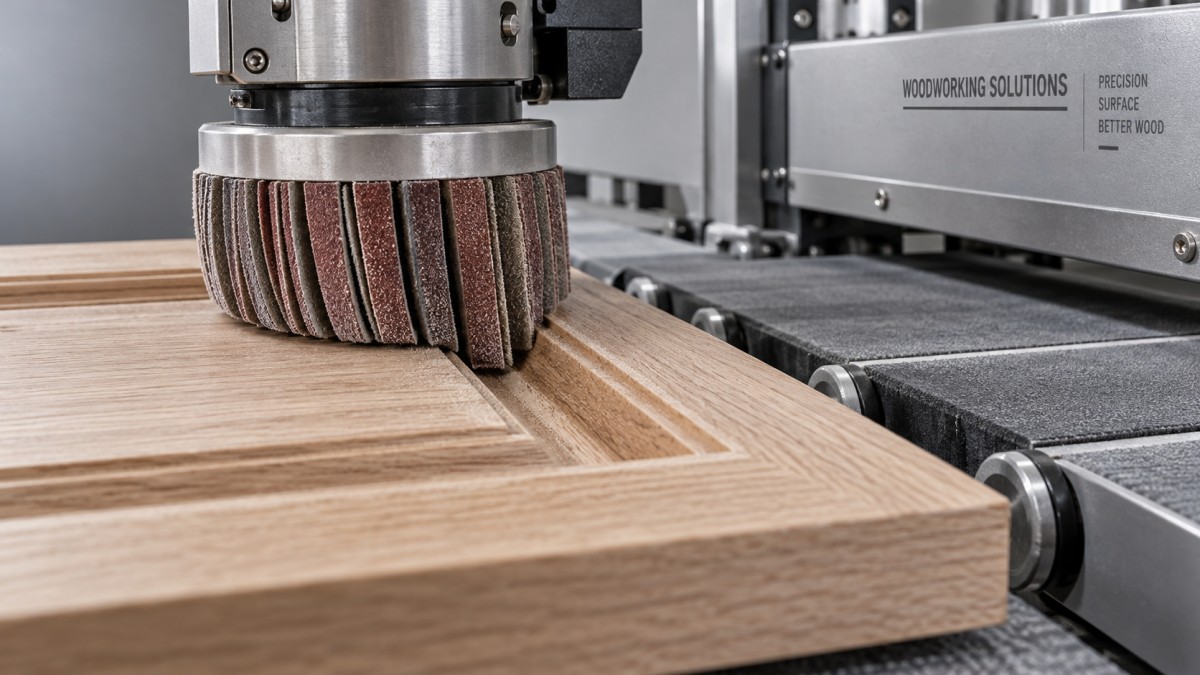
A Cabinet Door Sanding Machine can sand recessed profiles while preserving crisp edges—but only when its abrasive tooling, contact settings, and working directions suit the door geometry. A machine that produces an even finish on a shallow routed panel may leave deep grooves untouched or soften the shoulders of a more intricate profile.
For technical evaluators, the important distinction is between reaching a recess and sanding it effectively without changing its shape. Flexible abrasives can enter a groove, yet still apply more cutting action to the exposed edges above it. Before investing, you need evidence that the machine can meet both requirements at your intended production rate.
“Without rounding edges” needs a measurable definition
No abrasive process removes material with absolutely no effect on geometry. The practical objective is to keep profile changes within an agreed tolerance while achieving the required surface preparation. That is different from promising that every sharp corner will remain completely untouched.
Some edge softening may actually be intentional. Coating specifications sometimes require controlled edge breaking to support finish coverage and reduce fragile corners. The problem is uncontrolled rounding: a shoulder loses definition, a decorative bead becomes uneven, or matching doors no longer look consistent.
Define the acceptance criteria before discussing machine settings:
- Profile retention: What change in edge radius, shoulder position, or groove shape is acceptable?
- Surface preparation: Are you removing raised fibers, light machining marks, or cured coating nibs?
- Recess coverage: Must the groove floor, sidewalls, and internal corners all receive abrasive contact?
- Appearance: Will the door receive opaque paint, transparent stain, or another finish that reveals scratches differently?
A painted MDF door and a stained solid-wood door may share a similar profile but require different sanding recipes. Evaluate them separately rather than treating “cabinet doors” as one uniform application.
Why recessed profiles are difficult to sand evenly
A raised shoulder meets the abrasive before the groove floor does. As flexible sanding strips bend around that shoulder, their contact force and dwell can concentrate on the exposed edge. Increasing penetration to reach deeper into the recess may therefore increase edge wear faster than it improves the groove floor.
Tool access also has a geometric limit. A narrow opening may prevent abrasive strips from entering at a useful angle. Tight internal corners and undercut details may remain inaccessible even when the surrounding surface looks uniformly sanded.
Direction matters too. A brush approaching a routed shoulder from one direction can treat one side more aggressively than the opposite side. On a frame-and-panel door, grain orientation, cross rails, and intersecting profiles add further variation.
A useful evaluation drawing should show the groove opening, depth, sidewall angle, shoulder shape, and smallest internal radius. These details tell the supplier much more than overall door width and thickness.
Which Cabinet Door Sanding Machine configuration fits the profile?
Different sanding heads solve different problems. The best choice is not necessarily the machine with the most heads, but the configuration that provides suitable access without relying on excessive engagement.
Flexible brush sanding is often appropriate for light surface preparation and denibbing. It should not automatically be expected to remove substantial cutter marks from a deep recess while leaving adjacent edges unchanged. Heavy defect removal and delicate profile preservation are competing demands.
Profile-matched tooling may offer better control for repeated shapes, provided the tool accurately matches the intended profile. However, a change in routing geometry, tool wear, or component positioning can change the contact pattern. Request trials on the actual production profile, not a visually similar sample.
The settings that determine edge retention
Abrasive construction: flexibility is not enough
Longer, more flexible strips may reach into contours more readily, but length alone does not establish suitability. Strip width, backing stiffness, abrasive exposure, support-bristle arrangement, and grit all influence how the tool enters and cuts the recess.
A finer grit is not a guaranteed cure for rounding. If it requires more passes or longer contact to remove a defect, cumulative edge wear can still become unacceptable. Choose the abrasive around the required removal task, then assess profile change.
Head engagement: deeper is not always better
On many brush machines, contact is adjusted through head position or penetration rather than a directly measured pressure setting. Pneumatic pressure, where used, is only one part of the contact system. Ask how engagement is set, displayed, and reproduced.
Excessive penetration bends the abrasive more heavily around raised details. A sensible trial starts with light engagement and increases it gradually while checking both recess coverage and edge geometry. If the groove floor remains insufficiently prepared before the shoulder reaches its wear limit, the tooling or process needs to change.
Feed speed, head speed, and repeated passes
Slower feed generally increases abrasive exposure, while rotational speed changes cutting behavior and strip deflection. These variables interact; “slower is better” is not a reliable selection rule.
Multiple light passes can sometimes improve control, but they also accumulate material removal. Evaluate the complete production sequence, including any reverse-direction pass, rather than approving each pass in isolation. Record feed speed, head speed, engagement, abrasive specification, and pass count as one recipe.
Workpiece support and dust extraction
A door that lifts, rocks, or slips experiences inconsistent contact even when the sanding heads are correctly adjusted. Check conveyor condition, hold-down arrangement, thickness variation, and support for the smallest doors in your range.
Extraction affects consistency as well as housekeeping. Loaded abrasives and accumulated dust can change the cutting action or contribute to scratching. Confirm the supplier’s extraction requirements and evaluate performance under the intended operating conditions, with appropriate guarding and dust controls in place.
Material and upstream quality can decide the result
MDF routed profiles may have exposed fibers and varying surface density, especially where tooling cuts through different depths. Aggressive brushing can make an edge appear fuzzy or worn rather than cleanly prepared. Solid wood introduces grain-direction changes and local hardness variation. Veneered components add the risk of sanding through thin face material at vulnerable edges.
Inspect the door before sanding. A process intended to remove light fibers should not be judged by whether it can erase severe routing chatter. Worn cutters, poor workholding, or inconsistent machining depth can force the sanding station to remove more material than the profile safely allows.
Upstream panel preparation also deserves attention. For example, Qingdao Zhongding Machinery’s CNC Sliding Table Saw, model ZD400T-AD, is intended for cutting MDF, plywood, solid wood, and panel materials, with a 3200 mm maximum cutting length and screen-displayed blade angle. Its role is blank preparation—not recess sanding. Keeping those functions distinct helps avoid expecting a downstream sanding machine to compensate for every earlier process variation.
A sample trial that exposes the real limitations
A smooth demonstration door is reassuring, but it is not enough to support a purchasing decision. Build a sample set around the hardest parts in your actual range: the deepest recess, narrowest groove, sharpest decorative shoulder, and most vulnerable material.
- Establish a baseline. Photograph and inspect each profile before sanding. Record existing defects, moisture condition where relevant, and critical dimensions.
- Define separate pass criteria. Specify acceptable surface preparation and acceptable profile change. One must not hide failure in the other.
- Run controlled adjustments. Change one variable at a time during development, then document the final combined recipe.
- Check every orientation. Inspect leading and trailing shoulders, both sidewalls, groove floors, cross-grain sections, and intersecting details.
- Apply the intended finish. Review representative coated samples because raw surfaces can conceal scratches, fibers, or uneven preparation.
- Repeat beyond the first door. Confirm consistency across multiple parts and assess how abrasive wear affects results.
Use raking light and magnification for visual defects. Where tolerances require it, compare profile cross-sections or use suitable optical measurement. A profile template can provide a quick production check, but may not resolve small changes that matter to the specification.
Keep an approved reference sample with the recorded settings. A signed-off surface is more useful when production and quality teams can compare future output against the same physical standard.
Judge the production process, not just the machine demonstration
The decisive figure is acceptable doors per hour, not conveyor speed alone. Include loading, extra passes, abrasive changes, setup between profile families, inspection, and any manual touch-up. A faster machine that still requires extensive hand sanding in every recess may not deliver the expected labor savings.
Before purchase, ask the supplier to identify which surfaces the proposed tooling will sand, which may need secondary work, and how settings are restored after abrasive replacement. Also clarify consumable availability, replacement procedures, maintenance access, and technical support.
Qingdao Zhongding Machinery Co., Ltd. brings more than 20 years of woodworking machinery experience, alongside technical support, spare parts supply, and after-sales service. For a technical evaluation, those resources are most valuable when applied to reviewing real door samples and documenting a repeatable process—not as a substitute for application testing.
The selection rule is straightforward: choose a Cabinet Door Sanding Machine only after it demonstrates adequate recess preparation and acceptable edge retention together, at a realistic production rate. If increasing contact reaches the groove only by rounding the shoulder, stop adjusting around the limitation. Consider different tooling, an additional controlled operation, improved upstream machining, or a profile revision. The right investment preserves the design while reducing work—not merely making the visible flat surfaces look finished.
Send Your Inquiry
We welcome your cooperation and we will develop with you.