


Solution Center
Customized One-Stop Wood Processing Production Solutions for Global Furniture Factories
Industrial Woodworking Machinery: Which Technical Parameters Matter Most Before Purchase?
Industrial Woodworking Machinery: Which Technical Parameters Matter Most Before Purchase?
When evaluating industrial woodworking machinery, technical specifications directly affect productivity, precision, operating cost, and long-term return on investment.
Before comparing prices, it is smarter to compare the numbers behind machine performance.
The right specification sheet helps prevent undercapacity, unstable quality, unexpected maintenance, and expensive workflow bottlenecks.
This matters even more in furniture plants, custom workshops, and automated production lines where output targets are tight.
The key is not choosing the biggest machine.
The key is choosing industrial woodworking machinery that fits materials, process flow, labor conditions, and future expansion.
Start With Production Requirements, Not the Catalog
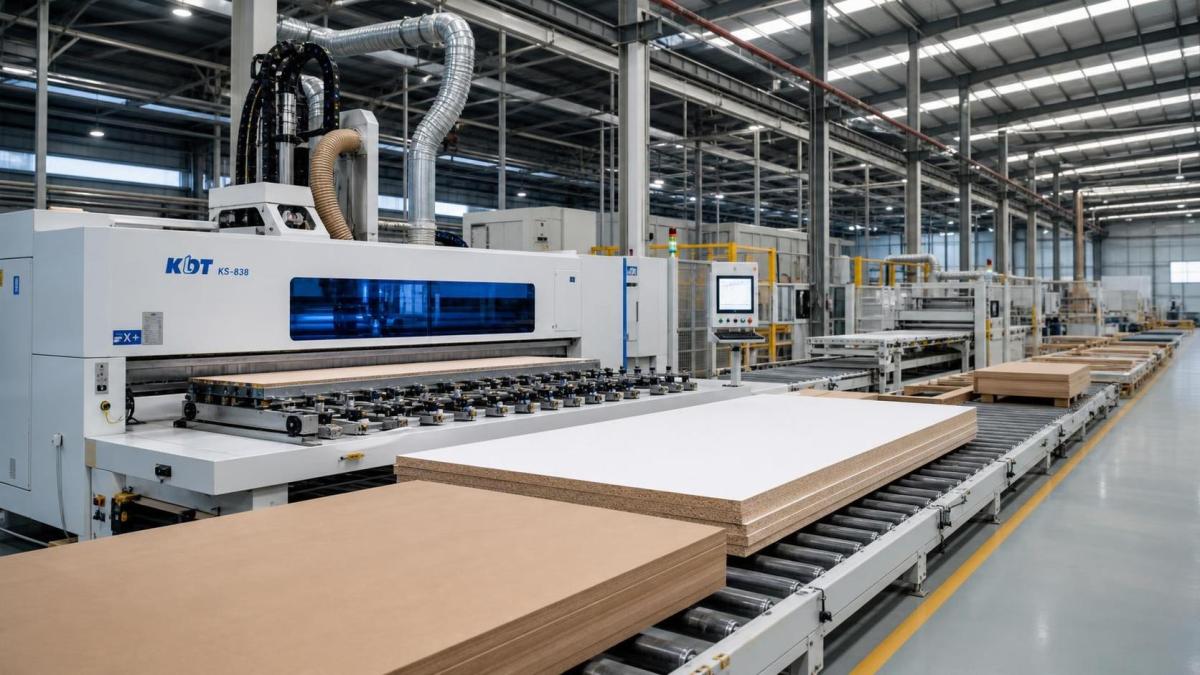
Many purchasing mistakes begin with a simple assumption: a higher specification always means better value.
In practice, industrial woodworking machinery should first match the factory’s actual workload and product mix.
That means reviewing daily output, peak orders, board types, panel sizes, thickness range, and tolerance expectations.
If the machine is too small, capacity suffers.
If it is oversized, energy use, floor space, and capital cost rise without a clear return.
A useful first filter includes these operational questions:
- What materials will be processed, such as MDF, plywood, particle board, solid wood, or laminated panels?
- What is the required output per shift, per day, or per month?
- How much variation exists in product size and thickness?
- Will the machine run as a standalone unit or inside a line?
- How much future growth should the investment support?
Once these answers are clear, technical comparison becomes more accurate and much less risky.
Capacity Parameters That Directly Affect Throughput
For industrial woodworking machinery, capacity is usually the first parameter that affects payback.
Yet capacity should be read carefully.
Suppliers may list maximum feed speed, but actual throughput depends on material handling, tooling, operator skill, and cycle stability.
Feed Speed and Cycle Time
Feed speed matters for edge banders, planers, sanding lines, and CNC systems.
But high speed only helps if accuracy remains stable at that rate.
Ask for tested production speed under normal working conditions, not only no-load speed.
Working Size and Thickness Range
Maximum working length, width, and thickness define what orders the machine can actually accept.
A narrow range may force manual rework or outsourcing later.
This is especially important when industrial woodworking machinery serves mixed furniture or custom cabinet production.
Precision Parameters That Protect Product Quality
Capacity creates output, but precision protects margin.
Poor dimensional control leads to rejected panels, uneven joints, installation problems, and rising labor costs.
Positioning Accuracy and Repeatability
For CNC routers, drilling centers, beam saws, and automated lines, accuracy and repeatability are essential specifications.
One-time accuracy looks good on paper.
Repeatability matters more because industrial woodworking machinery must deliver the same result across long production runs.
Surface Finish Quality
In planing, sanding, and cutting applications, surface quality depends on spindle balance, feed stability, pressure control, and tool condition.
A machine with better finish quality can reduce downstream sanding, patching, and inspection time.
Tolerance Consistency
Ask how the machine performs after continuous operation, not just during a short demo. Thermal stability and structural rigidity both affect tolerance drift.
Power, Structure, and Drive System Basics
Some of the most important industrial woodworking machinery parameters are hidden in the mechanical foundation.
These values determine whether performance stays stable after months of use.
Motor Power and Load Matching
Motor power should match cutting depth, material hardness, duty cycle, and tool size.
Too little power causes overload and unstable machining.
Too much power increases energy consumption without improving process quality.
Machine Frame and Vibration Control
Frame strength affects stability, finish, and service life.
Weld quality, stress relief, guide rail alignment, and vibration control all deserve attention.
Transmission and Motion Components
Servo systems, inverters, linear guides, ball screws, and pneumatic components influence precision and maintenance frequency. Component brand consistency can also affect spare parts planning.
Automation, Control, and Integration Readiness
Today, industrial woodworking machinery is often judged by how well it fits a broader production system.
This is a stronger buying signal than pure mechanical speed in many factories.
Control System and Software Compatibility
Check whether the control system supports your design software, production data, and operator language requirements.
Open compatibility helps reduce manual data transfer and input errors.
Automatic Functions
Depending on the machine type, useful automation may include auto tool change, barcode scanning, auto feeding, automatic positioning, or fault diagnosis.
These functions improve consistency and reduce dependence on highly experienced operators.
Line Integration Capability
If future expansion is likely, ask whether the industrial woodworking machinery can connect with conveyors, robots, labelers, nesting cells, or MES systems.
Operating Cost Parameters Often Missed During Comparison
Purchase price is only one part of the decision.
The better comparison is total operating cost over several years.
This is where industrial woodworking machinery can look similar at first and become very different later.
- Energy consumption under normal production load
- Tooling wear rate and replacement interval
- Compressed air demand, if applicable
- Dust extraction requirements
- Lubrication and preventive maintenance frequency
- Setup time for different orders
- Operator training needs
Machines with faster changeover and lower downtime often create better financial results than machines with a lower initial price.
Safety, Service, and Spare Parts Are Technical Factors Too
In real purchasing decisions, technical value includes supportability.
Even strong industrial woodworking machinery becomes a weak investment if support is slow or spare parts are hard to source.
Safety Standards
Review guarding, emergency stop layout, interlock systems, overload protection, and electrical compliance for your market.
After-Sales Response
Ask what technical support is available after installation, including remote troubleshooting, commissioning, and maintenance guidance.
Spare Parts Availability
Reliable spare parts supply reduces downtime risk. This is especially important for export projects and continuous production environments.
A Practical Checklist Before You Buy
A structured review makes industrial woodworking machinery comparison more objective.
- Define material types, product sizes, and target output clearly.
- Check working range, speed, power, and accuracy against real jobs.
- Evaluate operating cost, not only machine price.
- Review automation and software compatibility for future expansion.
- Confirm safety compliance, service response, and spare parts support.
- Request test data or sample processing under realistic conditions.
Qingdao Zhongding Machinery Co., Ltd. has focused on woodworking machinery for more than 20 years.
From a small workshop to a modern manufacturer, the company has built its reputation through reliable machines, precision engineering, and practical solutions.
Its equipment is widely used in furniture production, woodworking workshops, and industrial processing lines around the world.
Beyond machine supply, long-term value also comes from technical support, spare parts service, and responsive after-sales communication.
That combination is often what turns industrial woodworking machinery from a purchase into a productive long-term asset.
Before making a final decision, compare the critical parameters with your production goals, then choose the solution that delivers stable output, manageable cost, and room to grow.
Send Your Inquiry
We welcome your cooperation and we will develop with you.