


Solution Center
Customized One-Stop Wood Processing Production Solutions for Global Furniture Factories
Common Types of Woodworking Machine Spare Parts and When to Replace Them
Why do woodworking machine spare parts matter more than many teams expect?
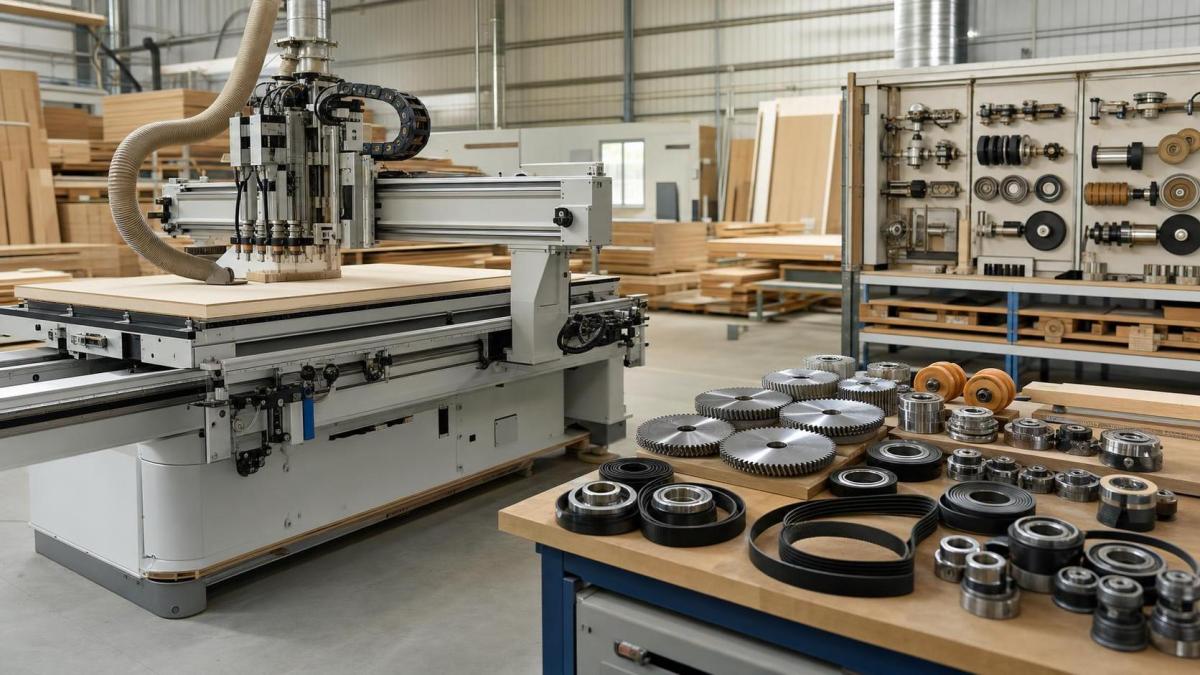
Reliable production rarely depends on one major repair. More often, it depends on small parts changed at the right time.
In woodworking lines, worn components can reduce cutting accuracy, increase vibration, and create unplanned stops that affect output and finish quality.
That is why woodworking machine spare parts deserve routine attention, not only emergency replacement after a breakdown.
A practical maintenance approach starts with understanding which parts wear fastest, what symptoms appear first, and how replacement timing changes by machine type.
For panel saws, edge banders, sanders, CNC routers, and moulders, failure patterns are different, but the maintenance logic is similar.
The goal is simple: keep machines stable, safe, and cost-efficient across long production cycles.
Companies with long manufacturing experience often treat spare parts planning as part of machine performance, not as a separate afterthought.
That mindset is common in established woodworking machinery suppliers such as Qingdao Zhongding Machinery, where long-term support and parts availability are part of overall equipment value.
Which woodworking machine spare parts are replaced most often?
The most common woodworking machine spare parts are usually the ones exposed to friction, heat, dust, pressure, or repeated motion.
Some parts are obvious wear items. Others fail slowly and only become visible when product quality starts drifting.
- Saw blades and cutter heads for cutting, trimming, and shaping operations.
- Belts and chains that transfer motion between motor and driven assemblies.
- Bearings used in spindles, rollers, feed units, and conveyor sections.
- Pressure rollers, feed wheels, and rubber-coated contact parts.
- Sandpaper belts, sanding pads, graphite cloth, and platen-related items.
- Filters, seals, hoses, and pneumatic components in dust or air systems.
- Electrical wear parts such as sensors, switches, contactors, and relays.
In actual use, the replacement frequency depends on wood species, operating hours, feed speed, dust control, and operator habits.
A machine processing abrasive boards will consume woodworking machine spare parts faster than one cutting dry softwood under stable settings.
This is why fixed replacement intervals should be treated as a baseline, then adjusted using real operating data.
How can you tell whether a part needs replacement now or can wait?
The best judgment combines visible wear, machine behavior, and product quality. Replacing too late raises risk. Replacing too early wastes inventory.
A useful way to judge common woodworking machine spare parts is to track both symptoms and likely causes.
More common than complete failure is gradual decline. A blade may still cut, but edge quality worsens. A bearing may still rotate, but temperature keeps rising.
When two or three small symptoms appear together, the safer decision is usually early replacement during planned downtime.
Do all machines wear parts in the same way?
Not really. The same category of woodworking machine spare parts can age differently depending on machine function and load conditions.
For example, a CNC router stresses spindle bearings, tool holders, collets, and vacuum seals through speed and precision demands.
An edge banding machine places more wear on trimming tools, pressure rollers, glue system filters, and heating-related components.
Wide belt sanders consume abrasive materials quickly, but they also depend on contact drums, pads, and tracking parts staying within tolerance.
Panel saws often show wear through blade sharpness, guide accuracy, drive belts, and feed carriage stability.
That is why replacement planning should match the machine process, not just the general parts list.
Suppliers with broad woodworking line experience usually help more effectively here, because they see how part life changes across different applications.
In furniture production, for instance, the same spare part may last far longer on straight cutting than on high-speed contour work.
What replacement mistakes cause the most downtime?
The biggest mistake is waiting for obvious failure. By then, one worn part may already have damaged a second component.
A failed bearing can damage shafts. A loose belt can overload motors. A dull cutter can raise heat and spoil material.
Another common mistake is choosing woodworking machine spare parts only by appearance or rough size.
Small differences in hardness, balance grade, material, or tolerance can change machine behavior more than expected.
- Ignoring dust buildup before fitting new parts.
- Replacing a failed item without checking root cause.
- Mixing unmatched belts, bearings, or rollers in one assembly.
- Skipping alignment, tension, lubrication, or calibration after installation.
- Holding too little stock for high-turnover wear items.
In practice, downtime often comes less from the part itself and more from delayed diagnosis or poor installation control.
A disciplined replacement record helps avoid repeat issues. It should include runtime, symptoms, part code, cause, and post-repair result.
How should you plan spare parts stock without overbuying?
A workable stock strategy separates woodworking machine spare parts into three groups: critical, fast-wearing, and low-risk items.
Critical items stop the line immediately when they fail. Fast-wearing items are predictable and should always be available. Low-risk items can be ordered as needed.
The more important question is not only price. It is lead time plus production impact.
A low-cost sensor may still deserve stock if its absence stops a high-output line for two days.
By contrast, a costly assembly with long service life may not need shelf stock if quick technical support is available.
This is where experienced machinery partners become useful. Strong after-sales support, clear part numbering, and responsive supply reduce unnecessary inventory pressure.
Manufacturers that combine machine production with spare parts service often provide better continuity because design knowledge and replacement guidance stay connected.
What is a sensible next step if you want fewer failures and cleaner maintenance decisions?
Start with a simple wear map for each machine. List the most common woodworking machine spare parts, expected life, warning signs, and current stock level.
Then compare that list with actual stoppage history. Patterns usually appear quickly, especially around blades, bearings, belts, rollers, and sensors.
If replacement timing is unclear, use three checkpoints: surface quality, machine sound, and temperature trend. Together, they reveal wear earlier than failure reports alone.
It also helps to confirm original specifications before reordering. Accurate matching improves stability and avoids repeat labor.
Over time, the best maintenance results usually come from a combination of reliable machinery, traceable spare parts, and steady technical support.
For woodworking operations aiming to reduce repair cost and protect uptime, that combination matters more than any single emergency fix.
A practical review of wear history, replacement standards, and supply response is often the clearest next move.
Send Your Inquiry
We welcome your cooperation and we will develop with you.