


Solution Center
Customized One-Stop Wood Processing Production Solutions for Global Furniture Factories
How to Choose Woodworking Machine Spare Parts for Compatibility and Service Life
How to Choose Woodworking Machine Spare Parts for Compatibility and Service Life
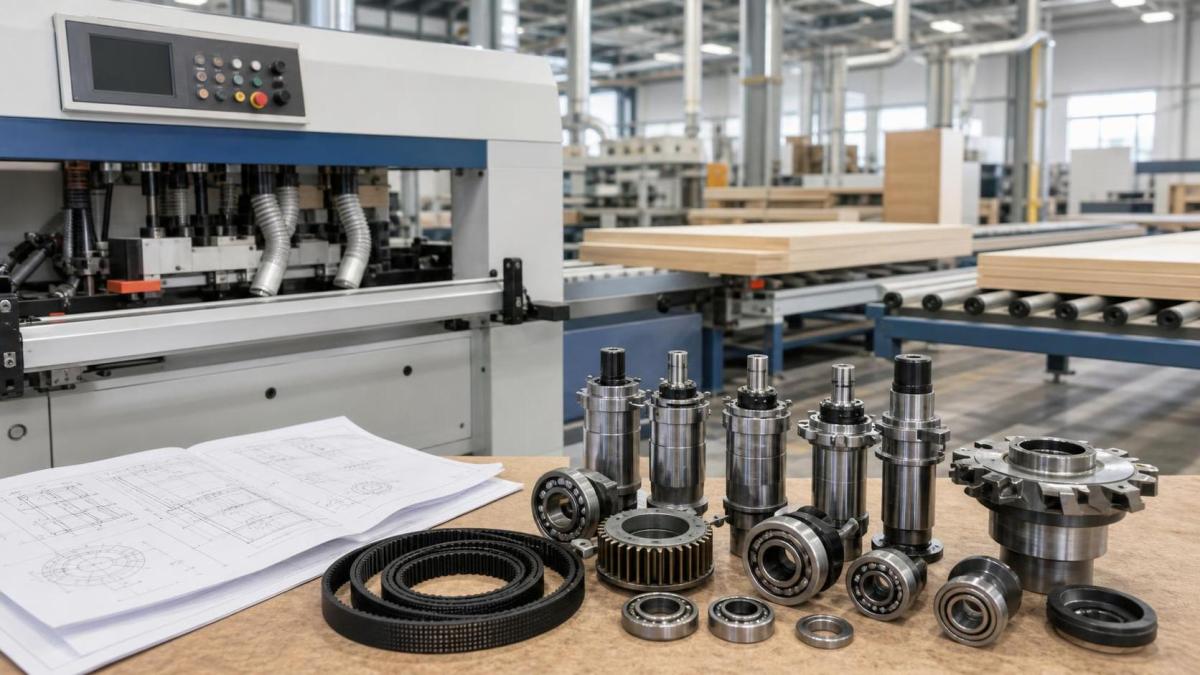
Choosing the right woodworking machine spare parts is essential for keeping equipment compatible, efficient, and durable over time.
A part that fits on paper may still create vibration, waste, heat, or unplanned downtime in real production.
That is why spare parts selection should go beyond dimensions and price.
In practice, the best woodworking machine spare parts support stable output, predictable maintenance, and longer machine life.
This matters even more when machines run across shifts, process different materials, or serve export-quality furniture production.
A strategic selection process helps reduce hidden costs and protects production continuity.
Start with Machine Compatibility, Not Just Part Names
Many buying mistakes happen because buyers rely on generic part names.
Terms like spindle, bearing, belt, cutter head, guide rail, or motor cover a wide range of specifications.
Before comparing suppliers, confirm the full technical match of the woodworking machine spare parts.
Check model number, drawing code, revision version, mounting dimensions, shaft diameter, speed range, and material grade.
Electrical parts also require voltage, frequency, connector type, and control system compatibility.
A small mismatch can shorten service life or create safety issues.
The more reliable approach is to request a part confirmation process with photos, drawings, and machine serial details.
Key compatibility checks
- Original machine brand, model, and production year
- Part number and drawing reference
- Mechanical size tolerance and installation position
- Operating load, speed, and temperature range
- Software, sensor, or PLC signal requirements for electrical items
This early screening step saves time later and reduces return risk.
Evaluate Service Life Through Real Operating Conditions
Service life is not determined by material claims alone.
It depends on how woodworking machine spare parts perform in the actual production environment.
Solid wood, MDF, plywood, laminated boards, and composite materials all create different wear patterns.
Dust levels, humidity, resin buildup, and shift length also affect durability.
For example, bearings used in dusty workshops need stronger sealing performance.
Cutting tools in high-output furniture lines need wear resistance and sharpening consistency.
Drive components in panel processing lines need stable running under repeated load changes.
Questions that reveal likely service life
- What material grade and heat treatment are used?
- What is the recommended operating cycle?
- Has the part been tested in similar woodworking applications?
- What are the common wear points and expected replacement intervals?
- Can the supplier provide maintenance guidance for longer use?
Recent buying trends show a stronger focus on lifecycle cost, not only unit cost.
That shift is practical, because frequent replacements often cost more than a higher-quality part.
Compare Spare Parts by Total Cost of Ownership
Low prices can look attractive during quotation review.
However, the true cost of woodworking machine spare parts includes much more than the invoice amount.
A cheaper part may increase scrap, setup time, machine adjustment, and downtime.
It may also raise labor costs if technicians need frequent intervention.
A better comparison method uses total cost of ownership.
This also means supplier evaluation should include operating value, not just unit price negotiation.
Check Supplier Support Before You Place the Order
Good woodworking machine spare parts are important, but support quality matters just as much.
When a line stops, response speed becomes part of the product value.
A capable supplier should confirm specifications clearly, communicate lead times honestly, and provide replacement advice when needed.
More importantly, the supplier should understand woodworking production conditions rather than selling generic industrial parts.
That industry knowledge often makes the difference between a workable substitute and a costly mismatch.
Qingdao Zhongding Machinery Co., Ltd. has more than 20 years of experience in woodworking machinery manufacturing and export.
That background supports a practical understanding of machine structure, spare parts matching, and long-term operating needs.
The company provides woodworking solutions, spare parts supply, technical support, and responsive after-sales service.
For buyers, this reduces uncertainty when evaluating replacement options across different machine applications.
What to verify with a spare parts supplier
- Technical confirmation process before shipment
- Stock availability or realistic lead times
- Packaging protection and export experience
- Installation guidance and troubleshooting support
- Consistency of future supply for repeat orders
Build a Smarter Spare Parts Selection Process
The strongest results usually come from a simple but disciplined process.
Instead of buying woodworking machine spare parts only when failures happen, build a structured review system.
Start with a critical parts list for each machine.
Then classify items by failure risk, lead time, and impact on production.
This makes emergency purchases less frequent and negotiation more controlled.
A practical decision framework
- Collect original machine and part data
- Confirm compatibility with drawings or photos
- Compare material quality and expected service life
- Review total ownership cost, not only price
- Assess supplier response speed and technical support
- Track performance after installation for future buying decisions
Over time, this creates a more reliable purchasing database and better forecasting accuracy.
It also improves communication between purchasing, maintenance, and production teams.
Final Thought
Choosing woodworking machine spare parts well is really about protecting output, quality, and long-term machine value.
The right decision balances compatibility, service life, lifecycle cost, and supplier capability.
When those four areas are checked carefully, spare parts become a source of stability rather than a recurring risk.
For companies managing woodworking equipment, a consistent evaluation method leads to better buying decisions and fewer production surprises.
That is the practical path to selecting woodworking machine spare parts that truly fit, last longer, and support efficient operation.
Send Your Inquiry
We welcome your cooperation and we will develop with you.