


News & Exhibitions
Latest Factory Updates, Industry Trends & Global Exhibition Information
Wood Glue Presses Explained: Pressure, Cure Time and Bond Quality
What Determines a Reliable Wood Glue Bond?
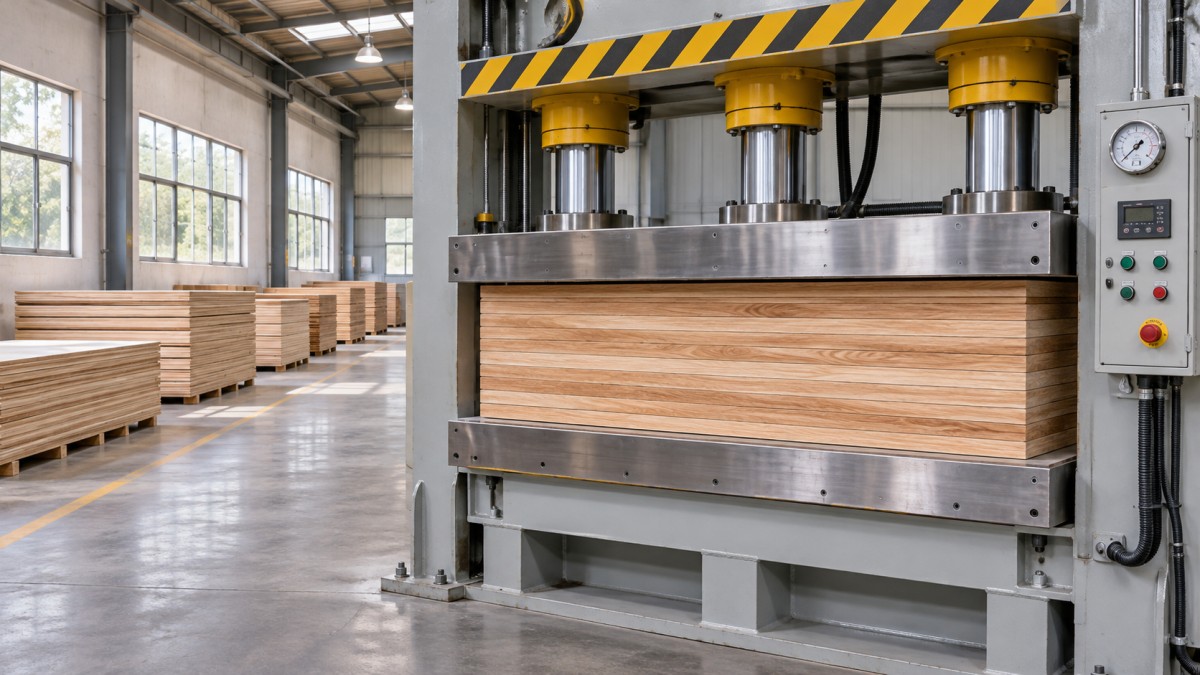
A reliable bond depends on the adhesive reaching the required surfaces, maintaining adequate contact during setting, and developing sufficient strength before the assembly is handled.
Pressure, temperature, time, material condition, and adhesive application must work together. A strong press cannot compensate for an expired adhesive or a contaminated substrate.
For quality teams, the practical question is whether the complete process produces repeatable results across the panel, throughout a shift, and between material batches.
For safety managers, the same process must also control crushing hazards, hot surfaces, unexpected movement, and exposure to adhesive chemicals during normal work and maintenance.
Start with the adhesive supplier’s instructions, the machine manufacturer’s operating limits, and the applicable workplace requirements. Then validate settings against your actual materials and production conditions.
How Much Pressure Does a Wood Glue Press Need?
There is no universal pressure setting for every wood assembly. The required pressure depends on the adhesive, wood species, surface preparation, joint design, and pressing method.
Too little pressure can leave gaps or prevent intimate contact. Excessive pressure can damage veneer, distort components, or squeeze too much adhesive from the joint.
Use the adhesive manufacturer’s recommended pressure range as the starting point. Confirm that the range applies to the materials, temperature, and joint configuration being processed.
Distinguish hydraulic system pressure from pressure on the bonded surface. A gauge reading describes the hydraulic circuit; it does not automatically equal the pressure at the glue line.
In a simplified calculation, average applied pressure equals total pressing force divided by the loaded area. Use consistent units and account for the actual contact area.
For example, a total force of 100 kilonewtons over one square meter gives an average of approximately 0.1 megapascals, before allowing for real-world variations.
This calculation is only an estimate. Platen stiffness, panel thickness variation, load placement, and machine condition can cause local pressure to differ from the average.
Ask the machine supplier how pressing force is calculated and how gauge readings relate to force. Follow the manufacturer’s limits when setting and checking pressure.
Why Pressure Distribution Matters More Than a Gauge Reading
A press may reach its target gauge reading while some areas receive insufficient contact. Uneven pressure often appears as edge lifting, localized blisters, or inconsistent bond strength.
Check platen condition and alignment, and inspect caul plates or other load-distribution materials for damage. Confirm that the panel stack sits correctly within the working area.
Variations in substrate thickness can create high and low contact points. Measure incoming panels and define acceptable tolerances for the intended adhesive and pressing process.
When loading multiple pieces, use the arrangement and balancing method approved by the machine manufacturer. Avoid improvised stacks that may overload part of the press.
For critical applications, use a suitable pressure-mapping method or trial panels to investigate suspected uneven contact. Interpret results alongside destructive bond tests and visual inspection.
Record where defects occur on each panel. A recurring pattern near one corner or edge can help distinguish a machine or loading issue from random contamination.
How Long Should Wood Stay in the Press?
Press time is the minimum period needed to maintain the specified conditions while the adhesive develops enough strength for removal. It is not necessarily full cure time.
Full cure can continue after the panel leaves the press. Premature machining, stacking, transport, or load testing may damage a joint that has not developed sufficient strength.
Follow the adhesive supplier’s instructions for press time, conditioning, and subsequent handling. Verify whether the stated time starts at closure, target pressure, or another defined point.
Actual requirements vary with adhesive chemistry, temperature, spread rate, substrate moisture, and assembly thickness. Hot pressing may accelerate some systems, but excessive heat can create defects.
For heated processes, platen temperature is not always the same as glue-line temperature. Thick assemblies or uneven loading can delay heat reaching the bond line.
During process validation, measure representative locations where practical and compare them with adhesive requirements. Use an approved test method that does not compromise production equipment or safety.
Do not shorten a cycle solely because a panel looks sound when removed. Confirm that downstream handling strength and final bond performance remain acceptable under documented tests.
Which Material and Adhesive Checks Prevent Bond Failures?
Before production, confirm adhesive identity, batch, storage conditions, usable life, and mixing requirements. For multi-component systems, document mix proportions and the permitted working time.
Inspect surfaces for dust, oil, release agents, and other contamination. Verify that machining produces the flatness and surface condition required for the selected adhesive system.
Measure wood moisture content using an appropriate method and sampling plan. Compare results with the adhesive supplier’s limits and the expected service environment of the finished product.
Control adhesive spread rate with a measurable method, such as weighing a known area. Too little coverage can leave dry spots; excessive application can create other defects.
Monitor open time and assembly time, especially during warm conditions or shift changes. Adhesive that has skinned over may not wet the mating surface adequately.
For veneer work, inspect the substrate and veneer for damage, variation, and contamination before pressing. Thin decorative surfaces can make pressure or temperature problems especially visible.
Which Type of Press Fits the Bonding Process?
Cold presses use pressure without heated platens, making them suitable for adhesive systems designed to cure under ambient conditions. Cycle duration still depends on the application.
Hot presses combine heat and pressure and are commonly used for panel lamination when the adhesive and materials are compatible with the selected temperature and cycle.
When comparing equipment, assess usable platen area, loading capacity, pressure control, heating arrangement, and access for inspection. Confirm actual specifications directly with the equipment supplier.
For example, the Wood Veneer Hot Press Machine is intended for laminating natural veneer onto plywood, MDF, particle board, and other wood-based panels.
Its described features include heated pressing, hydraulic pressure, a steel frame, and a multi-layer pressing structure. It is relevant to furniture, door, cabinet, and interior woodworking production.
Before selecting a configuration, confirm platen dimensions, loading arrangements, controls, safety provisions, and suitability for your adhesive. No specific capacity or certification should be assumed.
How Can Quality Teams Verify Bond Performance?
A practical inspection plan combines incoming checks, in-process records, visual examination, and bond testing. The sampling frequency should reflect product risk and process stability.
Inspect pressed panels for blisters, lifted edges, surface damage, and visible gaps. Mark the location and size of defects so patterns can be compared over time.
Use representative test pieces and a test method appropriate to the product and service conditions. Depending on the application, this may include shear, peel, or delamination testing.
Agree acceptance criteria before testing, including any applicable customer requirements or standards. A visual pass alone does not establish the strength or durability of a bond.
Where relevant, examine the failure mode as well as the measured result. The location of failure can provide useful evidence, but interpretation depends on the test method.
Test after the specified conditioning period and at the required cure stage. Comparing samples tested at different ages without accounting for cure can produce misleading conclusions.
Document adhesive batch, panel material, operator, settings, press cycle, and test results. These records support traceability when investigating complaints or changes in performance.
What Should Operators Do When Defects Appear?
Contain affected material first. Identify the production window and potentially affected batches, then prevent release until the quality team has assessed the risk and disposition.
For edge lifting or dry areas, investigate coverage, assembly time, pressure distribution, and panel flatness. Check several possible causes before changing the cycle.
For blisters, review moisture, temperature, heating uniformity, adhesive application, and material condition. The visible defect alone does not prove which variable caused it.
For weak bonds, verify adhesive preparation and shelf life, surface cleanliness, cure conditions, and the test procedure. Compare records against a known acceptable production run.
Change one controllable variable at a time where practical, run documented trials, and retest. Approve revised settings through the site’s change-control process before routine production.
What Safety Controls Should a Press Have?
Presses present serious crushing and pinch-point hazards during loading, closing, unloading, cleaning, and fault recovery. Heated equipment adds burn risks and potentially hazardous adhesive emissions.
Complete a machine-specific risk assessment covering normal operation, foreseeable misuse, maintenance, and clearing jams. Select safeguards according to applicable local requirements and the machine’s design.
Check that guards, interlocks, emergency stops, and any other protective devices specified for the installation are present, functional, and included in documented inspection routines.
Emergency stops are supplementary protective measures; they do not replace guarding or safe working procedures. Never bypass an interlock to maintain production.
Before maintenance or entry into a hazardous area, isolate energy sources and apply the site’s lockout procedure. Control stored hydraulic, electrical, thermal, and gravitational energy.
Follow the manufacturer’s instructions for supporting moving parts and relieving stored pressure. Only authorized, trained personnel should perform maintenance and return equipment to service.
Review adhesive safety data sheets for ventilation, protective equipment, handling, and spill response. Confirm that controls address actual substances and temperatures used on site.
Train operators to recognize abnormal movement, leaks, damaged guards, and unsafe loading. Define who can stop the process and how faults must be reported.
What Should Be Recorded for Each Production Run?
A concise production record makes quality trends easier to investigate and helps demonstrate that the approved process was followed. Capture information at the time of use.
- Product, substrate, veneer or wood batch, and relevant moisture measurements.
- Adhesive identity, batch, mix details where applicable, and preparation time.
- Approved and actual pressure settings, temperature settings, and press duration.
- Loading arrangement, operator, shift, inspection results, and any equipment alarms.
- Test method, sample identification, conditioning period, acceptance decision, and corrective action.
Review records for recurring changes rather than filing them without analysis. Increasing cycle variation or repeated defects in one position can justify targeted maintenance or retraining.
Conclusion: Judge the Process, Not Just the Press
A dependable glue bond comes from a validated combination of material preparation, adhesive control, appropriate pressure, sufficient cure, and consistent inspection. No single gauge reading guarantees quality.
Whether assessing a new presse collage bois or improving an existing line, involve quality, production, maintenance, and safety personnel in setting limits and reviewing results.
Use supplier guidance as the starting point, verify performance with representative tests, and maintain effective safeguards. That approach makes bond quality and worker protection measurable production outcomes.
Send Your Inquiry
We welcome your cooperation and we will develop with you.