


News & Exhibitions
Latest Factory Updates, Industry Trends & Global Exhibition Information
Southeast Asian Furniture Makers Accelerate Automation: Panel Furniture Equipment Imports Surge 37%
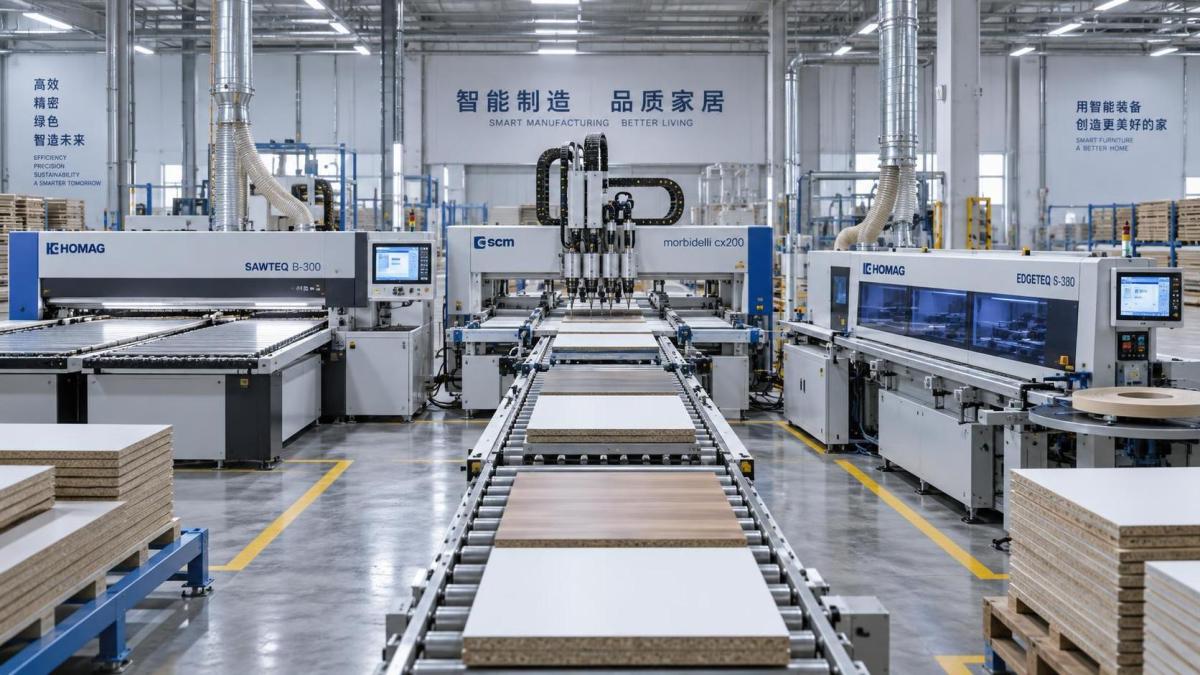
According to a September 11, 2026, report from the ASEAN Industrial Development Board (AIDB), Vietnam, Thailand, and Indonesia added over 210 new intelligent panel furniture production lines in the first half of 2026. This rapid shift toward automation has driven a 37% year-on-year increase in imports of key Chinese-made equipment, including edge banding machines, multi-spindle drills, and CNC panel saws. The development signals a significant change in procurement requirements, where localized after-sales service and dual CE/UL certification have become decisive factors for suppliers. This trend primarily impacts machinery exporters, production line integrators, and furniture manufacturers operating in or trading with Southeast Asia.
Automation Drive Underpinned by New Production Lines
As reported by the AIDB on September 11, 2026, the three major Southeast Asian manufacturing hubs—Vietnam, Thailand, and Indonesia—collectively commissioned more than 210 new intelligent panel furniture production lines during the first half of 2026. This expansion directly correlates with a 37% surge in imports of specialized equipment from China, specifically edge banding machines, multi-spindle drilling machines, and CNC panel saws. The report confirms a concrete, ongoing industrial shift towards higher automation levels in the region's furniture sector.
Supply Chain and Compliance Shifts for Equipment Suppliers and Buyers
The surge in demand impacts multiple layers of the supply chain. Chinese equipment manufacturers are experiencing heightened demand but face new, stricter market access conditions. Buyers across Southeast Asia are now prioritizing suppliers who can provide robust, on-the-ground technical support and maintenance services, moving beyond simple price and specification comparisons. The requirement for dual CE (European conformity) and UL (Underwriters Laboratories) certification has emerged as a mandatory entry threshold for procurement contracts. This adds a layer of compliance and testing that affects not only the factory acceptance process but also the speed of delivery and final installation.
Certification and After-Sales Service as New Competitive Barriers
For equipment exporters, the news highlights that certification is no longer a differentiator but a baseline requirement. Companies must ensure their machinery holds valid CE and UL marks, which may require design adjustments or revised technical documentation. Furthermore, the explicit demand for localized service means that having a distributor or service partner in the target country is becoming a prerequisite for winning contracts, adding logistical and operational costs.
Impact on Production Planning and Purchasing Cycles
For furniture manufacturers in Vietnam, Thailand, and Indonesia, the trend accelerates their own planning cycles. With over 210 lines already in place, competition to secure the best equipment and after-sales support is intensifying. Procurement teams must now factor in longer lead times to verify certification documents and draft service-level agreements. The shift also suggests a growing need for local technicians trained on advanced Chinese machinery, creating a parallel demand for technical training and knowledge transfer.
Key Actions for Market Participants
Given the confirmed trends, both suppliers and buyers should take proactive steps to align with the new market realities.
Verify and Accelerate Certification Processes
Chinese exporters should immediately audit their current product portfolio for CE and UL compliance. Engaging early with notified bodies for any necessary testing or redesign is critical to avoid losing bids. This is a concrete action, not a future consideration.
Strengthen Local Service Partnerships
Establishing or expanding partnerships with local service providers in Vietnam, Thailand, and Indonesia is essential. This could involve training local teams, setting up spare parts warehouses, or formalizing joint ventures. The AIDB report confirms that this is now a key buying criterion.
Review Contractual Terms for Certification and Service
Purchasers should standardize their tenders and purchase orders to include explicit clauses for CE/UL certification and a defined local service response plan. Legal and procurement teams must verify the validity and scope of the certifications provided by suppliers.
An Established Trend with Clear Execution Signals
From an industry perspective, this information reflects a policy and market rule that is already in effect. The AIDB data is not a projection but a record of lines installed and equipment imported. The 37% growth figure confirms market momentum, while the emphasis on certification and service indicates a permanent shift in procurement standards. This is best understood as a confirmed change, not a speculative trend. The primary uncertainty lies not in whether these requirements will persist but in how quickly other ASEAN countries, such as Malaysia or the Philippines, will adopt similar standards, which could further reshape regional trade flows.
Strategic Implications for Industry Players
The AIDB report serves as a critical data point for strategic planning. For equipment suppliers, the market opportunity is substantial but conditional, with clear technical and service prerequisites. For Southeast Asian furniture manufacturers, the move toward intelligent production lines signals a competitive upgrade that will likely pressure smaller players to invest or partner. The most rational conclusion is that the era of selling machinery merely on price and specification in this region is over, replaced by a more complex market where compliance and local commitment are the true currencies.
Source and Further Verification
This article is based on the provided information: the headline "Southeast Asian Furniture Manufacturing Accelerates Automation: Panel Furniture Production Equipment Import Demand Surges 37%," the event date of September 11, 2026, and the event summary from the ASEAN Industrial Development Board (AIDB). The specific data points and trends (over 210 new lines, 37% import increase, CE/UL certification requirement) are drawn directly from that input. The specific official link to the AIDB report was not provided in the input. Market participants are advised to seek the full AIDB report for granular details and to monitor subsequent procurement announcements from major furniture manufacturers in the region to validate the pace of adoption. Continuous monitoring of certification body announcements for CE and UL guidelines related to this machinery category is also recommended.
Send Your Inquiry
We welcome your cooperation and we will develop with you.