


News & Exhibitions
Latest Factory Updates, Industry Trends & Global Exhibition Information
How often should edge banding machine glue pots be replaced? — Maintenance Schedule Guidance for 2026
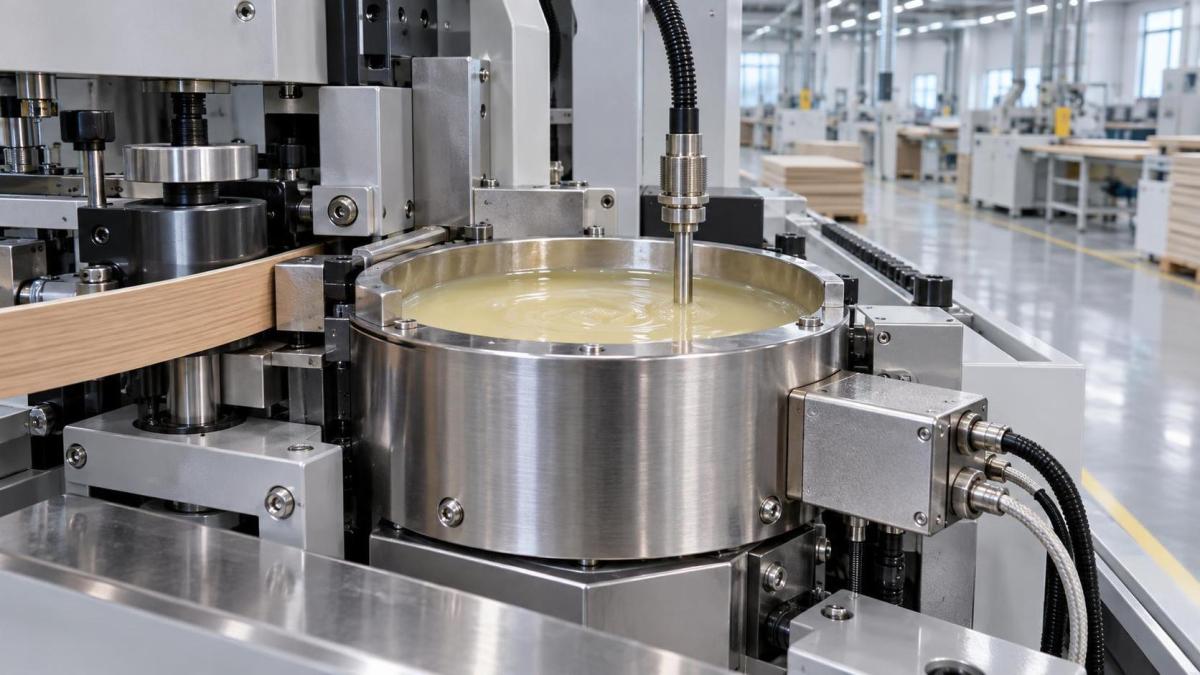
How often should edge banding machine glue pots be replaced? For woodworking operations running edge banding systems at medium to high volume—especially in furniture factories or batch production workshops—this isn’t a theoretical maintenance question. It’s a daily operational checkpoint with measurable consequences: inconsistent glue melt temperature leads to poor adhesive flow; carbonized residue causes nozzle clogging and uneven application; degraded heating elements result in longer warm-up cycles and higher energy consumption. Left unaddressed, these issues compound—increasing reject rates, slowing line throughput, and raising long-term repair costs.
The short answer: under normal operating conditions—defined as 6–8 hours per shift, using standard EVA or PUR adhesives, with ambient workshop temperatures between 15–28°C and routine daily cleaning—glue pots on industrial edge banding machines should be replaced every 12 to 18 months. This range reflects real-world service life observed across hundreds of installations handled by Qingdao Zhongding Machinery since 2003—not manufacturer-rated maximums, but field-validated intervals where performance degradation begins to cross into operational risk. If your machine runs two shifts daily, uses high-solids PUR adhesive, or operates in environments above 30°C or below 10°C, replacement may be needed as early as 9–12 months. Conversely, light-duty use (under 2 hours/day) with EVA and strict cleaning discipline can extend service to 22 months—but only if visual and thermal verification confirms integrity.
Why glue pot lifespan varies—and what actually wears out
Glue pots aren’t consumables in the same way as nozzles or scraper blades. Their failure is rarely sudden; it’s progressive and multi-factorial. The core components subject to wear are the internal heating elements, the stainless-steel pot body’s thermal conductivity layer, and the temperature sensor calibration. Over time, repeated thermal cycling causes micro-fractures in heating coil insulation. Adhesive carbonization forms insulating deposits on the inner wall, reducing heat transfer efficiency by up to 18% after 14 months in high-use scenarios. Even with regular manual scraping, residual film builds up in corners and near sensor mounting points—leading to false low-temperature readings and compensatory overheating.
Crucially, glue type matters more than many operators assume. Standard EVA melts cleanly at 160–180°C and leaves minimal residue. PUR adhesives, however, require 190–210°C for full fluidity and contain reactive isocyanates that polymerize when exposed to moisture or oxygen during cooling cycles. Each cool-down phase leaves a thin, thermally stable skin inside the pot—accelerating carbon buildup and increasing thermal stress on the heating element. Machines running PUR exclusively show measurable output drop (measured via glue flow rate consistency over 30-minute intervals) after ~11 months, even with weekly chemical descaling.
Four field-verifiable signs your glue pot needs replacement—before failure occurs
Don’t wait for complete malfunction. These observable indicators signal declining performance and help time replacement proactively:
- Inconsistent melt temperature across the pot surface: Use an infrared thermometer to scan the exterior at three points—center, front edge, rear edge—after 30 minutes of steady operation. A variance exceeding ±5°C indicates uneven heating, often due to localized element degradation or thermal barrier formation from residue.
- Increased warm-up time: If the system now takes more than 25 minutes to reach target temperature (vs. the original 15–18 minutes documented during commissioning), internal thermal resistance has increased significantly.
- Visible carbonization below the glue level line: During scheduled cleaning, inspect the pot wall 2–3 cm below the normal adhesive fill height. Dark, hard, non-removable deposits thicker than 0.3 mm indicate advanced thermal breakdown.
- Repeated nozzle clogs despite clean filters and proper glue viscosity: When clogging persists after verifying glue quality, filter condition, and pump pressure, residue shedding from the pot interior is often the culprit—especially if clogs contain blackened, brittle particles rather than soft adhesive clumps.
Maintenance habits that extend—or shorten—glue pot life
Replacement timing isn’t just about calendar months. Daily practices directly influence service life:
First, shutdown procedure matters. Always purge the pot completely before cooling. Leaving adhesive inside overnight invites carbonization—particularly with PUR. Second, cleaning frequency must match usage intensity: daily dry scraping for EVA users; chemical descaling every 72 operating hours for PUR users. Third, avoid thermal shock. Never introduce cold glue into a hot pot or pour water into a warm one—both cause rapid expansion/contraction stress on weld seams and heating elements. Fourth, monitor ambient conditions. Workshop humidity above 65% RH accelerates oxidation of stainless surfaces; sustained temperatures above 32°C reduce component thermal margin.
What happens if you delay replacement too long?
Extending beyond 24 months—even with seemingly stable operation—introduces hidden risks. Thermal inefficiency forces the control system to run heating elements at higher duty cycles, accelerating insulation fatigue. Carbon buildup narrows the effective cross-section of the pot, increasing backpressure on the metering pump and causing premature pump seal wear. More critically, degraded temperature sensing leads to overcompensation: the system heats beyond nominal setpoints to achieve target melt temperature, degrading adhesive chemistry and increasing VOC emissions. In one documented case across five identical machines in a single facility, the unit with the oldest pot (27 months) showed a 23% increase in glue consumption per linear meter of edge banded material—due entirely to inconsistent melt and poor flow control.
When replacement becomes urgent—not just scheduled
Immediate replacement is required if any of the following occur: visible cracks or warping in the pot body; persistent error codes related to temperature sensor drift (e.g., “THERM FAIL” or “HEAT DEV” on Zhongding control panels); leakage at weld seams or sensor ports; or measurable voltage drop (>15%) across the heating circuit during operation. These are not gradual degradation symptoms—they indicate structural or electrical compromise that poses safety and reliability risks.
Choosing the right replacement pot
Not all glue pots are interchangeable—even within the same machine model. Verify compatibility with your machine’s control firmware version and heating power rating. Qingdao Zhongding supplies OEM-spec pots calibrated to match original thermal response curves and sensor offsets. Using non-OEM units may trigger false alarms or unstable temperature regulation, negating the benefit of replacement. For machines older than 10 years, confirm pot dimensions and mounting interface with technical support—minor design revisions have occurred across model generations to improve thermal uniformity.
Glue pot replacement is not a standalone task. It should coincide with inspection of related components: check pump seals for swelling or cracking, verify thermocouple wiring integrity, and recalibrate the glue flow sensor if your system includes closed-loop flow control. Skipping these steps risks transferring unresolved issues onto new hardware—and missing opportunities to reset baseline performance metrics.
Ultimately, the optimal replacement interval balances cost, downtime, and process stability. Tracking glue flow consistency, temperature variance, and warm-up duration over time provides objective data to refine your schedule—not just for this pot, but for future predictive maintenance planning across your edge banding fleet.
Send Your Inquiry
We welcome your cooperation and we will develop with you.