
News & Exhibitions
Latest Factory Updates, Industry Trends & Global Exhibition Information
Woodworking Workshop Equipment Checklist for Setting Up a Safe and Efficient Shop
Woodworking Workshop Equipment Checklist for Setting Up a Safe and Efficient Shop
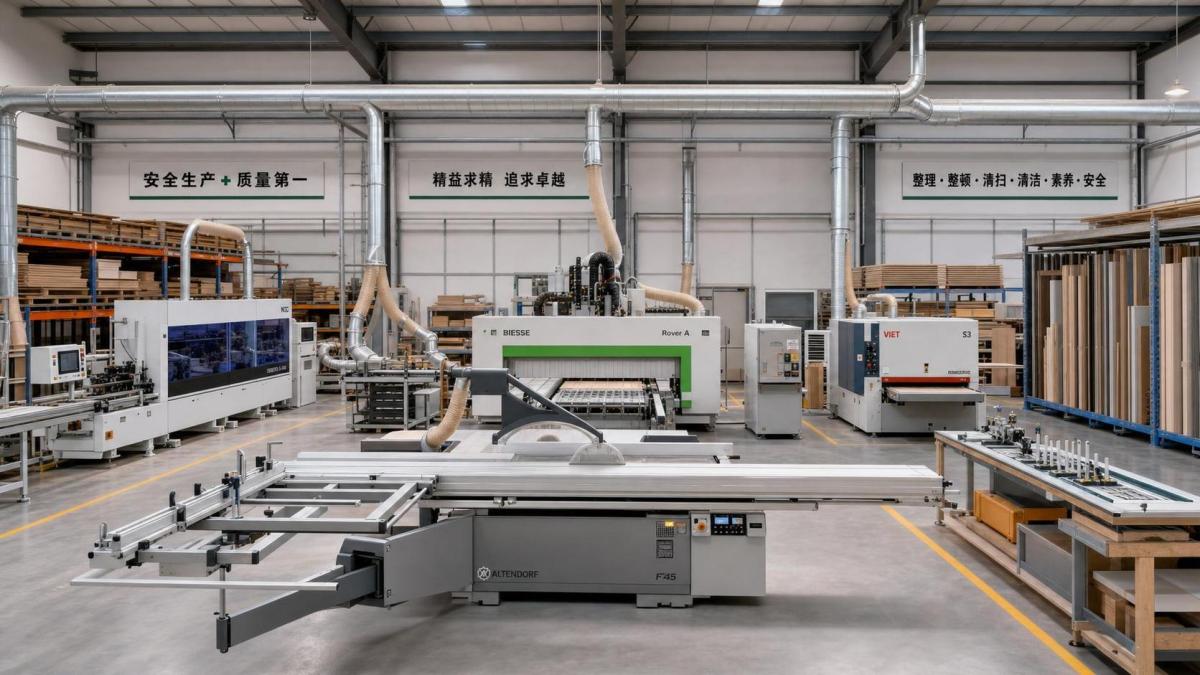
Setting up a productive shop starts with the right woodworking workshop equipment and a clear focus on safety, quality, and workflow efficiency.
A practical checklist helps reduce avoidable risks, limit downtime, and support stable output across daily operations.
In real production environments, the best woodworking workshop equipment is not only powerful. It also fits the process, the people, and the control plan.
This matters even more when product quality, operator protection, and machine reliability must work together every shift.
A strong equipment plan should cover core machines, dust control, material handling, inspection tools, and supporting safety devices.
It should also match the type of production, whether the shop builds solid wood furniture, panels, cabinets, doors, or custom components.
Qingdao Zhongding Machinery Co., Ltd. has more than 20 years of experience in woodworking machinery manufacturing and export.
That background shows one clear pattern. Workshops perform better when equipment selection follows process logic instead of simple price comparison.
The checklist below is designed to make that decision process easier and more actionable.
Start with Workflow Before Buying Woodworking Workshop Equipment
Before ordering machines, map the full production route from raw material intake to final packing.
This step reveals where woodworking workshop equipment should be placed and how materials should move through the shop.
Poor layout often creates hidden costs. These include extra handling, part damage, bottlenecks, dust spread, and unsafe crossing paths.
A simple planning review should answer five questions:
- What product types will the shop run most often?
- Which processes must stay continuous?
- Where are the main safety exposure points?
- Which quality checks must happen in-line?
- How much floor space is available for service access?
From a risk perspective, layout mistakes are usually easier to prevent than to fix later.
That is why woodworking workshop equipment planning should begin with process flow, not machine catalogs.
Core Machine Checklist for Daily Production
The exact machine list depends on the product mix, but some categories appear in most woodworking workshop equipment plans.
Cutting and Sizing Equipment
- Panel saw or sliding table saw for accurate cutting
- Band saw for curves or thicker stock
- Crosscut saw for repetitive length control
These machines set the baseline for dimensional accuracy. If cutting is unstable, later stations inherit the same problem.
Surfacing and Thickness Control
- Planer for thickness consistency
- Jointer for flat reference surfaces
- Wide belt sander for surface finish preparation
This woodworking workshop equipment directly affects fit-up, glue performance, and finishing quality.
Machining and Assembly Support
- CNC router for precision shaping and drilling
- Edge banding machine for panel processing
- Drilling machine or boring unit for repeatable hole patterns
- Clamping tables and assembly benches
For many shops, this is where productivity gains become more visible. Automation reduces handling errors and improves repeatability.
Safety Equipment That Should Never Be Treated as Optional
Safe woodworking workshop equipment is more than machine guarding. It includes the full operating environment around each station.
A practical safety checklist should include the following items:
- Emergency stop devices with clear access
- Blade guards, anti-kickback devices, and interlocks
- Lockout and tagout points for maintenance control
- Fire extinguishers matched to electrical and dust hazards
- Non-slip floors in cutting and finishing areas
- Task lighting for setup, inspection, and blade changes
- Hearing protection, eye protection, and respiratory protection
More shops now review machine access zones as part of equipment acceptance. That shift is worth following.
It helps confirm that woodworking workshop equipment can be operated, cleaned, and serviced without forcing unsafe movement.
In practice, the safest machine is the one people can use correctly under normal production pressure.
Dust Collection and Air Quality Control
Dust control is a critical part of woodworking workshop equipment planning, not an afterthought.
Wood dust affects operator health, machine life, fire risk, surface quality, and cleaning time.
A complete system usually includes central dust collectors, ducting, blast gates, collection bins, and air filtration units.
The goal is simple. Capture dust at the source before it spreads across work areas or settles into sensitive machine parts.
When evaluating woodworking workshop equipment, confirm that extraction ports match the machine output and expected chip volume.
This is especially important for saws, sanders, routers, and edge banding lines.
A weak extraction setup often causes secondary quality issues, including scratches, bonding defects, and contamination before finishing.
Quality Control Tools That Support Stable Output
Good woodworking workshop equipment needs matching inspection tools. Otherwise, process drift may go unnoticed until scrap rises.
A practical quality control toolkit should cover dimensions, moisture, alignment, and surface consistency.
These tools cost little compared with the losses caused by rejected panels, misaligned drilling, or unstable raw material conditions.
The better approach is to connect woodworking workshop equipment with defined checkpoints at high-risk steps.
Material Handling and Storage Equipment
Even advanced woodworking workshop equipment cannot perform well if materials are damaged before processing begins.
Handling and storage systems should protect both raw boards and finished components.
- Racks for sheet stock and long lumber
- Roller tables and transfer carts
- Vacuum lifters or assisted loading devices
- Labeling stations for work-in-process control
- Protected zones for finished parts
This area is often underestimated. Yet many scratches, mix-ups, and ergonomic incidents begin here.
A cleaner material path also makes woodworking workshop equipment utilization easier to monitor and improve.
Maintenance Readiness and Spare Parts Planning
Reliable woodworking workshop equipment depends on maintenance access, planned servicing, and spare parts availability.
This is where long-term equipment value becomes more obvious than the initial purchase price.
A sound readiness checklist should include:
- Daily cleaning points and lubrication schedules
- Blade, belt, bearing, and cutter replacement plans
- Electrical inspection intervals
- Critical spare parts stock
- Clear technical documentation and service contacts
Qingdao Zhongding Machinery Co., Ltd. supports customers with technical assistance, spare parts supply, and responsive after-sales service.
That kind of support becomes important when woodworking workshop equipment must stay productive across long operating cycles.
How to Prioritize Equipment Investment
Not every shop needs to buy every machine at once. A phased plan usually delivers better control.
Start with woodworking workshop equipment that removes the biggest safety risks or quality bottlenecks first.
Then expand toward automation, faster throughput, and tighter process integration.
A practical order often looks like this:
- Core cutting and sizing machines
- Dust collection and safety devices
- Surfacing and sanding equipment
- Inspection and measurement tools
- CNC, edge banding, and advanced automation
This kind of sequence keeps woodworking workshop equipment aligned with real production needs, not assumptions.
Build a Shop That Stays Safe and Productive
The right woodworking workshop equipment creates more than output. It creates control, consistency, and a safer working environment.
When machine selection follows workflow, safety needs, inspection points, and maintenance planning, the whole shop works better.
For workshops aiming to improve reliability and reduce operating cost, a clear checklist is the best place to begin.
Review your current woodworking workshop equipment line by line, identify the weak points, and upgrade the areas that affect safety and quality first.
That approach leads to a workshop that is easier to manage, easier to scale, and better prepared for long-term production demands.
Send Your Inquiry
We welcome your cooperation and we will develop with you.