
News & Exhibitions
Latest Factory Updates, Industry Trends & Global Exhibition Information
Industrial Woodworking Machinery Selection: Key Capacity and Precision Factors
Choosing industrial woodworking machinery is rarely a matter of footprint or purchase price alone. In real production, machine capacity, machining precision, structural stability, and service continuity shape output quality, labor efficiency, and cost per finished part.
That is why equipment selection has become a strategic decision across furniture plants, joinery workshops, and automated manufacturing lines. A machine that looks competitive on paper can still underperform if its feed system, spindle accuracy, or long-run stability do not match the process.
The practical goal is simple: align machine capability with the material, batch profile, tolerance target, and expected production rhythm. When that alignment is clear, industrial woodworking machinery delivers both precision and predictable operating value.
Why Selection Standards Matter More Than Ever
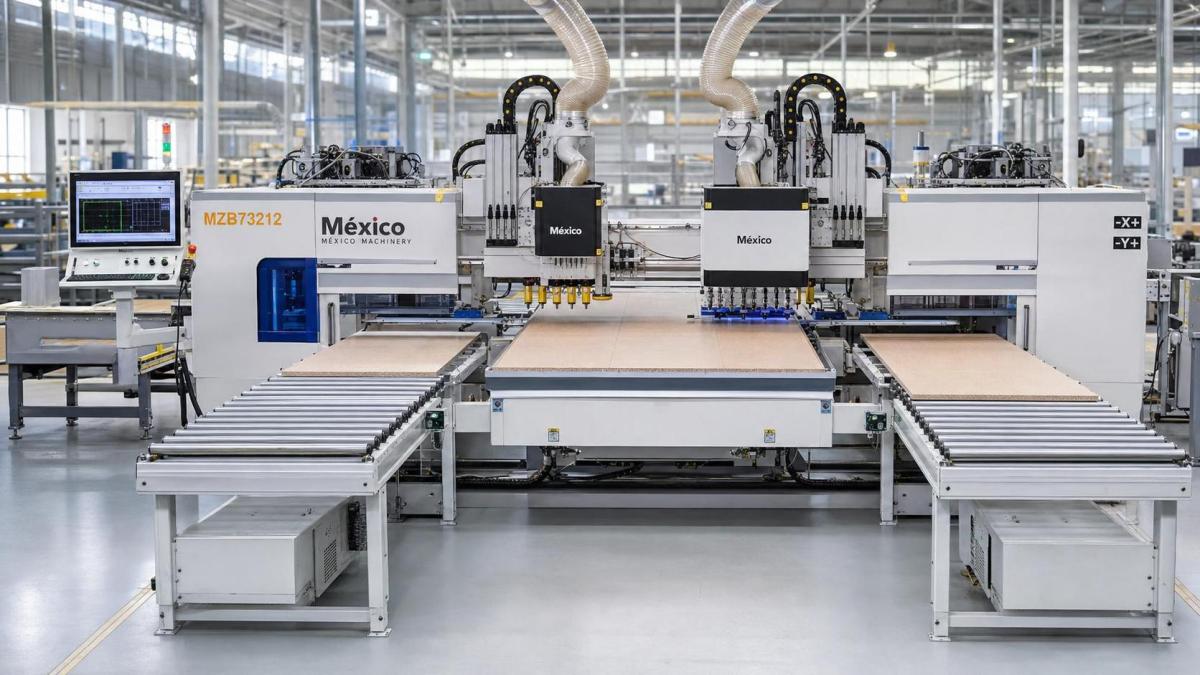
Wood processing has changed in two important ways. Product variation has increased, while tolerance expectations have tightened. Cabinets, panels, doors, and custom furniture often move through mixed production rather than one simple, repetitive cycle.
This puts pressure on industrial woodworking machinery to do more than cut wood. It must hold dimensions, reduce setup loss, support fast changeover, and stay stable over long shifts.
Another shift comes from cost control. Energy use, tool wear, downtime, rejected parts, and maintenance intervals now influence total equipment value as much as the initial quotation.
In that context, the right machine is not necessarily the biggest or fastest. It is the one that sustains the required output with acceptable tolerance, low disruption, and manageable support needs.
Capacity Is More Than Throughput
Capacity is often reduced to hourly output, but that is only one layer. In industrial woodworking machinery, usable capacity depends on material range, duty cycle, setup frequency, and how consistently the machine performs under load.
A line that runs solid wood parts has different demands from one processing melamine-faced panels. Thickness variation, board size, moisture condition, and edge quality all affect real production capacity.
Key Capacity Questions
- What is the maximum and recommended workpiece size?
- Can the machine maintain output at normal shift length?
- How much time is lost during tool change or adjustment?
- Does the feeding system handle mixed batches smoothly?
- Is the rated speed usable at required finish quality?
These questions help separate nominal performance from production performance. A machine may advertise high speed, yet create bottlenecks if alignment, clamping, or discharge handling cannot keep pace.
Matching Capacity to Production Style
Capacity should therefore be read in context. The useful benchmark is not maximum output in isolation, but output that remains stable across the actual product mix.
Precision Determines Fit, Finish, and Waste
Precision in industrial woodworking machinery affects more than appearance. It directly influences assembly fit, edge consistency, rework rate, and material waste. Even small dimensional drift becomes expensive when repeated over large batches.
For cutting, drilling, sanding, or edge processing equipment, precision depends on several combined elements. Machine frame rigidity, guide quality, spindle balance, servo response, and control accuracy all matter.
What to Check Behind Precision Claims
- Repeat positioning accuracy over continuous cycles
- Vibration control during high-speed operation
- Thermal stability over long production hours
- Tool holding quality and ease of calibration
- Surface finish consistency on different materials
A single test piece is rarely enough. Precision should be checked across repeated cycles, different materials, and normal operating speed. That reveals whether accuracy is robust or only achieved under ideal conditions.
This is especially important in panel furniture and modular production, where hole position, edge straightness, and dimensional tolerance affect downstream assembly and final product appearance.
Machine Structure and Stability Often Decide Long-Term Value
A well-designed frame does not attract the same attention as speed or automation features, yet it often determines long-term performance. Weak structural design can lead to vibration, alignment drift, and accelerated wear.
In industrial woodworking machinery, stability comes from the full mechanical system. Bed construction, transmission components, bearing quality, clamping design, and dust handling all contribute to dependable operation.
Dust extraction deserves more attention than it usually gets. Poor extraction affects finish quality, tool life, and component reliability. It also raises the maintenance burden and interrupts consistent production.
For this reason, structural evaluation should include the machine in operation, not only at rest. Noise, vibration, feed smoothness, and consistency after several working hours reveal much more than catalog data.
Where Application Scenario Changes the Decision
The same industrial woodworking machinery may perform very differently depending on the production environment. Material type, operator routine, shift duration, and product variability can change what counts as a good fit.
Furniture Manufacturing
This setting usually values repeatability, cycle balance, and clean finish quality. Machines must support high-volume panel processing, stable drilling patterns, and low adjustment time between standard product runs.
Woodworking Workshops
Smaller workshops often need flexibility more than peak speed. Compact layout, easier setup, and dependable control systems may create better return than oversized equipment with underused capacity.
Industrial Production Lines
Here the concern is integration. Industrial woodworking machinery must communicate well with conveyors, loading systems, labeling, and downstream processing. A machine can be technically strong and still reduce line efficiency if synchronization is weak.
Support, Spare Parts, and Service Are Part of Technical Evaluation
Equipment reliability is not defined only by hardware. Service response, spare parts availability, and technical guidance shape uptime just as directly. This is where supplier background matters in practical terms.
Qingdao Zhongding Machinery Co., Ltd., with more than 20 years in woodworking machinery, reflects a model many buyers now prefer: reliable machines combined with complete woodworking solutions and continued support after installation.
That combination is relevant because industrial woodworking machinery operates as part of a larger production system. When setup advice, parts supply, and after-sales response are weak, even a capable machine can become an operational risk.
A supplier with experience across furniture manufacturing, workshops, and industrial lines is also more likely to understand process matching, not just machine delivery. That usually leads to better parameter selection and fewer avoidable adjustments later.
A Practical Way to Compare Options
A useful evaluation process combines machine data with production evidence. That means comparing technical specifications, sample quality, operating stability, and service capability together rather than in separate discussions.
- Define the main workpieces, material range, and tolerance target.
- Check whether rated capacity reflects continuous production.
- Review repeated sample results, not one-off demonstrations.
- Assess maintenance access and critical spare part lead times.
- Confirm compatibility with current or planned workflow.
- Estimate operating cost, including tools, energy, and downtime risk.
This approach keeps the decision grounded in production reality. It also helps compare industrial woodworking machinery across different suppliers without overvaluing headline specifications.
Moving from Specification to Decision
The most reliable equipment decision usually starts with a clear process map. Once product types, output rhythm, accuracy needs, and service expectations are defined, machine comparison becomes more objective.
Industrial woodworking machinery should be judged by what it sustains over time: stable capacity, repeatable precision, manageable maintenance, and support that protects production continuity. Those factors tend to outlast any short-term pricing advantage.
A sensible next step is to build an evaluation checklist around actual parts, target tolerances, operating hours, and support requirements. That turns selection into a controlled technical decision rather than a catalog comparison.
Send Your Inquiry
We welcome your cooperation and we will develop with you.