
News & Exhibitions
Latest Factory Updates, Industry Trends & Global Exhibition Information
Woodworking Solutions for Cabinet Production: How to Improve Output and Consistency
Woodworking Solutions for Cabinet Production: How to Improve Output and Consistency
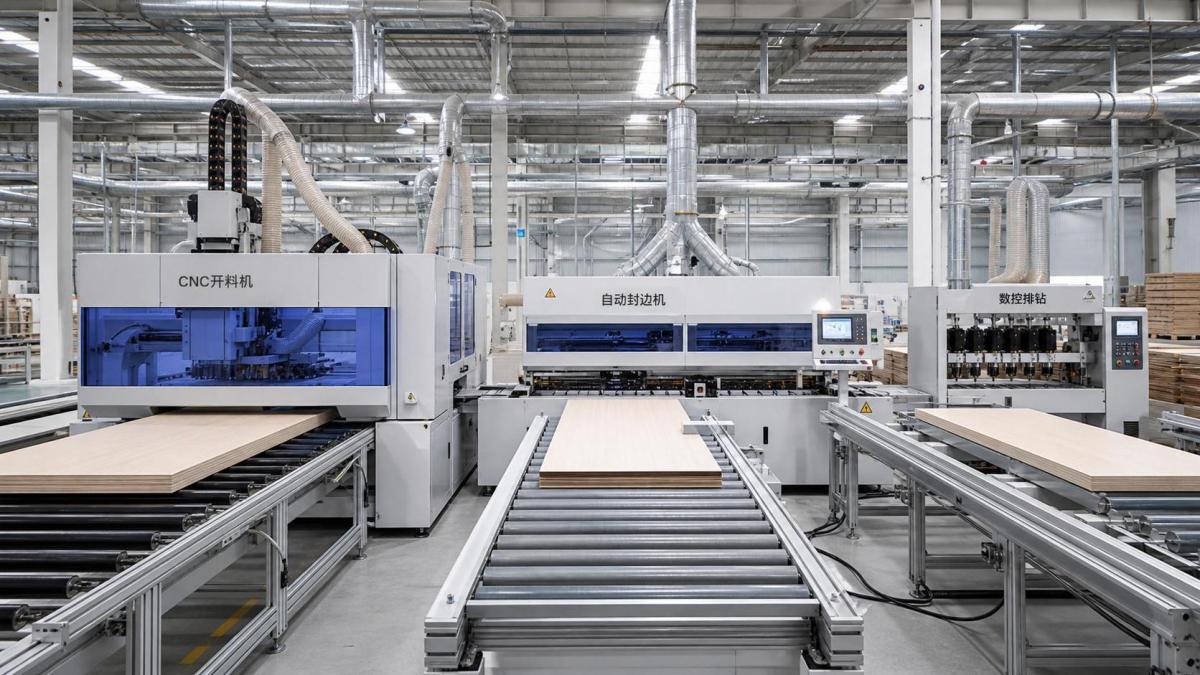
For cabinet production, speed alone rarely solves production pressure.
What matters is repeatable output, stable quality, and fewer interruptions across the whole line.
That is why practical woodworking solutions are becoming a priority in modern manufacturing.
A cabinet line usually combines cutting, drilling, edge banding, routing, sorting, and assembly preparation.
If one process drifts, every downstream station feels the impact.
In real operations, inconsistency often comes from setup variation, material waste, manual handling, and weak process coordination.
The right woodworking solutions address those issues as a system, not as isolated machine upgrades.
Qingdao Zhongding Machinery Co., Ltd. has spent more than 20 years building woodworking machinery for global furniture and industrial users.
That experience matters because cabinet production needs more than equipment specifications.
It needs woodworking solutions that improve throughput, reduce rework, and support reliable daily performance.
Why output and consistency break down
Many cabinet factories already own capable machines, yet still miss delivery targets.
The gap usually appears between machine capacity and actual line performance.
A few common causes show up again and again:
- Manual measurement causes panel size variation.
- Frequent job changes extend setup time.
- Unstable edge banding quality creates rework.
- Poor dust collection affects precision and machine life.
- Weak spare parts planning increases downtime.
- Operators rely on individual habits instead of standard procedures.
From a project perspective, these issues create a hidden cost structure.
Machines may run, but the line remains unstable.
That also means production planning becomes reactive rather than controlled.
Effective woodworking solutions start by identifying where variation begins and how it spreads.
Core woodworking solutions for cabinet lines
Cabinet production improves fastest when woodworking solutions match the full process flow.
The goal is not adding complexity.
The goal is creating a line that repeats the same result every shift.
1. Panel cutting with higher accuracy
Cutting quality sets the base for every later operation.
CNC beam saws or panel saws with optimized layout software help reduce waste and dimension errors.
When cut sizes stay consistent, drilling alignment and edge quality improve as well.
2. Automated nesting for flexible orders
For customized cabinets, nesting CNC equipment is one of the most practical woodworking solutions.
It supports complex shapes, mixed batch production, and better material utilization.
This is especially useful when order variety rises but floor space stays limited.
3. Stable edge banding
Edge banding often decides whether a panel looks premium or problematic.
Consistent feed speed, temperature control, and trimming accuracy are critical.
Well-designed woodworking solutions include edge banders that keep finish quality steady during long runs.
4. Drilling and routing standardization
Cabinet assembly depends on accurate hole patterns and repeatable routing positions.
Multi-boring machines and CNC drilling centers reduce manual marking and improve repeatability.
That shortens training time and lowers the risk of assembly mismatch.
How to select woodworking solutions for real production goals
Not every factory needs the same investment path.
The better approach is to choose woodworking solutions based on output targets, order mix, and operating constraints.
A practical evaluation usually includes these points:
- Daily panel volume and peak demand.
- Standard cabinets versus customized models.
- Available labor skills and shift structure.
- Material type, thickness range, and finish requirements.
- Expected payback period and maintenance capacity.
This is where an experienced machinery supplier adds value.
Qingdao Zhongding Machinery Co., Ltd. combines machine manufacturing with complete woodworking solutions for furniture and cabinet plants.
That includes technical guidance, equipment matching, spare parts support, and responsive after-sales service.
In practice, that reduces implementation risk and helps lines reach stable output faster.
Ways to improve consistency after installation
Even strong woodworking solutions need disciplined execution after startup.
Most consistency gains come from a few operational habits done well.
Create standard setup routines
Tool changes, calibration checks, and material loading should follow one method every time.
That limits process drift between shifts and operators.
Track the right production indicators
Focus on rework rate, changeover time, yield, unplanned downtime, and on-time completion.
These metrics show whether woodworking solutions are improving the line or only shifting bottlenecks.
Maintain critical wear parts proactively
Blades, cutters, glue system parts, belts, and sensors affect output long before total failure.
Scheduled replacement protects precision and avoids rushed shutdowns.
Keep operator training practical
Training should focus on setup discipline, fault recognition, and basic adjustment logic.
This matters even with automation, because small operator decisions still influence consistency.
A simple comparison for decision planning
What long-term value looks like
Good woodworking solutions should deliver more than short-term speed improvements.
They should make planning easier, quality more predictable, and costs more visible.
Over time, the benefits usually appear in four areas.
- Higher output per shift without adding unnecessary labor.
- More consistent cabinet quality across batches.
- Lower material waste and reduced rework pressure.
- Stronger delivery performance for demanding schedules.
That is the real business case behind modern woodworking solutions.
For cabinet production, consistency is not a side result.
It is the condition that makes higher output sustainable.
When machinery, process design, technical support, and maintenance planning work together, the line becomes easier to scale.
For manufacturers reviewing cabinet line upgrades, the next step is straightforward: assess bottlenecks, define target capacity, and select woodworking solutions built for reliable daily production.
Send Your Inquiry
We welcome your cooperation and we will develop with you.