


News & Exhibitions
Latest Factory Updates, Industry Trends & Global Exhibition Information
Woodworking Machine Quotes: Comparing Installation and Service Costs
The lowest woodworking machine quote can become the most expensive once installation, travel, training, spare parts, and service visits are added. Compare offers on the same scope: delivered machine, site preparation, commissioning, production acceptance, and support over an agreed period. A price without those boundaries leaves too much room for unexpected costs.
A devis machine-outil de menuiserie should also distinguish firm charges from estimates. A fixed installation fee is useful only when its assumptions are clear: the number of service days, the condition of the site, the materials available for trials, and what happens if work takes longer than planned.
Start With the Cost to Reach Production
The machine price is only one part of the amount required to produce an acceptable component. Freight, unloading, positioning, utility connections, commissioning, and initial process trials may be invoiced by different parties. Two quotations with similar totals can therefore leave very different work outstanding.
Ask for each cost to be assigned to a named party and expressed in the same currency where practical. Record whether tax, import charges, travel expenses, accommodation, and local transport are included. If a charge cannot be fixed before a site visit, request the rate, the basis of calculation, and any spending limit or approval process.
This is a scope comparison, not a price ranking. A separate rigging quotation or an agreed daily rate can turn an apparently low offer into a comparable installed cost. Keep uncertain items visible as allowances rather than treating an unanswered item as free.
Installation: Identify Where the Supplier’s Work Starts
“Installation included” can mean anything from mechanical assembly to a fully tested machine connected to factory utilities. Request a written boundary between site preparation and the supplier’s work. A useful scope names who unloads the machine, moves it into position, levels it, connects utilities, removes packing, and verifies safety functions before commissioning.
Access matters before the machine arrives. The transport dimensions and weight determine whether a forklift, crane, skates, or partial disassembly is needed; the final operating footprint must also allow space for feeding, discharge, maintenance, and material handling. A doorway that accommodates the machine body may still be too narrow for the packed shipment or lifting arrangement. Confirm both shipping and installed dimensions with the supplier.
Electrical preparation deserves the same precision. Rated voltage alone does not establish that the factory supply is suitable. Obtain the required phase, frequency, protective arrangements, connection point, and starting or load information from the machine documentation. The supplier should state whether the quoted service includes connection to a prepared isolator or work farther back into the building supply. Similar boundaries apply to compressed air and extraction where required.
Site readiness affects the value of a fixed installation period. If the technician arrives before power, lifting equipment, or materials are available, waiting time may be charged even though the machine is not being commissioned. Set a readiness date and agree how postponement, interrupted work, extra days, and a return visit are priced.
Read Machine Specifications as Installation Inputs
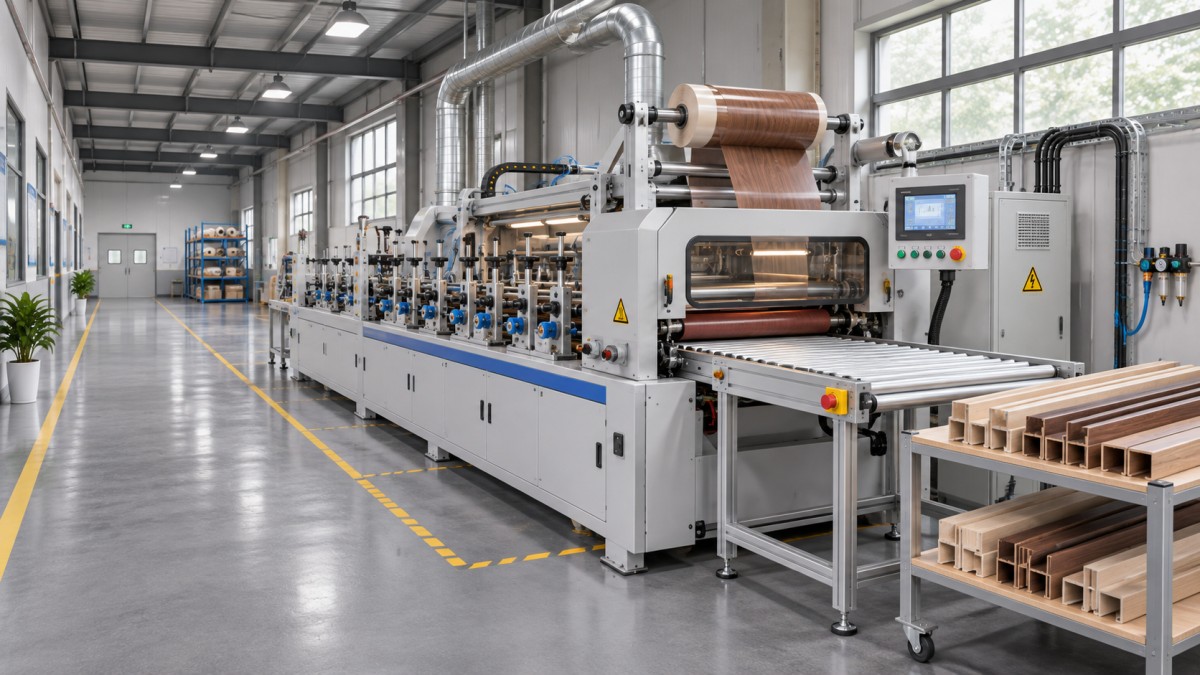
The PUR Wrapping Machine PUR1350, for example, is specified at 4500 × 2400 × 2000 mm and 3500 kg, with a rated voltage of 380 V and total rated power of 36 kW. Those figures are useful for planning space, handling, and electrical discussions; they do not replace shipping dimensions, lifting instructions, electrical connection details, or a site-specific assessment.
Its stated processing width of 400–1220 mm and laminating speed of 5–25 m/min also frame the production trial. When wrapping PVC film, veneer, or other decorative materials onto wood, MDF, or aluminum profiles, the actual substrate, adhesive settings, profile geometry, and finish requirements should be identified before the visit. A trial on a convenient sample does not establish that the quoted commissioning scope covers the intended workpiece.
Commissioning and Acceptance Are Separate Cost Events
A machine can be powered up and mechanically functional without being ready for production. Dry running verifies basic movement and controls; commissioning with material adds feeding, setup, process adjustment, and inspection of output. The quotation should state which stage is included and how much time is allocated to it.
For a wrapping application, define the sample substrate and covering, the length and profile to be processed, the expected finish, and the method of inspection. For a saw, router, or edge bander, the relevant test will differ: specify the workpiece, tooling or consumables, and the dimensional or finish criteria that matter to the intended job. Avoid accepting a generic promise to “test the machine” without agreeing on the test conditions.
Clarify who supplies trial material, adhesive, tooling, and measuring equipment, as well as who pays for material consumed during adjustment. If a defect appears, record whether it is caused by the machine, the incoming material, an unavailable utility, or an unconfirmed process setting before assigning responsibility for additional service time.
Acceptance terms should describe the evidence required to close commissioning, including any open items and a date or procedure for resolving them. Payment milestones tied to acceptance need the same definition. Otherwise, the machine may be treated as accepted after a power-on test while a separate charge remains for achieving the required finish.
Training and Documentation: Specify the Deliverable
Training charges are difficult to compare when one offer states “training included” and another lists a daily rate. Define the number of days, location, language, and subjects: startup and shutdown, changeovers, routine cleaning, adjustment, fault messages, and the maintenance tasks expected on site. Include the time needed to run representative material, not just a demonstration at the control panel.
A remote session can be effective for reviewing controls or diagnosing a familiar fault. Initial process setup or mechanical adjustment may require a physical visit, particularly when the installation team must observe material handling and finish quality. If translation is necessary, establish who provides it and whether it consumes the quoted training time.
Request the available operating instructions, electrical and pneumatic drawings where applicable, maintenance schedule, spare-parts identification, and parameter backup procedure. Confirm their language and delivery format. Missing documentation creates a service cost later when a part cannot be identified or a replacement component must be configured from scratch.
Compare Service Terms Beyond the Warranty Heading
A warranty period by itself says little about the cost of restoring production. Read which components are covered, when coverage begins, and which events or consumables are excluded. A replacement part supplied under warranty may still leave freight, customs charges, travel, accommodation, and labor to be paid separately. Ask for those responsibilities to be stated for both remote diagnosis and an on-site repair.
Response time and resolution time are different. A commitment to acknowledge a message does not guarantee that a technician has diagnosed the fault or that a replacement part is available. Record the support hours and time zone, contact channel, language, and escalation route. Where remote access is offered, establish the required connection and approval arrangements before a breakdown occurs.
For on-site service, compare the call-out fee, hourly or daily rate, minimum charge, travel time, and expense policy. Ask whether weekends and holidays are charged differently. A nearby service visit with a higher daily rate can cost less overall than a lower rate combined with international travel and several days away from production.
Separate scheduled maintenance from fault repair. The quoted scope might include advice but no periodic visits, or it might cover a visit while excluding replacement parts and consumables. State whether maintenance is performed by site staff, an independent provider, or the supplier, and confirm whether that arrangement affects warranty obligations.
Spare Parts and Downtime Change the Comparison
A starter parts package is valuable when its contents match the installed machine and the expected duty. Request part numbers, quantities, unit prices, and a description of each item. Distinguish routine consumables from components whose failure would stop the line, such as a specific sensor, drive, heater, or control component where applicable. A large package of inexpensive consumables does not necessarily cover a long-lead failure.
Ask which parts are held locally, which must be shipped from elsewhere, and what lead time is quoted at the time of purchase. Availability can change, so treat a lead time as a stated assumption rather than a guarantee unless the agreement makes it binding. For proprietary parts, request a quotation method and a process for confirming replacements when an original component is discontinued.
The cost of downtime should be assessed against the production arrangement. A standalone machine with an available alternative creates a different exposure from a unit feeding a continuous line. Where a stoppage would interrupt several operations, a critical spare or faster service arrangement can justify a higher initial quote. Where work can be rescheduled, holding every possible component on site may add unnecessary inventory cost.
Put the Offers on One Timeline
Build a comparison over a stated ownership period using the same production assumptions for each offer. Add the machine price, delivery, site work, installation, trial materials, training, planned maintenance, and the spare parts selected for that period. Keep taxes and financing treatment consistent. Show one-time costs separately from recurring service charges so that a low purchase price does not conceal a higher annual commitment.
For uncertain items, record the assumption beside the amount: for example, a specified number of technician days, one return visit if commissioning is interrupted, or freight for a warranty replacement. Test the comparison again with a longer installation or a paid service visit. This reveals which offer is sensitive to delays without presenting an invented failure rate as fact.
Before an order is placed, incorporate the agreed scope, rates, exclusions, acceptance procedure, and responsibilities into the quotation or purchase agreement. Resolve blank lines and contradictory wording in writing; a service promise is easier to compare when its deliverables and charges are attached to the same document as the machine price.
Send Your Inquiry
We welcome your cooperation and we will develop with you.