


News & Exhibitions
Latest Factory Updates, Industry Trends & Global Exhibition Information
Does the quoted solid wood machinery price include installation?
A quoted solid wood working machinery price includes installation only when the quotation explicitly says so and defines the work covered. The equipment price alone does not establish who will unload the machine, connect utilities, carry out trial runs, or train operators. Even “installation included” can leave technician travel, lifting equipment, and site preparation outside the quoted amount.
Before approving the purchase, establish what it will cost to move from a delivered machine to equipment your team can operate and maintain. That requires a written installation scope, a clear division of responsibilities, and an agreed method for accepting the machine after commissioning.
What does “installation included” actually cover?
Installation can describe anything from remote setup guidance to an engineer supervising a complete production line startup. Suppliers may use the same term for different services, so the wording needs to identify tasks and deliverables.
For a standalone planer or spindle moulder, installation might involve positioning, levelling, checking assembled components, and confirming settings. A connected solid wood processing line may also require machine alignment, transfer adjustments, control checks, and coordinated trial production. These differences affect the labour, time, and skills needed on site.
Installation, commissioning, and training are separate deliverables. Installation makes the equipment physically ready for use. Commissioning checks its operation under agreed conditions. Training prepares staff to operate, adjust, clean, and maintain it. A quotation may include one without the others.
Separate delivery terms from installation commitments
Shipping arrangements can make a quotation look more complete than it is. An Incoterms rule allocates specified delivery responsibilities, costs, and risks between buyer and seller. It does not, by itself, promise machinery installation, commissioning, or operator training.
A quotation covering transport to a named destination can still leave unloading, internal movement, positioning, electrical connections, and startup outside the supplier’s scope. Record the delivery rule and named place accurately, then review the installation agreement separately.
The physical handover point matters. Delivery to a factory entrance is different from placing a heavy machine in its operating position. Restricted access, an unsuitable forklift, or insufficient clearance can create additional handling costs before installation begins.
The costs most likely to sit outside the machine price
Technician attendance and travel
A supplier may include an engineer’s working time while charging separately for flights, accommodation, local transport, and travel documentation where required. Another quotation may offer a daily service rate without an overall cost limit.
Request an estimate based on the planned scope, together with the charging rules for additional days. Specify how travel days, weekends, waiting time, and return visits are treated. Extra attendance should have a documented cause and an approval process, especially when the delay results from incomplete site preparation or a machine fault.
Unloading, positioning, and utility connections
Rigging and lifting are often arranged locally because they depend on the building, access route, machine weight, and available equipment. The supplier should provide the handling information needed to plan this work, including dimensions, weight, and designated lifting points where applicable.
Power, dust extraction, and compressed air also need defined connection boundaries. A technician might check a machine’s electrical cabinet while a locally qualified contractor installs the incoming supply. A dust outlet on the machine does not mean ductwork, extraction capacity, or waste collection equipment is included.
Ask for site requirements before approving the project. They should identify the electrical supply, extraction needs, air requirements where relevant, floor conditions, service clearances, and access for maintenance. An existing workshop connection should not be assumed suitable simply because it served an older machine.
Tooling, materials, and startup consumables
Confirm which cutters, blades, holders, lubricants, and other startup items come with the equipment. A machine may be supplied with basic tooling that does not match the profiles or timber sizes you intend to process.
Commissioning also needs suitable timber. Species, moisture condition, dimensions, and defects can influence feeding and machining results. Agree on representative test material and responsibility for supplying it. Otherwise, a successful unloaded run may leave production performance unresolved.
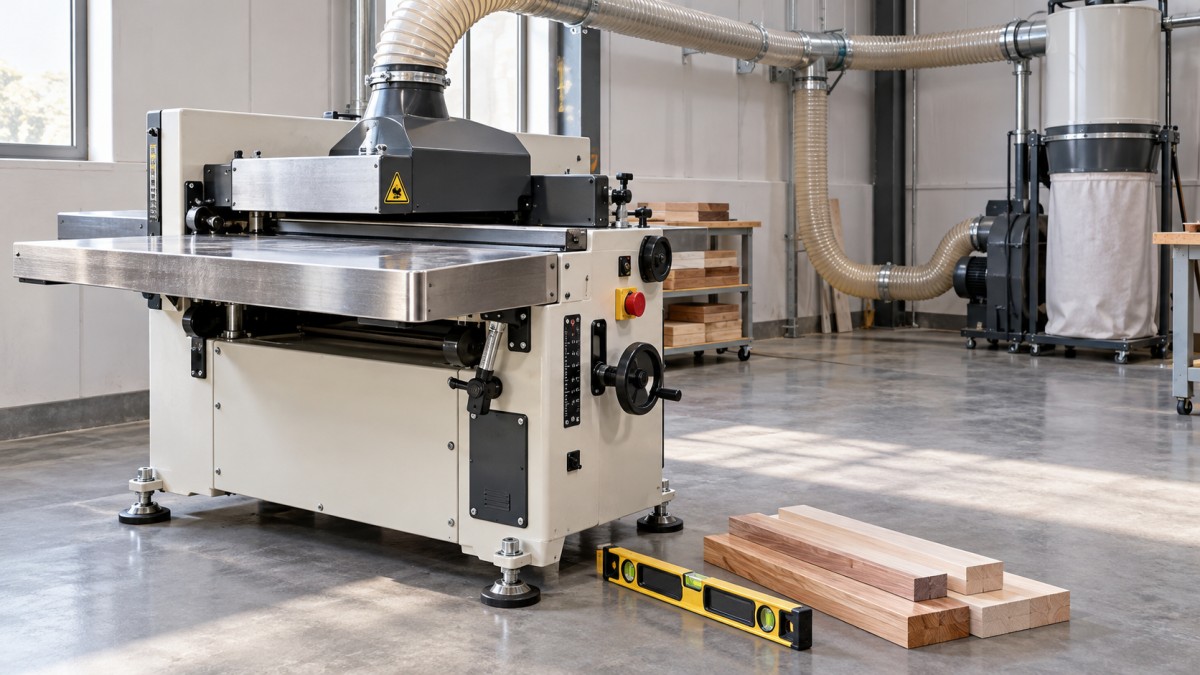
Choose installation support to match the equipment and your team
A full on-site service package can be valuable when several machines must work together, controls are unfamiliar, or local maintenance staff have limited experience with the equipment. It gives the supplier direct access to the conditions affecting startup and adjustment.
Remote commissioning can be practical for a relatively straightforward standalone machine when competent local personnel can complete the physical work. It requires clear documentation, suitable communication tools, and agreed support availability. Time-zone differences matter if a short troubleshooting session stretches across several production shifts.
A combined approach can also work: your contractors prepare utilities and position the machine, while the supplier attends for checks, commissioning, and training. This can reduce paid attendance time when responsibilities and readiness requirements are settled beforehand.
The decision should reflect the consequences of a delayed or unsuccessful startup. A machine that supports an existing workshop may allow more flexibility than a linked line on which the production schedule depends. Evaluate the support package against that operational exposure.
Compare quotations using the same project boundary
Two equipment offers cannot be compared fairly when one includes commissioning and the other stops at shipment. Build a common cost schedule and ask each supplier to identify what is included, excluded, optional, or dependent on site conditions.
A useful comparison separates the following:
- Equipment: machine configuration, controls, guards, tooling, and specified accessories.
- Delivery: packing, freight, insurance where applicable, and local handling according to the agreed terms.
- Site work: access preparation, foundations if required, utility installation, lifting, and positioning.
- Startup services: installation labour, technician expenses, commissioning, and training.
- Startup resources: trial timber, consumables, internal staff time, and scheduled production interruption.
For budget purposes, distinguish committed costs from allowances. A fixed commissioning fee is different from an estimate based on an expected number of days. Keep the assumptions visible so that a lower initial quotation does not receive an artificial advantage.
Contingency should address identifiable uncertainty, such as unresolved access arrangements or variable travel expenses. Obtain clearer prices where practical, and assign an owner to each remaining allowance. A general contingency cannot compensate for an undefined installation scope.
Payment comparisons also need consistent treatment of currency, applicable taxes and duties, and payment timing. These can change the funding requirement even when the machinery specifications appear similar. Show them separately so the installation decision remains understandable.
Define what successful commissioning looks like
“Machine runs normally” is too vague to support a meaningful handover. Acceptance should reflect the equipment purchased and the work it is intended to perform, using conditions agreed before delivery.
For a solid wood planer, commissioning might include checks of feeding, thickness adjustment, and finish on agreed timber. For a moulding machine, it may involve a specified profile and tooling setup. A connected line also needs checks of material transfer and coordinated operation.
Keep acceptance requirements proportionate to the purchase. A test should assess agreed machine capabilities under suitable conditions. If output or quality targets form part of the contract, define how they will be measured and what materials, tooling, staffing, and utilities must be available.
The handover record should capture completed checks, operating settings where relevant, training delivered, outstanding items, and responsibilities for correction. Distinguish issues that prevent intended operation from minor items that can be resolved afterward.
Where commercially agreed, connect an appropriate payment milestone to documented commissioning or acceptance. State what happens if testing is delayed by site readiness, unavailable materials, or supplier-related problems. This gives both parties a workable route through delays.
Check the conditions that can generate a second visit
A second technician visit can cost more than the original installation allowance anticipated. Preventable causes include unfinished electrical work, missing extraction connections, unavailable tooling, or the absence of operators who need training.
Use a readiness checklist before travel is booked. Have the responsible parties confirm that the machine can be unloaded and positioned, utilities are ready, test material is available, and staff can attend. Photographs, layout drawings, and connection details can help resolve questions before the engineer arrives.
Also establish the process for faults discovered during startup. The agreement should distinguish extra work caused by a buyer-requested change from corrective work needed to deliver the contracted equipment. Record who authorizes additional charges and how disagreements are escalated.
Warranty timing belongs in this discussion. Record the event that starts coverage and how a delayed installation affects it. Ask whether buyer-arranged installation or remote commissioning has any conditions attached to warranty support, including required personnel, procedures, and records.
What to request before approving the order
Ask for an installation and commissioning schedule attached to the commercial quotation. It should be detailed enough for purchasing, maintenance, production, and the supplier to work from the same document.
- List the installation, commissioning, and training tasks included in the price.
- Assign responsibility for unloading, positioning, utilities, tooling, and trial materials.
- State technician charges, travel expenses, attendance assumptions, and rates for approved extra work.
- Define site readiness, scheduling dependencies, and the procedure for delays.
- Agree on acceptance checks, handover records, payment milestones, and warranty commencement.
Qingdao Zhongding Machinery Co., Ltd. manufactures and exports woodworking machinery and provides technical support, spare parts supply, and after-sales service. When requesting a quotation, include the intended timber, finished products, workshop layout, available utilities, and preferred installation arrangement. These details help establish a useful service scope; the written offer should specify which services are included.
Approve the purchase when the route from delivery to usable production is clear, each significant cost has an owner, and any variable charges have agreed controls. That makes the quoted machinery price a reliable part of the project budget.
Send Your Inquiry
We welcome your cooperation and we will develop with you.