


A furniture factory machine quote should be evaluated as a long-term investment, not simply a purchase price. Financial decision-makers need evidence of lifecycle value, operating impact, and measurable risk control.
When several woodworking machinery suppliers submit similar-looking proposals, the lowest figure can appear attractive. However, lower acquisition cost may conceal weaker output, expensive downtime, limited support, or replacement-part uncertainty.
The strongest purchasing decision compares each furniture factory machine quote against a consistent financial framework. This approach connects technical specifications with production economics, cash flow, payback expectations, and long-term operational resilience.
Start With the Business Case, Not the Quoted Total
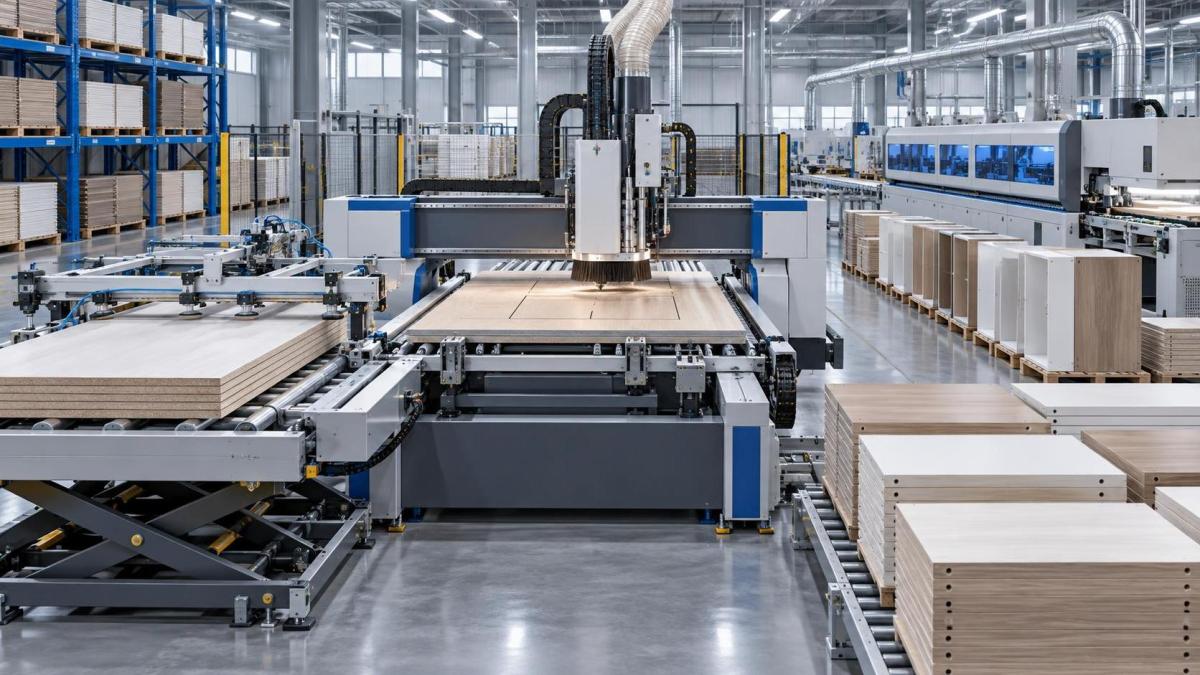
Before comparing suppliers, define the commercial problem the machine must solve. A quote has limited meaning unless buyers understand required capacity, product mix, labor constraints, quality targets, and expansion plans.
For example, a panel saw, edge bander, CNC nesting machine, or drilling center may reduce labor dependence differently. Finance teams should ask which production bottleneck creates the greatest current cost.
A machine purchased only because its listed price is favorable can become an underutilized asset. The better question is whether it removes a constraint that prevents profitable output growth.
Start with a baseline of current production performance. Record daily throughput, rejection rates, labor hours, energy consumption, unplanned downtime, delivery delays, and outsourced processing costs where relevant.
This baseline allows financial approvers to evaluate supplier claims against measurable conditions. Without it, expected improvements in capacity or cost control remain assumptions rather than investment inputs.
Then define the minimum acceptable outcome. It may be higher cabinet output, improved edge quality, fewer operators per shift, reduced material waste, or faster changeovers between furniture orders.
Translate each outcome into a financial measure. Higher output can increase contribution margin, lower labor demand can reduce unit cost, and lower defects can protect both materials and customer relationships.
A furniture factory machine quote should therefore be compared against a required return profile. Price matters, but it should support the business case rather than become the business case.
Compare Capacity Claims Using Real Production Conditions
Quoted production speeds are often based on ideal operating conditions. Financial buyers should distinguish between maximum technical speed and achievable output during normal shifts, material changes, setup periods, and maintenance.
Ask every supplier to state the assumptions behind stated capacity. These should include board dimensions, material type, program complexity, operator skill, loading method, shift pattern, and expected machine availability.
A high-speed CNC machine can produce strong returns when it is consistently fed with prepared material. Its value may decline if upstream cutting, labeling, loading, or programming limits utilization.
Request cycle-time calculations for representative products instead of generic demonstrations. Include common cabinet components, doors, shelves, drilling patterns, shaped panels, and any parts that create regular production delays.
Capacity should also reflect the factory’s expected order profile. A machine optimized for large repetitive batches may not generate equivalent value in a business handling frequent custom furniture changes.
Compare setup time between job types. Shorter setup periods can be financially significant because they protect productive machine hours, especially for factories with diverse orders and smaller batch sizes.
Utilization assumptions deserve particular attention. A machine rated for high output but used only intermittently may have a weaker return than a moderately priced system integrated into daily production.
Ask suppliers for references from factories with similar products and production volumes. Comparable customer evidence is more useful than broad performance statements from unrelated manufacturing environments.
Calculate Total Cost of Ownership Across the Machine Lifecycle
The purchase price is only one component of total cost of ownership. Financial approval should cover the expected cost of operating, maintaining, repairing, supporting, and eventually replacing the equipment.
Build a lifecycle comparison covering at least five years, and preferably seven to ten years for major production equipment. The model should use the same period for every quote.
Include freight, insurance, customs duties, installation, commissioning, factory modifications, electrical connections, dust extraction changes, compressed-air requirements, and operator training in the initial investment calculation.
Some furniture factory machine quotes exclude site preparation or peripheral equipment. These exclusions can materially change capital requirements, particularly for automated lines, CNC systems, and integrated material-handling equipment.
Energy consumption should be evaluated under realistic loads rather than rated motor power alone. Request consumption data for idle periods, active cutting, vacuum operation, heating, and standby modes.
Maintenance costs should include scheduled labor, lubricants, filters, tooling wear, belts, bearings, cutting units, sensors, and software-related service requirements. Ask which items are consumable versus covered by warranty.
Compare expected spare-parts expenditure using a defined annual estimate. Suppliers should identify critical components, recommended stock levels, lead times, and whether local or regional inventory is available.
Residual value may also affect the decision. Well-supported machinery from an established manufacturer can retain resale value better, reducing the effective cost of ownership at replacement time.
Put Downtime Risk Into the Financial Comparison
Downtime is frequently the largest hidden cost in machinery ownership. A lower-priced machine loses its advantage quickly if breakdowns interrupt delivery commitments, idle labor, or delay downstream processes.
Calculate the cost of one lost production hour before evaluating supplier reliability claims. Include lost contribution margin, idle operators, overtime recovery, delayed shipments, penalties, and potential customer dissatisfaction.
Then ask each supplier for documented availability expectations, warranty response procedures, remote diagnostic capability, and escalation routes. General assurances of service quality should not be treated as financial evidence.
Technical support location matters. A supplier with remote engineering, regional technicians, and accessible documentation can reduce recovery time compared with a supplier dependent on long-distance service arrangements.
Evaluate the machine’s control system and components carefully. Widely available electrical, pneumatic, motion-control, and bearing components may reduce repair risk compared with proprietary or difficult-to-source alternatives.
For critical machines, identify possible backup methods. A factory may use outsourced cutting, manual processing, alternative equipment, or stocked assemblies to prevent a single failure from stopping all production.
Warranty terms should be compared beyond duration. Confirm what failures are included, whether labor and travel are covered, how claims are approved, and what actions could invalidate coverage.
A financially sound quote recognizes uptime as an economic value. The supplier offering stronger service capability may justify a higher price when the cost of interruption is significant.
Assess Labor, Training, and Automation Benefits Honestly
Labor savings are often included in machinery proposals, but they require careful validation. The relevant measure is not simply fewer operators, but whether labor can actually be redeployed or reduced.
Map the full workflow before assigning labor savings. Automation may remove one operator from machine operation while creating new requirements for programming, material handling, inspection, or preventive maintenance.
Consider skill availability in the factory’s location. Advanced CNC woodworking machinery can improve consistency, but it also requires capable operators who understand programs, tooling, calibration, and basic troubleshooting.
Ask what training is included in the furniture factory machine quote. Training should cover operation, safety, parameter adjustment, maintenance routines, error diagnosis, and production handover for multiple employees.
Evaluate the consequences of employee turnover. Machines with intuitive controls, documented procedures, and remote assistance can reduce dependence on a single experienced operator and protect production continuity.
Automation can also improve labor economics indirectly. Better nesting, automatic feeding, labeling, or drilling may reduce rework, simplify handling, and allow experienced workers to focus on higher-value tasks.
However, avoid assigning savings twice. If a proposal includes both labor reduction and increased output, ensure that the model does not count the same operational improvement as separate financial benefits.
The most credible labor case identifies actual roles, current wages, expected redeployment, training duration, and the period required before the new process reaches stable productivity.
Test Supplier Credibility and Long-Term Support Capacity
Machinery performance is inseparable from supplier capability. Financial approvers should assess whether the manufacturer can support the equipment throughout its useful life, not merely deliver it successfully.
Review the supplier’s manufacturing experience, export history, quality-control methods, technical team structure, and installed base. A long operating record can reduce uncertainty, but should be verified.
Request customer references that match the proposed machine category. Ask reference customers about commissioning quality, actual output, spare-parts delivery, problem resolution, and support after the warranty period.
For international purchases, clarify communication responsibilities. The buyer should know who provides installation guidance, who handles remote support, and how language or time-zone differences are managed.
Spare-parts policy deserves formal review. Confirm whether parts are identified by standard codes, how long they will remain available, and what shipping methods apply for urgent failures.
Software support is increasingly relevant for CNC machinery. Verify licensing terms, update policies, backup procedures, remote access safeguards, and compatibility with existing design or production-management systems.
Qingdao Zhongding Machinery Co., Ltd., for example, positions machinery supply alongside technical support and spare-parts service. Buyers should still convert such commitments into documented service terms before approval.
A capable supplier reduces financial uncertainty after commissioning. This value is especially important when the machine will become central to furniture production schedules, quality consistency, or delivery performance.
Use ROI, Payback, and Sensitivity Analysis Before Approval
Once technical and operating information is available, finance teams can turn the comparison into an investment decision. Use a common model so every supplier quote receives equal treatment.
Annual benefits may include additional gross profit from capacity, lower direct labor, reduced scrap, lower outsourcing costs, fewer defects, energy savings, and avoided maintenance on obsolete equipment.
Annual costs should include energy, maintenance, consumables, service agreements, additional skilled labor, financing charges, insurance, and expected spare-parts purchases. Use conservative assumptions where evidence is limited.
A simple payback calculation divides total investment by annual net benefit. It is useful for screening, but it should not be the only approval measure for equipment with long operating lives.
For larger investments, calculate net present value and internal rate of return. These measures account for the timing of cash flows and allow comparison with internal capital-allocation thresholds.
Run sensitivity analysis on the assumptions most likely to vary. Test lower utilization, slower output gains, higher energy costs, delayed startup, increased maintenance, and reduced demand for finished furniture.
A proposal that remains acceptable under realistic downside conditions is generally safer than one offering an impressive return only under perfect production assumptions. This distinction matters for budget protection.
Document the investment case clearly for approval committees. The final recommendation should explain why the selected machine creates stronger economic value, not merely why its quote looks competitive.
Create a Quote Comparison Scorecard for Final Selection
A structured scorecard prevents purchasing decisions from being driven by a single visible number. It also creates an auditable record of how technical, operational, and financial factors were balanced.
Assign weighted categories based on the factory’s priorities. Typical categories include total cost of ownership, output capacity, uptime risk, service capability, product quality, labor impact, and delivery schedule.
Weighting should reflect business strategy. A factory facing rapid demand growth may assign more value to scalable capacity, while a cost-control project may prioritize efficiency and maintenance predictability.
Require each supplier to respond using the same technical schedule. Standardized inputs make it easier to identify exclusions, compare commitments, and avoid confusion caused by different quote formats.
Record uncertainties separately from confirmed facts. For example, promised cycle times without customer evidence should be marked as assumptions, while documented energy data can receive greater confidence.
Include commercial terms in the scorecard. Payment milestones, delivery dates, acceptance tests, installation responsibilities, warranty conditions, and penalties for non-performance can affect project risk materially.
The chosen supplier should be able to support a clear approval narrative: expected value, known risks, mitigation measures, implementation requirements, and the performance indicators used after commissioning.
After installation, compare actual results with the original model. This validates the investment, improves future furniture factory machine quote evaluations, and strengthens accountability between operations and finance.
Conclusion: Choose the Quote That Protects Long-Term Value
The best furniture factory machine quote is rarely defined by the lowest purchase price. It is the proposal that produces dependable output, manageable operating costs, reliable support, and defensible financial returns.
Financial decision-makers should require comparable lifecycle costs, realistic capacity assumptions, downtime analysis, service commitments, and sensitivity-tested ROI before authorizing capital expenditure for woodworking machinery.
This framework turns a supplier quotation into a more complete investment assessment. It helps furniture manufacturers avoid false economies while selecting equipment that supports profitable and sustainable growth.
When price, performance, risk, and support are evaluated together, buyers can approve machinery with greater confidence and establish clearer expectations for operational results after commissioning.