


For small-batch furniture production, start with machines matched to your materials and main production constraint: accurate cutting, reliable preparation, consistent edging, or repeatable machining.
Panel furniture workshops usually need a sliding table saw or CNC router, an edge banding machine, and accurate drilling equipment before considering greater automation.
Solid wood producers typically prioritize a jointer, thickness planer, suitable saws, and sanding equipment, adding specialized machining as product designs and order patterns justify investment.
Choosing wood product manufacturing machinery for furniture therefore requires more than comparing specifications. Decision-makers must connect equipment capacity with labor availability, delivery commitments, and cash flow.
Drawing on Qingdao Zhongding Machinery’s more than 20 years of industry experience, this guide explains how to build a flexible workflow and evaluate purchases.
Which machines belong on your initial shortlist?
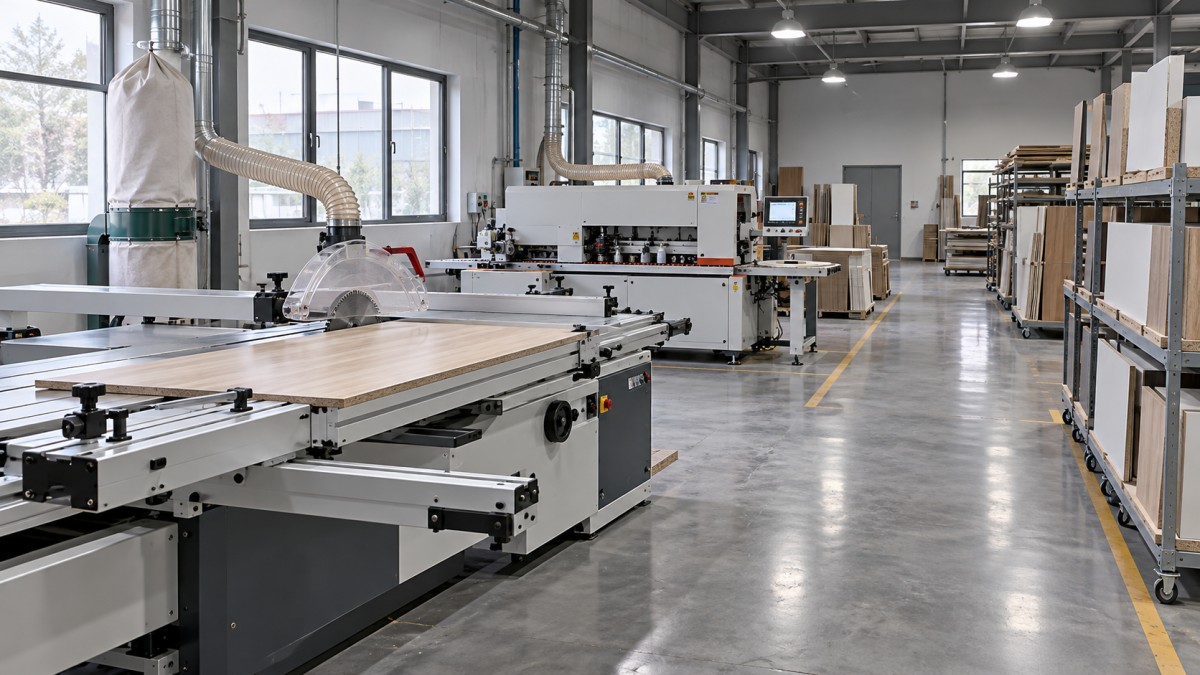
The right starting package depends primarily on whether you process sheet materials, solid timber, or both. These workflows create different preparation, machining, and finishing requirements.
Use the following comparison to identify essential capabilities. Purchase priorities should then follow your actual order mix, existing equipment, and the operations currently delaying delivery.
A compact workshop can perform well with separate machines when material movement is organized. An automated line requires sufficient recurring work to justify its complexity.
Avoid purchasing every machine needed for a hypothetical future catalog. Equip the products you can sell profitably, while preserving practical options for later expansion.
Should you buy a sliding table saw or a CNC router first?
A sliding table saw is often a practical first investment for straight panel cutting, especially when orders vary and experienced operators are readily available.
It offers direct control over individual cuts and relatively straightforward setup. However, finished output depends on operator skill, panel handling, labeling, and subsequent drilling operations.
A CNC router becomes more attractive when jobs repeatedly require shaped components, drilling patterns, pockets, or numerous parts generated from digital cabinet and furniture designs.
Its business value comes from combining compatible operations and reducing repeated measurement. Material savings depend on nesting quality, sheet sizes, part geometry, and usable offcuts.
For very small batches, programming and setup can consume much of the available production time. Ask suppliers to demonstrate complete jobs, including file preparation.
Compare both options using representative orders: include loading, cutting, unloading, labeling, drilling, and rework. The fastest cutting cycle alone does not establish the better investment.
When does edge banding become a business priority?
For laminated cabinets and panel furniture, edge quality directly affects appearance and customer acceptance. Inconsistent adhesion or trimming can undermine otherwise accurate component production.
A compact edge banding machine may offer strong value when manual edging creates excessive labor, visible defects, or delays between cutting and final assembly.
Evaluate performance on your actual panel thicknesses, edging materials, and smallest components. Confirm minimum workpiece dimensions, trimming quality, cleaning requirements, and changeover procedures before purchase.
Adhesive selection also matters. EVA and PUR systems differ in processing requirements and achievable joint performance; suitability depends on materials, application conditions, and equipment compatibility.
Do not select feed speed in isolation. Small batches benefit from easy adjustments, accessible maintenance, and dependable results across frequent changes in colors and thicknesses.
If production primarily uses exposed solid wood, edge banding may have limited relevance. Allocate that budget to preparation, joinery, or finishing constraints affecting saleable output.
Which preparation and sanding machines are essential for solid wood?
Solid wood furniture starts with stable material and accurate reference surfaces. Machinery cannot compensate for unsuitable moisture content, poor storage, or inconsistent incoming timber quality.
A jointer establishes a flat face and straight reference edge; a thickness planer produces consistent thickness using that prepared face as its machining reference.
Buying prepared timber can reduce initial equipment needs. Compare the supplier premium with preparation labor, material yield, storage requirements, and the consistency your products demand.
Select ripping and crosscutting equipment around board dimensions, required accuracy, and safe handling. A bandsaw adds value when curved components or resawing appear regularly.
For sanding, begin with the surfaces and finishes customers actually require. Portable sanders may suit varied shapes, while wide belt sanders support repeated flat components.
Validate sanding results on representative timber, veneers, and glued panels. Thin veneers require controlled stock removal, and abrasive costs should enter your operating budget.
Will drilling and joinery become the next bottleneck?
After improving cutting, many workshops discover that drilling, hardware preparation, and assembly now limit throughput. Purchasing more cutting capacity will not resolve these downstream delays.
For cabinet production, accurate hinge boring and connector drilling support reliable assembly. Dedicated boring machines can be economical when hole patterns repeat across orders.
A CNC router may perform some drilling, but tool access, hole orientation, and cycle time determine whether separate equipment still improves the overall workflow.
Solid wood workshops should evaluate mortising, tenoning, or other joinery equipment against actual designs. Dedicated machines become valuable when repeated joints consume substantial skilled labor.
Include assembly benches, clamps, and verification gauges in the investment plan. Components only generate revenue when they become complete furniture that passes inspection and ships.
Track queues between operations for several representative jobs. The longest recurring queue often reveals a more useful investment target than the oldest machine onsite.
How should decision-makers calculate the financial return?
Compare total installed cost with realistic monthly benefits. The purchase price excludes some expenses that can materially affect whether a machine delivers an acceptable return.
Installation may require electrical upgrades, compressed air, dust extraction, tooling, software, training, freight, or additional handling equipment. Confirm which items each supplier quotation includes.
Estimate benefits from reduced direct labor, lower outsourcing expenditure, improved material yield, and additional contribution from orders you have sufficient demand and capacity to fulfill.
Avoid counting the same benefit twice. Labor time saved only becomes a cash saving when staffing costs fall or productive capacity creates measurable value.
For illustration, a machine costing $45,000 fully installed and delivering $1,500 in monthly net benefit has a simple payback period of approximately 30 months.
That calculation excludes financing, taxes, and the timing of cash flows. Use it for initial screening, then evaluate cash flow under conservative demand assumptions.
Include maintenance, tooling, software subscriptions, energy, and expected downtime in operating costs. Test whether the purchase remains affordable during slower months or a delayed ramp-up.
Can the workshop support the machine’s real operating requirements?
A machine’s footprint is only part of its space requirement. Allow room for loading, unloading, maintenance access, material storage, and safe movement around operators.
Large panels and long boards need clear handling routes. Sketch the journey from incoming materials through machining, sanding, assembly, and dispatch before finalizing equipment placement.
Dust extraction must match the machines, materials, and expected simultaneous operation. Confirm airflow requirements and address wood dust hazards under applicable local workplace regulations.
Check electrical supply, compressed air demand, and the handling equipment needed for heavy materials. Infrastructure limitations can reduce usable capacity or increase installation costs unexpectedly.
Operator capability also determines results. CNC equipment needs reliable programming and setup skills; conventional machines require competent adjustment, measurement, tooling selection, and safe operating practices.
Ask who will run each machine during absences or peak demand. Training a second operator can protect delivery performance when staffing changes disrupt production.
What should you verify before choosing a machinery supplier?
Ask shortlisted suppliers to process your drawings and materials, using a representative batch with realistic changeovers. Evaluate finished components rather than relying solely on demonstrations.
Agree on acceptance criteria before ordering: dimensional tolerances, edge finish, assembly fit, processing time, and the conditions under which the machine must achieve them.
Request a written specification covering machine configuration, included tooling, software, installation responsibilities, training, warranty terms, and service arrangements. Clarify exclusions before comparing final quotations.
For export purchases, verify electrical compatibility, documentation, delivery terms, and applicable conformity requirements. Confirm responsibility for unloading, commissioning, and resolving damage discovered upon arrival.
Spare parts availability deserves particular attention. Ask about stocked components, typical dispatch times, remote troubleshooting, and support arrangements for controls, drives, and other critical assemblies.
Qingdao Zhongding Machinery supplies woodworking machinery and complete woodworking solutions, supported by technical assistance, spare parts supply, and after-sales service for global customers.
Share your product drawings, materials, batch sizes, available floor space, and production constraints when requesting recommendations. These details enable a more useful discussion than capacity alone.
Build capacity in the order your business needs it
The best wood product manufacturing machinery for furniture supports your actual product mix, improves the operation limiting deliveries, and fits the resources available to operate it.
For panel furniture, prioritize accurate cutting, dependable edging, and repeatable drilling. For solid wood, establish sound preparation and joinery before expanding machining or sanding capacity.
Add CNC capability when repeatable digital production creates measurable value. Approve each investment against representative jobs, conservative cash flow, and clearly defined supplier acceptance criteria.
This approach gives small-batch manufacturers a practical growth path: strengthen the current workflow, measure the results, and expand capacity when customer demand supports the next purchase.