


News & Exhibitions
Latest Factory Updates, Industry Trends & Global Exhibition Information
Does a double glue pot edge banding machine reduce downtime on long production runs?
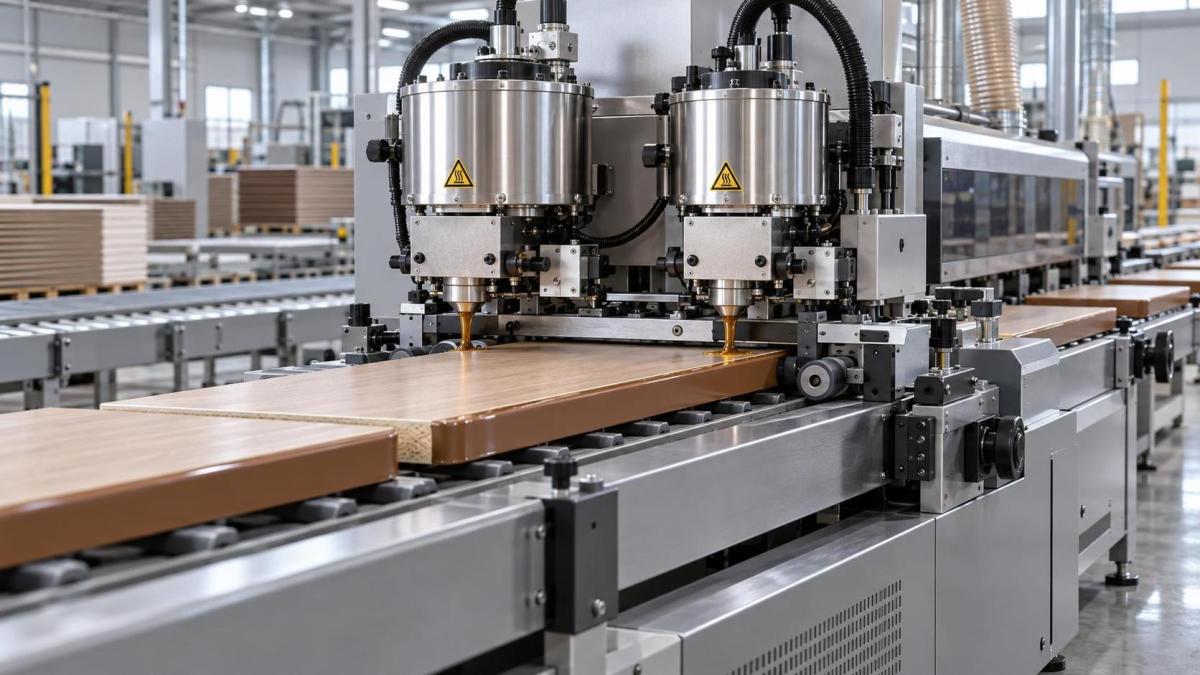
Yes—when properly configured and maintained, a double glue pot edge banding machine significantly reduces downtime on long production runs. This is not due to redundancy alone, but because the dual-pot design directly addresses three primary sources of interruption in high-volume edge banding: glue cooling, adhesive degradation, and manual pot switching. For furniture manufacturers running 8- or 12-hour shifts with minimal operator intervention, the ability to switch between pots without stopping the line—or even without pausing feed—translates into measurable uptime gains. Unlike single-pot systems that require full cooldown, cleaning, and reheating cycles every 4–6 hours under continuous load, a double glue pot system allows one pot to remain active while the other is cleaned, refilled, or brought up to operating temperature. The result is fewer unplanned stops, more consistent bond quality across extended batches, and lower labor demand per linear meter processed.
Why Glue-Related Downtime Accumulates on Long Runs
Edge banding adhesives—especially EVA and PUR—require precise thermal stability to maintain viscosity, open time, and wetting performance. During uninterrupted operation, a single glue pot experiences progressive thermal fatigue: heater elements work harder to compensate for heat loss at the nozzle; residual carbon builds up in corners and flow channels; and adhesive begins to oxidize near the surface. Operators often notice subtle signs before failure—slight discoloration of the bead, inconsistent spread width, or increased stringing—but by then, cleaning is already overdue. A typical maintenance stop for a single-pot unit takes 12–18 minutes: shutdown, pot removal, solvent soak, brush cleaning, reassembly, and reheating to 190–210°C. Over a 10-hour shift, two such stops add nearly 30 minutes of non-productive time—not counting re-calibration or test runs afterward.
A double glue pot configuration eliminates this cycle dependency. While Pot A dispenses adhesive at full line speed, Pot B can be serviced offline. Crucially, modern double-pot machines like those from Qingdao Zhongding Machinery include automatic temperature hold logic: when switching, the inactive pot maintains a standby temperature (typically 120–140°C) sufficient to prevent charring but low enough to minimize thermal stress. This means no full cooldown is required before reuse—and no reheating delay upon return. The switch itself is triggered either manually via HMI or automatically based on preset run time or adhesive volume thresholds.
What Makes the Difference Beyond “Two Pots”
Not all double glue pot systems deliver equal uptime benefits. Performance hinges on integration—not just hardware count. Key differentiating factors include:
- Independent temperature control per pot: Prevents cross-contamination of thermal profiles and allows one pot to run PUR while the other handles EVA without recalibration.
- Sealed, quick-disconnect manifolds: Enable pot removal in under 90 seconds without draining lines or disturbing glue pressure settings.
- Nozzle-level flow monitoring: Detects early signs of clogging—such as rising backpressure or reduced flow rate—before visible defects appear, allowing scheduled service during natural line pauses rather than emergency stops.
- Glue level sensing with predictive refill alerts: Avoids mid-run depletion, which causes immediate bond failure and often requires full rework of the preceding 3–5 meters of panel.
These features are not additive conveniences—they’re interdependent safeguards. For example, independent temperature control becomes irrelevant without sealed manifolds, since opening a hot pot risks thermal shock and adhesive splatter. Likewise, predictive alerts only reduce downtime if the machine supports hot-swap capability; otherwise, the alert simply flags an unavoidable stop.
When the Benefit Is Most Pronounced
The uptime advantage scales with operational intensity—not just run length. It’s most impactful under these conditions:
- Mixed-material production: Switching between PVC, ABS, and wood veneer edge bands often requires different adhesive types or temperatures. Dual pots let operators pre-load both formulations and switch seamlessly.
- High ambient humidity or temperature variation: In unconditioned workshops, adhesive cooling accelerates. Having a second pot ready avoids waiting for the primary pot to recover after a brief pause.
- Limited operator availability: On night shifts or in regions with tight labor supply, minimizing hands-on maintenance steps—like manual scraping or solvent handling—reduces reliance on skilled intervention.
- Just-in-time material flow: When panels arrive continuously from upstream CNC or sanding lines, any stoppage creates bottlenecks. A double pot system keeps the edge bander moving while downstream stations stay fed.
Note that benefit diminishes in low-volume, high-variability shops where changeovers happen every 30–45 minutes. There, the complexity of managing two adhesive systems may outweigh the gain—unless the shop also uses the second pot for specialty adhesives like cold-melt or water-based formulas not compatible with standard EVA/PUR setups.
Practical Setup Steps to Maximize Uptime
Simply installing a double glue pot machine doesn’t guarantee reduced downtime. Real-world performance depends on procedural alignment:
- Map your longest uninterrupted run: Track actual production time between planned stops (e.g., shift changes, material replenishment). If your current longest stretch is under 3.5 hours, prioritize optimizing single-pot maintenance over upgrading hardware.
- Standardize pot service windows: Schedule cleaning and refilling during natural lulls—like panel loading or dust extraction maintenance—not mid-batch. Use the machine’s timer-based alerts to align with those windows.
- Validate glue temperature consistency across pots: Use a calibrated infrared thermometer to check nozzle exit temperature on both pots under load. A variance >5°C indicates calibration drift or heater imbalance—correct before relying on automatic switching.
- Train operators on visual indicators—not just alarms: Teach recognition of early degradation signs: slight yellowing at the pot rim, thicker-than-usual residue on scraper blades, or audible hissing from the nozzle (indicating vapor lock).
What Doesn’t Change With Dual Pots
A double glue pot does not eliminate all sources of edge bander downtime. It specifically targets glue-system interruptions—not mechanical wear, tracking errors, or substrate inconsistencies. Belt tension loss, roller misalignment, or inconsistent panel thickness still cause jams or poor bonding, regardless of pot count. Similarly, adhesive quality remains critical: using off-spec EVA or improperly stored PUR will degrade faster in both pots. And while dual pots reduce frequency of glue-related stops, they do not shorten individual service time—cleaning one pot still takes the same effort. What changes is scheduling flexibility: you choose when to clean, rather than reacting when the system forces it.
Also, glue pot switching does not replace preventive maintenance. Heater element lifespan, pump diaphragm wear, and nozzle orifice erosion follow the same duty-cycle patterns. Skipping scheduled replacement of consumables because “we have two pots” accelerates failure modes elsewhere in the system—often leading to longer, costlier repairs later.
Final Verification Before Committing
If you’re evaluating whether a double glue pot system fits your operation, ask these questions—not of the supplier, but of your own production logs:
- What percentage of your total unscheduled downtime over the past 90 days was directly attributable to glue pot issues (clogging, temp instability, depletion)?
- How many times per shift do operators manually adjust glue temperature or clear nozzle blockages?
- Do you currently discard or rework panels due to inconsistent edge bond appearance or strength in the last 15% of a glue pot’s usable life?
- Is your current glue pot service procedure documented, timed, and consistently followed—or handled reactively?
If the answers point to recurring, predictable glue-system interruptions—and especially if those interruptions cluster during peak output windows—a double glue pot configuration delivers measurable, repeatable reduction in downtime. It’s not about having backup hardware. It’s about decoupling maintenance from production rhythm.
Send Your Inquiry
We welcome your cooperation and we will develop with you.