


News & Exhibitions
Latest Factory Updates, Industry Trends & Global Exhibition Information
What affects the beam saw price quote beyond base machine cost?
What Affects the Beam Saw Price Quote Beyond Base Machine Cost?
When a technical assessor receives a beam saw price quote, the headline number—say, “$185,000”—is rarely the full story. In our 20 years of supplying beam saws to furniture factories, cabinet workshops, and industrial joineries across Europe, Southeast Asia, and North America, we’ve seen too many teams approve a quotation only to discover later that critical operational costs were buried in assumptions—not line items.
That’s why we don’t issue blanket quotes. Every beam saw price quote we prepare starts with a production audit—not a catalog check. We ask: What board thicknesses do you cut daily? How many edge-banding lines feed into this saw? Do your operators change programs mid-shift—or is every job pre-loaded and validated? These aren’t sales questions. They’re engineering inputs that directly shape cost drivers no spec sheet reveals.
Automation Level Isn’t Just “More Buttons”—It Changes Labor Logic
A semi-automatic beam saw may list at 30% less than its fully automatic counterpart—but that gap often vanishes within 18 months if your shop runs two shifts and handles frequent material changes. Why? Because manual loading, manual zero-point setting, and manual program selection add cumulative time loss per cycle. At 4–6 cuts/minute, even 12 seconds of operator intervention per board compounds fast.
We recently worked with a German kitchen manufacturer who switched from a manual-load beam saw to one with integrated conveyor + auto-calibration. Their quoted machine cost rose by €47,000—but their real-time cycle time dropped 22%, and setup errors fell by over 90%. That wasn’t magic. It was built-in repeatability: laser-guided referencing, pneumatic clamping sequence logic, and real-time thickness compensation—all priced separately, not bundled.
Cutting Accuracy Has a Hidden Cost Curve
“±0.1 mm” sounds precise—until you realize it applies only under lab conditions: stable temperature, calibrated tooling, fresh belts, and ideal feedstock. In real workshops, accuracy degrades faster on machines where linear guide maintenance requires full disassembly or where thermal expansion isn’t compensated in the control loop.
So when evaluating a beam saw price quote, look closely at *how* accuracy is maintained—not just what’s claimed. Machines with hardened ground rails, dual-axis encoder feedback, and onboard temperature sensors typically carry a 12–18% premium. But for shops producing laminated panels or CNC-ready blanks, that premium often pays back in reduced rework and tighter nesting yields—especially when paired with compatible CAM software.
Material Handling Options Are Never “Add-Ons”—They’re Workflow Anchors
A vacuum table upgrade might seem like a simple option. But if your workflow includes frequent mixed-thickness cutting (e.g., 16 mm MDF + 25 mm solid wood), then the vacuum zone segmentation, seal integrity, and pressure response time become decisive—not optional. Likewise, side-loading conveyors aren’t just about convenience; they affect board stability during high-speed feed, which directly influences kerf consistency and saw blade life.
One UK customer assumed their existing roller conveyor could interface with a new beam saw. We ran a compatibility test—and found their 20-year-old drive system couldn’t match the saw’s acceleration profile. The result? Board slippage on 12% of cuts above 80 m/min. Retrofitting wasn’t feasible. The solution? A matched conveyor package—priced separately, but essential to achieving the rated throughput.
Software Integration Is Where Quotations Get Ambiguous
Most beam saws ship with basic nesting software. But “basic” means different things depending on your ERP or MES environment. Does the controller support OPC UA? Can it ingest .dxf files with layer-based toolpath logic—or does it require manual geometry cleanup? Does it log cycle data by job ID, or just by timestamp?
We’ve seen quotations where “software included” meant only the OEM’s proprietary interface—no API, no export formats beyond PDF reports. For shops integrating with SAP or JobBOSS, that meant third-party middleware development. Not part of the original quote. Not reflected in the base machine cost. But very much part of the total implementation budget.
Electrical Configuration Often Triggers Site-Specific Surprises
A 400 V, 50 Hz machine won’t run on a US 480 V, 60 Hz line without transformer retrofitting—or rewiring the entire drive cabinet. And voltage isn’t the only variable. Grounding topology, harmonic filtering requirements, and PLC power isolation specs vary widely by region and facility age.
At Zhongding, we include electrical review as standard in our quoting process—not as a checkbox, but as a documented handover: a signed schematic cross-reference showing how each motor, sensor, and safety circuit maps to local utility standards. If your facility uses TN-C-S earthing and the machine expects TT, that detail gets flagged *before* the quote is issued—not after installation hits a compliance audit.
Safety Compliance Isn’t Just CE or UL—it’s Contextual
CE marking covers broad categories. But for beam saws, regional enforcement focuses on specific failure modes: emergency stop redundancy paths, light curtain zoning logic, and interlocked guard sequencing. A machine certified to EN ISO 13857 in Germany may still require additional mechanical guards or revised door switches to pass a Turkish TSE inspection—because local inspectors apply clause 6.3.2 differently than their EU counterparts.
We build those variations into the quote—not as “optional safety,” but as required configuration. Because skipping them doesn’t save money. It delays commissioning, triggers site modification costs, and risks production downtime during verification.
The Real Cost of “Standard” Spare Parts Support
Every beam saw price quote should disclose spare parts lead times—not just list prices. A bearing may cost $89, but if it ships from China with 12-week air freight and customs clearance, your MTTR jumps from hours to weeks. At Zhongding, we tier parts by criticality: consumables (blades, belts) are stocked regionally; motion components (linear guides, servo drives) are held in strategic hubs; and custom-machined frames or castings are built-to-order with confirmed timelines—stated upfront, not estimated post-sale.
Because in woodworking, downtime isn’t theoretical. It’s measured in boarded-up cabinets, delayed shipments, and renegotiated contracts. A $5,000 difference in initial quote matters less than a 3-week parts delay on a core component.
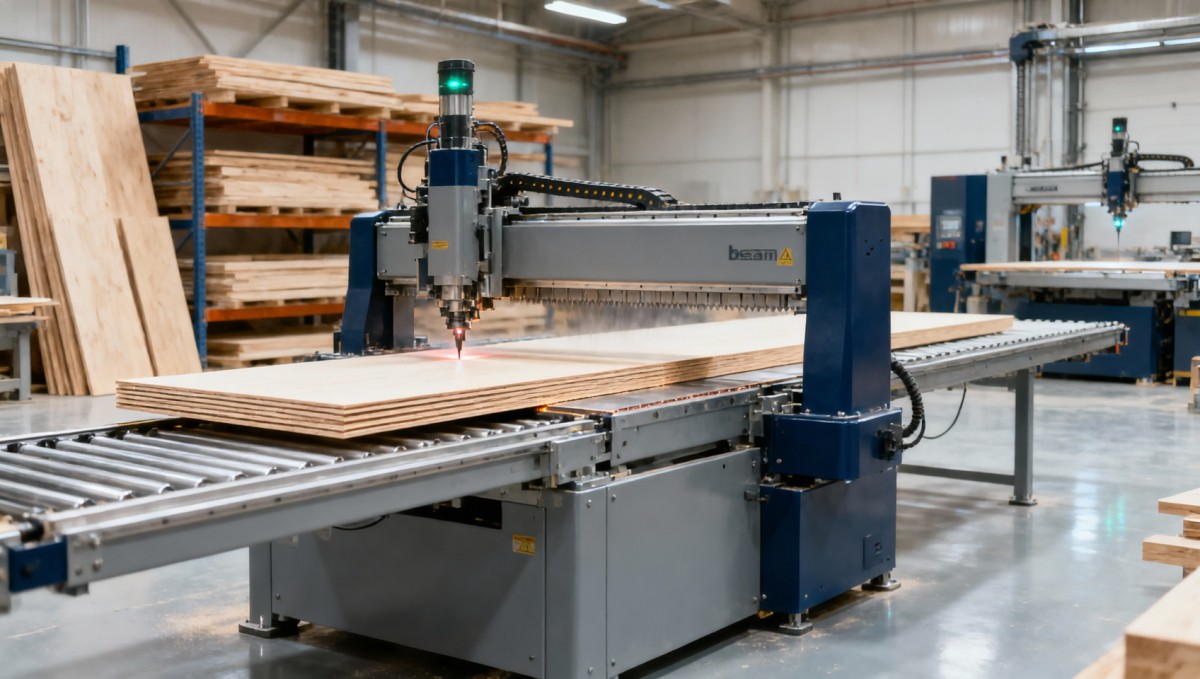
Final Thought: A Quote Is a Snapshot—Not a Contract
The most reliable beam saw price quote we’ve ever issued came with three pages of assumptions—each signed off by the customer’s maintenance lead, production planner, and safety officer. Not because we over-engineered it. Because we knew: if any one assumption shifted—material moisture content, ambient humidity range, or even floor vibration levels—the machine’s long-term performance would shift, too.
So when reviewing your next beam saw price quote, don’t just compare numbers. Trace each line item back to a real production constraint. Ask how it scales with your growth plan—not just your current capacity. And verify whether the supplier treats the quote as a starting point for dialogue… or as a finished document.
At Qingdao Zhongding Machinery, we’ve learned that the best quotes aren’t the cheapest ones—they’re the ones where nothing gets left unsaid.
Send Your Inquiry
We welcome your cooperation and we will develop with you.