


News & Exhibitions
Latest Factory Updates, Industry Trends & Global Exhibition Information
Woodworking Machinery Operator Training for Safe, Repeatable CNC Panel Processing
Woodworking Machinery Operator Training for Safe, Repeatable CNC Panel Processing
Effective woodworking machinery operator training is essential for safe, repeatable CNC panel processing in modern furniture and woodworking production.
Operators who understand machine setup, tooling, material handling, safety procedures, and routine maintenance can reduce errors, minimize downtime, and achieve consistent panel quality.
This guide explains the practical training priorities that help workshops and production lines improve productivity while protecting both personnel and equipment.
For operators, the central question is practical: how can daily CNC panel processing remain safe, accurate, and predictable across different materials, orders, and production shifts?
The answer is not simply learning which buttons to press. Reliable operation depends on disciplined preparation, correct work habits, verified programs, suitable tooling, and timely communication.
Good training helps operators recognize issues before they become damaged panels, broken cutters, machine alarms, delivery delays, or serious workplace injuries.
Why CNC Panel Processing Requires Structured Operator Training
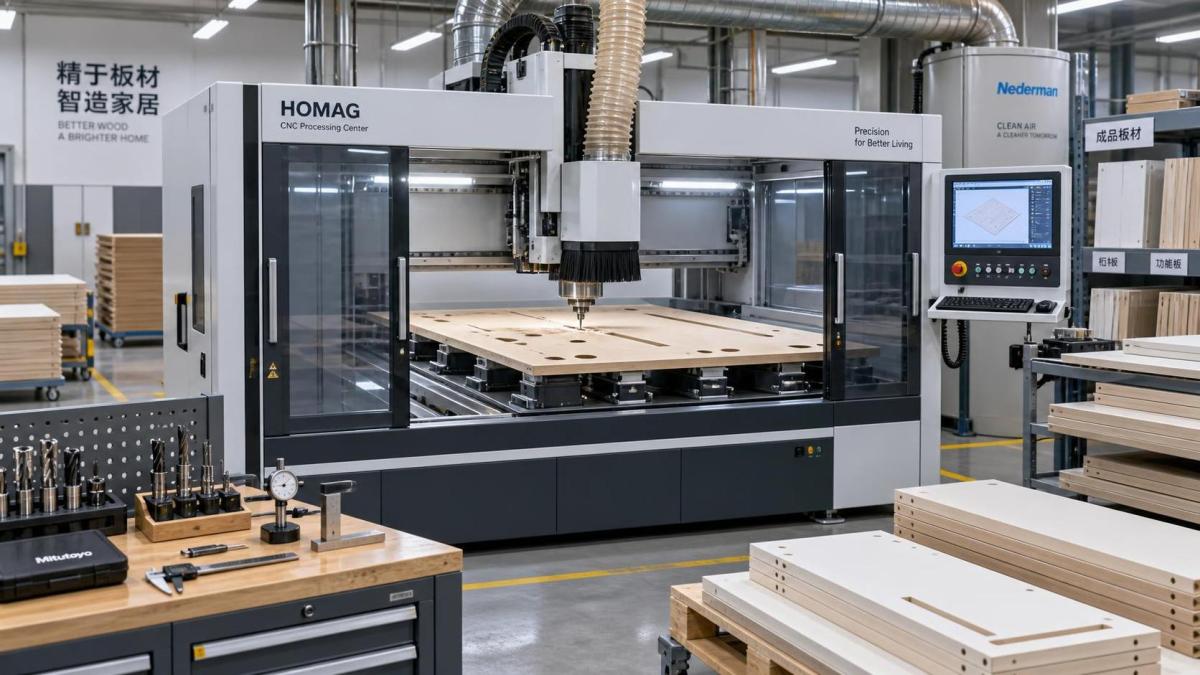
CNC routers, nesting machines, drilling centers, and panel processing lines can produce high volumes quickly, but their speed also magnifies small operating mistakes.
An incorrect datum position, loose vacuum cup, unsuitable cutter, or wrong sheet thickness setting can affect every panel produced during a run.
Woodworking machinery operator training gives employees a repeatable operating method instead of relying on memory, informal advice, or trial-and-error adjustments.
Structured training should explain the entire workflow, from receiving panel material and checking drawings through loading, machining, inspection, labeling, and machine shutdown.
Operators need to understand how their actions affect downstream processes such as edge banding, assembly, finishing, packaging, and final furniture installation.
When a CNC-cut panel is dimensionally inaccurate, the problem may appear later as poor edge alignment, difficult assembly, visible gaps, or wasted hardware.
Training also helps operators distinguish between normal process variation and warning signs that require intervention, including vibration, unusual noise, poor chip evacuation, or inconsistent cutting quality.
A capable operator does not wait for a major fault. They follow procedures, observe machine behavior, document abnormalities, and escalate concerns before production quality declines.
Start with Safety Before Speed or Output Targets
Safe operation must be the first outcome of woodworking machinery operator training, because no production target justifies bypassing guards, sensors, interlocks, or lockout procedures.
New operators should learn the specific hazards of each machine, including rotating tools, moving gantries, automatic loading systems, vacuum devices, dust, noise, and sharp panel edges.
Personal protective equipment should match the task and local safety requirements. Typical items include hearing protection, safety footwear, eye protection, and appropriate close-fitting work clothing.
Gloves require particular attention. They may protect hands during panel handling, but they should not be worn near rotating cutting tools unless approved procedures explicitly allow them.
Training should define restricted zones clearly. Operators must know where they may stand during automatic cycles and when it is safe to enter the machine area.
Emergency stop buttons are important, but training should not treat them as the primary operating control. Preventive checks and safe positioning reduce the need for emergency intervention.
Before starting a machine, operators should verify that guards are closed, extraction is active, workholding is secure, tools are properly installed, and the surrounding area is clear.
Lockout and tagout procedures must be taught for tool changes, cleaning, maintenance, troubleshooting, and any situation where stored electrical, pneumatic, or mechanical energy presents risk.
Teach Operators How to Prepare the Machine Correctly
Many CNC processing problems begin before the first panel enters the machine. Preparation should therefore be a core part of every daily operating routine.
Operators should inspect the work order, panel list, drawings, machining program, material specification, and expected quantity before beginning a production batch.
They need to confirm panel length, width, thickness, surface finish, grain direction, protective film requirements, and whether the material has defects that affect machining.
Machine setup training should cover spindle warm-up where required, air supply checks, vacuum system status, lubrication levels, extraction performance, and control panel alarm review.
Operators should verify that the correct tool library information is available. Cutter diameter, cutting length, rotation direction, feed rate, and tool offset must match the program.
A visual inspection of cutters helps prevent avoidable quality problems. Damaged, dull, contaminated, or incorrectly clamped tools should never remain in production.
Workholding requires the same attention. On nesting machines, operators should verify sheet placement, vacuum zones, spoilboard condition, and sufficient holding strength before cycle start.
For point-to-point CNC machines, vacuum cups, clamps, stops, and reference points must be positioned according to the program and the actual panel dimensions.
Build Confidence in Program Selection and Verification
Operators do not always write CNC programs, but they must understand enough about program selection and verification to prevent incorrect files from reaching the machine.
Training should establish a clear naming system for programs, revisions, materials, customer orders, and panel types. Ambiguous file names create unnecessary risk on busy shop floors.
Before machining, the operator should compare the selected program with the production document, especially part number, dimensions, drilling pattern, material thickness, and quantity.
A first-piece process is essential when starting a new batch, switching material, changing tooling, or loading a revised program from engineering or production planning.
The first panel should be measured and checked against the drawing before full production continues. Inspection should include overall dimensions, hole locations, grooves, edges, and visible surfaces.
Operators should know when a simulation, dry run, reduced-speed cycle, or single-step verification is appropriate. These actions can prevent expensive collisions and material waste.
Training must also address program revisions. An operator should never assume an existing file remains correct when the order, panel hardware, or customer specification has changed.
When uncertainty exists, the correct action is to stop and confirm with the supervisor, programmer, or quality team instead of making an unapproved adjustment.
Match Tooling, Feed Rates, and Materials for Better Panel Quality
Repeatable CNC panel processing depends heavily on choosing tooling and cutting parameters that suit the board material, panel construction, required finish, and production volume.
Melamine-faced particleboard, MDF, plywood, solid wood panels, laminate boards, acrylic surfaces, and composite materials can require different cutters and machining strategies.
Operators should recognize common quality defects, including chipping, burning, rough edges, breakout, fuzzy fibers, oversized holes, undersized slots, and incomplete cuts.
These defects may result from worn tools, unsuitable feed rates, incorrect spindle speed, poor extraction, unstable workholding, incorrect tool offsets, or damaged material.
Training should explain the relationship between feed speed and spindle speed without requiring every operator to become a programmer. Operators need practical limits and escalation rules.
For example, slowing a feed rate may improve edge finish in some situations, but it can also create heat and burning if spindle speed remains too high.
Tool life management is equally important. Operators should record tool changes, monitor cutting quality, follow replacement schedules, and avoid using tools until complete failure occurs.
Clear tool labeling and storage reduce setup errors. Each tool should be traceable by type, diameter, application, condition, and compatible machine or holder.
Make Material Handling Part of CNC Training
Panel handling is often treated as a separate task, but it directly affects safety, surface quality, machine loading accuracy, and overall productivity.
Operators should learn correct lifting methods, use lifting aids when necessary, and understand the weight and balance characteristics of large sheets and finished components.
Scratched decorative surfaces, damaged edges, and warped panels can create costly rework even when the CNC machining itself is accurate.
Training should cover material storage conditions. Panels should be protected from moisture, excessive heat, contamination, and poor support that can cause bending or surface damage.
Before loading, operators should inspect sheets for bowing, chips, loose protective film, foreign objects, and defects that could reduce vacuum holding performance.
Correct sheet orientation matters for grain direction, decorative surfaces, machining access, and later assembly. Operators should verify orientation before the machine cycle starts.
Finished panels need controlled unloading and identification. Labels should remain readable and connected to the order so downstream teams can avoid sorting mistakes.
Good material flow reduces unnecessary movement. Training should help operators organize incoming sheets, processed panels, offcuts, and waste without obstructing walkways or machine access.
Use Inspection Routines to Keep Results Repeatable
Repeatability is not achieved by assuming that a CNC machine will always produce correct parts. It comes from verifying results at planned points during production.
Operators should inspect the first piece, conduct periodic in-process checks, and complete final batch checks according to the product complexity and quality requirements.
Measurements should focus on characteristics that matter for assembly, including panel dimensions, hole positions, groove depth, edge quality, squareness, and hardware alignment.
Simple gauges, calipers, tape measures, templates, depth gauges, and approved inspection fixtures can help operators identify deviations quickly and consistently.
Training should define acceptable tolerances clearly. Vague instructions such as “looks fine” are not sufficient for repeatable furniture component manufacturing.
When defects occur, operators should isolate affected panels, record the issue, identify the possible cause, and avoid mixing questionable parts with approved production.
Production records are useful for more than traceability. They reveal recurring issues involving specific materials, cutters, programs, machine settings, or production shifts.
A consistent inspection habit protects both the operator and the company. It demonstrates control of the process and prevents defective panels from reaching customers.
Train Operators to Handle Alarms and Routine Maintenance
CNC machines need trained operators who can respond calmly to alarms without guessing, bypassing protective systems, or repeatedly restarting a machine without identifying the cause.
Training should group alarms into practical categories, such as vacuum issues, tool changer faults, axis limits, spindle warnings, safety circuit conditions, and communication errors.
For each common alarm, operators should know which basic checks they may perform and when they must contact maintenance or technical support.
Routine care can prevent many avoidable interruptions. Daily cleaning, dust removal, table inspection, sensor cleaning, and extraction checks should be included in standard work instructions.
Operators should never use compressed air in ways that force dust into electrical cabinets, bearings, sensors, or sensitive machine components.
Maintenance schedules should identify operator responsibilities separately from technician responsibilities. This prevents neglected tasks while avoiding unauthorized repairs by untrained personnel.
Accurate fault reporting saves time. Useful reports include alarm codes, machine status, program name, tool number, material type, recent changes, and photographs when appropriate.
Reliable machinery support also matters. Access to technical guidance, spare parts, and responsive after-sales service helps workshops recover faster when complex problems occur.
Create a Training System That Works Across Shifts
One-time instruction is rarely enough for a high-performance woodworking operation. Skills need reinforcement, observation, feedback, and documented qualification over time.
A practical woodworking machinery operator training program should combine classroom safety instruction, supervised machine practice, written procedures, and competency-based assessments.
New operators should first observe experienced personnel, then perform defined tasks under supervision before operating independently on live production orders.
Training checklists should cover startup, setup, program confirmation, first-piece approval, material handling, tool changes, inspection, shutdown, cleaning, and fault escalation.
Experienced operators also benefit from refresher training, especially after new machinery installation, software updates, process changes, tooling changes, or recurring quality concerns.
Cross-training can improve staffing flexibility, but it should not reduce standards. An operator should be qualified on each machine type before being assigned independent responsibility.
Shift handovers deserve special attention. Operators should communicate current order status, tool condition, quality findings, machine alarms, material concerns, and incomplete maintenance tasks.
Qingdao Zhongding Machinery supports woodworking customers with reliable equipment, technical support, spare parts supply, and service focused on long-term production performance.
Conclusion: Safe Habits Produce Better Panels
The strongest CNC panel processing results come from operators who understand the process, follow consistent procedures, and act early when conditions do not match expectations.
Effective woodworking machinery operator training improves safety, reduces scrap, protects machine components, supports stable output, and creates confidence across every production shift.
Operators should focus on preparation, correct material handling, verified programs, suitable tooling, first-piece inspection, routine maintenance, and clear communication with technical teams.
When these habits become standard practice, CNC equipment can deliver the accurate, repeatable panel processing required by modern furniture factories and woodworking workshops.
Send Your Inquiry
We welcome your cooperation and we will develop with you.