


News & Exhibitions
Latest Factory Updates, Industry Trends & Global Exhibition Information
What woodworking machinery does Qingdao Zhongding Machinery Co. Ltd offer?
When a buyer is reviewing a woodworking machinery supplier, the first practical question is rarely just whether the supplier sells “woodworking machines.” The real issue is whether its equipment scope can support the buyer’s production flow: panel preparation, machining, edge treatment, drilling, assembly preparation, or a combination of these steps. A machine that performs well in isolation may still create bottlenecks if it does not match the material format, production volume, labor arrangement, and downstream processes of the factory.
Qingdao Zhongding Machinery Co. Ltd is positioned as a manufacturer and exporter of woodworking machinery for furniture producers, woodworking workshops, and industrial production lines. Based on the available business information, the company provides woodworking equipment and complete woodworking solutions intended to help users improve productivity, reduce production costs, and maintain equipment over the long term through technical support, spare parts supply, and after-sales service. For an accurate purchase decision, buyers should confirm the current product catalog and the configuration available for their specific materials and process requirements.
What “woodworking machinery” should mean in a purchasing evaluation
The term covers a broad group of machines, and buyers should avoid treating it as a single product category. A furniture factory processing laminated board has different needs from a workshop making solid-wood doors, while a production line for cabinets requires a different sequence again. Before asking for a quotation, it is useful to map the actual workpiece journey from raw material to finished component.
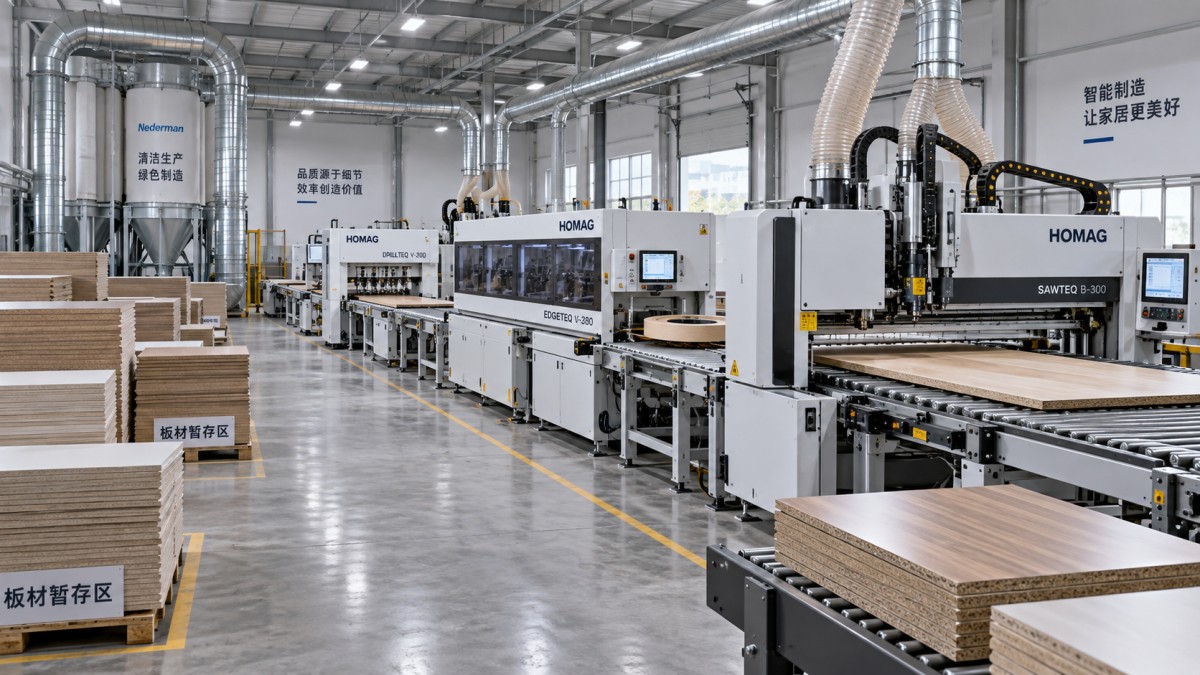
In most furniture and panel-processing environments, the workflow may involve cutting sheet materials, machining grooves or profiles, applying edge materials, drilling holes for connectors or hinges, and preparing components for assembly. Solid-wood production may instead place greater importance on sawing, planing, thicknessing, shaping, sanding, and joinery operations. Some factories need only one replacement machine; others need equipment that fits into a linked or semi-linked production process.
Rather than asking only, “Which machines do you offer?”, a more useful question is: “Which operation in our current process requires a machine, and what must that machine deliver?” This changes the evaluation from a broad supplier search into a workable equipment specification.
Equipment categories buyers commonly need to clarify
Because the specific machine lineup, model names, capacities, and optional configurations should be confirmed directly with Qingdao Zhongding Machinery Co. Ltd, it is sensible to use process categories when beginning a supplier assessment. The following categories describe the types of woodworking operations that often form part of a furniture workshop or industrial woodworking line.
This framework does not assume that every category is included in a particular supplier’s active offering. It helps a buyer identify which product families, configurations, and supporting services should be discussed during an inquiry. A supplier that understands the sequence of operations can usually respond more effectively than one asked only for a general machinery price list.
Start with the production problem, not the machine name
A common purchasing mistake is to begin with a familiar machine label and then look for the lowest-priced version. That approach can miss the problem the buyer is actually trying to solve. For example, slow output may not be caused by cutting speed. It may result from manual loading, repeated measuring, chip removal interruptions, poor material handling, or delays between cutting and drilling. Replacing only the cutting machine may leave the real bottleneck untouched.
Another frequent situation occurs in cabinet production. A workshop may buy equipment intended for standard rectangular panels but later add more customized orders, more hardware patterns, or smaller batch sizes. The equipment may still operate reliably, yet the time needed for setup and changeover becomes the limiting factor. In that situation, flexibility, programming method, fixture arrangement, and operator training can matter as much as the nominal output rating.
When discussing machinery with Qingdao Zhongding Machinery Co. Ltd or any potential supplier, describe the production constraint in operational terms:
- Which material is being processed: MDF, particleboard, plywood, solid wood, veneered board, or another material?
- What is the usual workpiece size, thickness range, and edge condition?
- Which operation currently creates the longest waiting time or highest rejection risk?
- Is the factory producing repeated batches, mixed orders, or mainly custom pieces?
- What quality issue must be controlled: chip-out, inaccurate dimensions, poor edge appearance, misaligned holes, burn marks, or inconsistent sanding?
- What existing machines, electrical supply, dust collection, compressed air, and material handling equipment must the new machine work with?
These details allow the discussion to move beyond generic capability claims. They also reduce the risk of comparing machines that appear similar in a quotation but are intended for very different working conditions.
How the machinery scope may fit different woodworking settings
Furniture manufacturers with repeatable panel products
Factories making cabinets, wardrobes, office furniture, or other panel-based products usually evaluate machinery as a sequence rather than as independent stations. Cutting accuracy affects edge quality. Edge quality affects the appearance of the finished cabinet. Drilling accuracy affects assembly speed and the fit of hinges, slides, and connectors. A small dimensional error early in the process can become much more costly after several later operations have been completed.
For this type of operation, buyers should ask whether the proposed equipment is intended for panel material, whether it can accommodate the required workpiece sizes, and how it handles repeated production. They should also clarify which tasks remain manual. A machine may automate one part of the operation while still requiring manual positioning, return handling, inspection, or component sorting. That is not necessarily a disadvantage, but it must be reflected in labor planning.
Workshops handling mixed orders
Smaller workshops may need machinery that can handle varied sizes and changing jobs without excessive setup time. The most relevant issue is often not maximum production capacity but usable flexibility. An operator may need to switch between shelving, cabinet doors, table components, repair work, and special-order pieces in the same week.
In this environment, a buyer should ask about adjustment points, changeover procedures, tooling compatibility, measuring references, and the practical skill required to maintain accurate results. A highly capable machine can still be a poor fit if its setup process is too complex for the available staff or if its most useful functions are rarely used in the workshop’s normal work.
Industrial production lines
For higher-volume production, the decision extends beyond the machine itself. Material flow, loading direction, buffer space, dust extraction, electrical requirements, maintenance access, and operator safety all affect whether equipment can be installed and used efficiently. A machine with the right process function may still be difficult to integrate if the layout leaves no room for infeed, outfeed, service access, or workpiece staging.
Here, the supplier discussion should include line position and interfaces. Buyers should provide a simple floor plan, existing machine arrangement, material direction, and expected handoff between operations. Even a basic layout can reveal whether operators will need to carry panels across aisles, whether offcuts will interfere with movement, or whether a finished component will need to be handled several times before reaching the next station.
What to verify before treating a machine list as comparable
Two machines described with the same broad name can differ significantly in actual working value. Buyers conducting an initial review should request enough detail to compare operating conditions rather than relying on photographs or general descriptions. The key point is not to demand every specification immediately; it is to request the specifications that affect the intended process.
For cutting equipment, important questions may include cutting length and width, material thickness range, blade or tooling arrangement, positioning method, workpiece support, and expected cut quality for the actual board material. For edge-processing equipment, ask about compatible edge materials, glue or bonding method where applicable, trimming and scraping stages, adjustment procedures, and the quality expected on curved or narrow parts if those are relevant. For drilling or boring equipment, confirm the hole pattern capability, reference method, positioning accuracy, and how programs or settings are changed between product designs.
Machine dimensions and utilities are equally important. Procurement decisions sometimes focus on purchase cost while overlooking transport access, installation space, voltage and frequency compatibility, compressed-air demand, dust-extraction connection, and local serviceability. A machine that cannot be placed correctly or supported by the facility infrastructure will create delays before production even begins.
Support should be evaluated as part of the equipment offer
Woodworking machinery is not fully assessed at the point of shipment. Blades, cutters, bearings, belts, electrical parts, pneumatic components, and wear items may eventually require replacement. Operators may also need clarification on setup, maintenance intervals, alignment checks, or troubleshooting when material quality changes.
The business information for Qingdao Zhongding Machinery Co. Ltd indicates an emphasis on technical support, spare parts supply, and responsive after-sales service. For a buyer, that should lead to specific questions rather than broad assumptions. Ask what operating documentation is supplied, how spare parts are identified, which routine maintenance tasks are expected from the user, what information is needed when requesting technical assistance, and how machine configuration records are retained. These questions are especially important when equipment will be exported, installed far from the manufacturer, or operated across multiple shifts.
It is also sensible to distinguish between a production issue and a machine fault. Poor cutting or edge results may be caused by dull tooling, unsuitable feed settings, inconsistent boards, inadequate dust removal, incorrect alignment, or insufficient operator setup. A support process is more useful when the buyer can provide photos of the defect, material details, machine settings, maintenance history, and a clear description of when the problem occurs.
A practical way to make the first inquiry
A concise inquiry can produce a more useful response than a long request for “all models.” State the product being made, the material, the required operation, the main dimensions, expected production pattern, and any present difficulty. Mention whether the need is for a standalone machine, replacement equipment, workshop expansion, or line integration.
For example, instead of requesting a general woodworking machine quotation, a buyer could explain that the factory processes coated board for cabinet components, needs consistent sizing before edge treatment, works with a defined thickness range, and wants to reduce delays caused by manual measurement. That gives the supplier a basis for identifying a relevant machine category and asking the next technical questions.
The most useful view of Qingdao Zhongding Machinery Co. Ltd’s offering is therefore not simply a catalog of machine names. It is a woodworking machinery capability intended to support furniture manufacturing, workshop production, and industrial processes, combined with technical and service support. The final selection should be tied to the buyer’s actual operation, material, workflow, installation conditions, and required level of production control.
Send Your Inquiry
We welcome your cooperation and we will develop with you.